Storage & Shelving
Executive Office Storage Design: Credenzas, Cabinets & Shelving
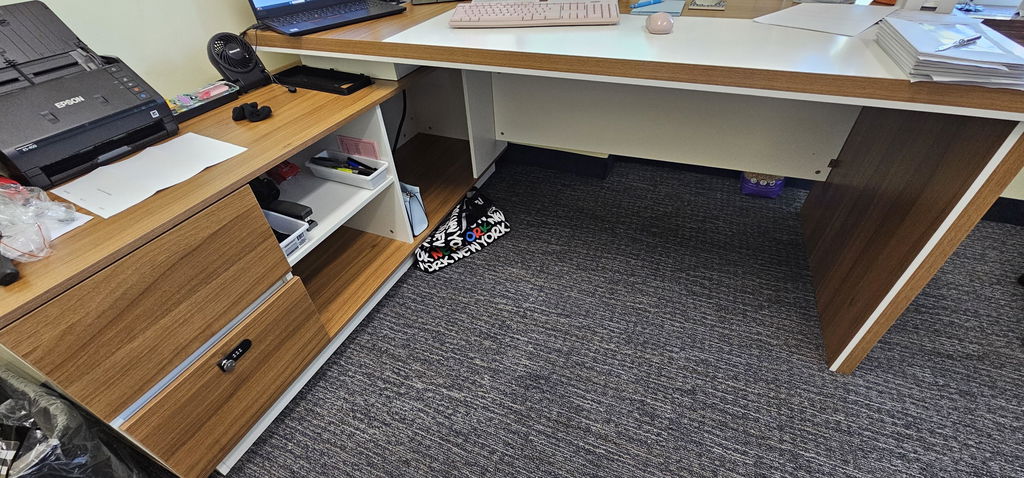
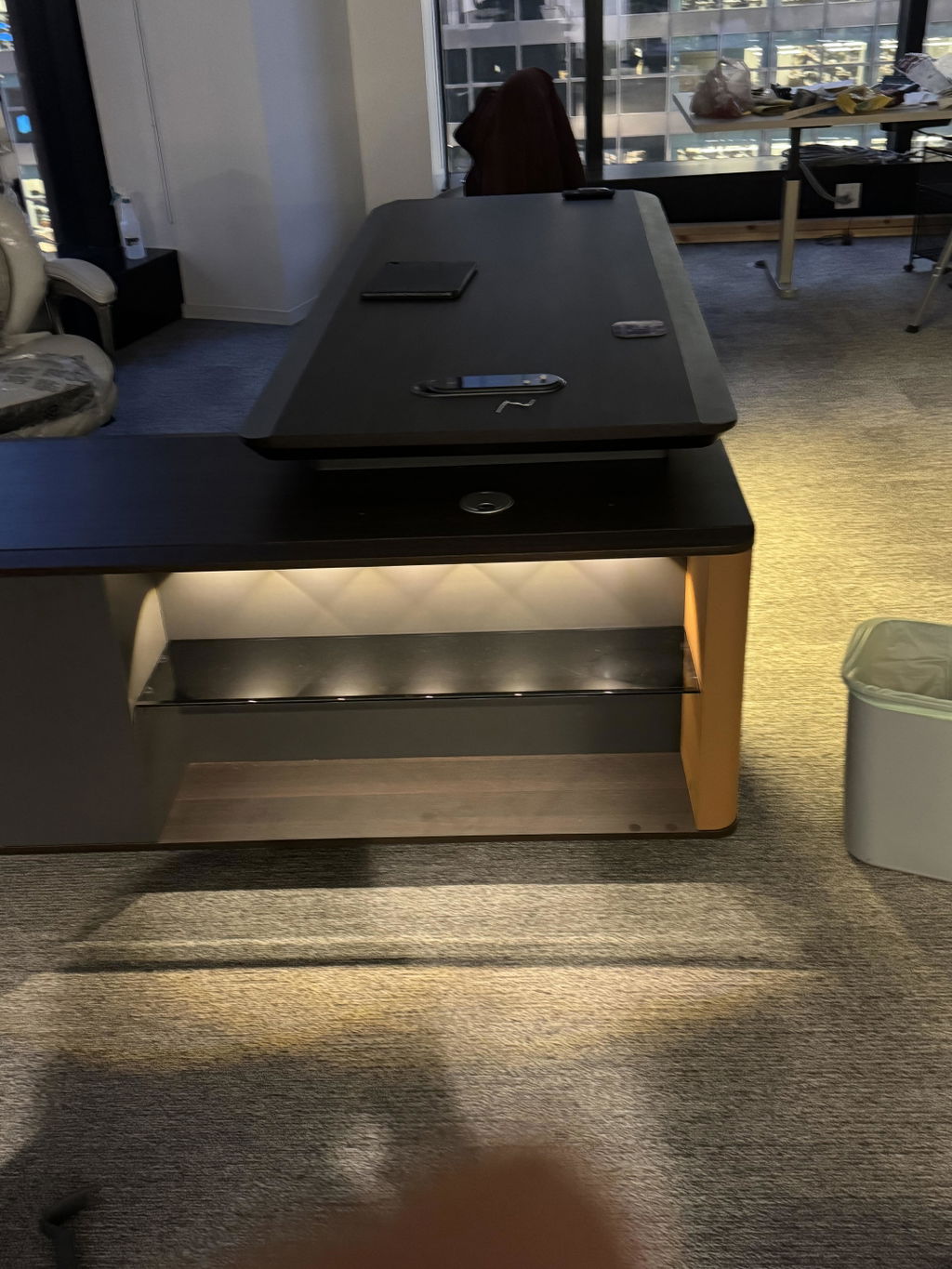
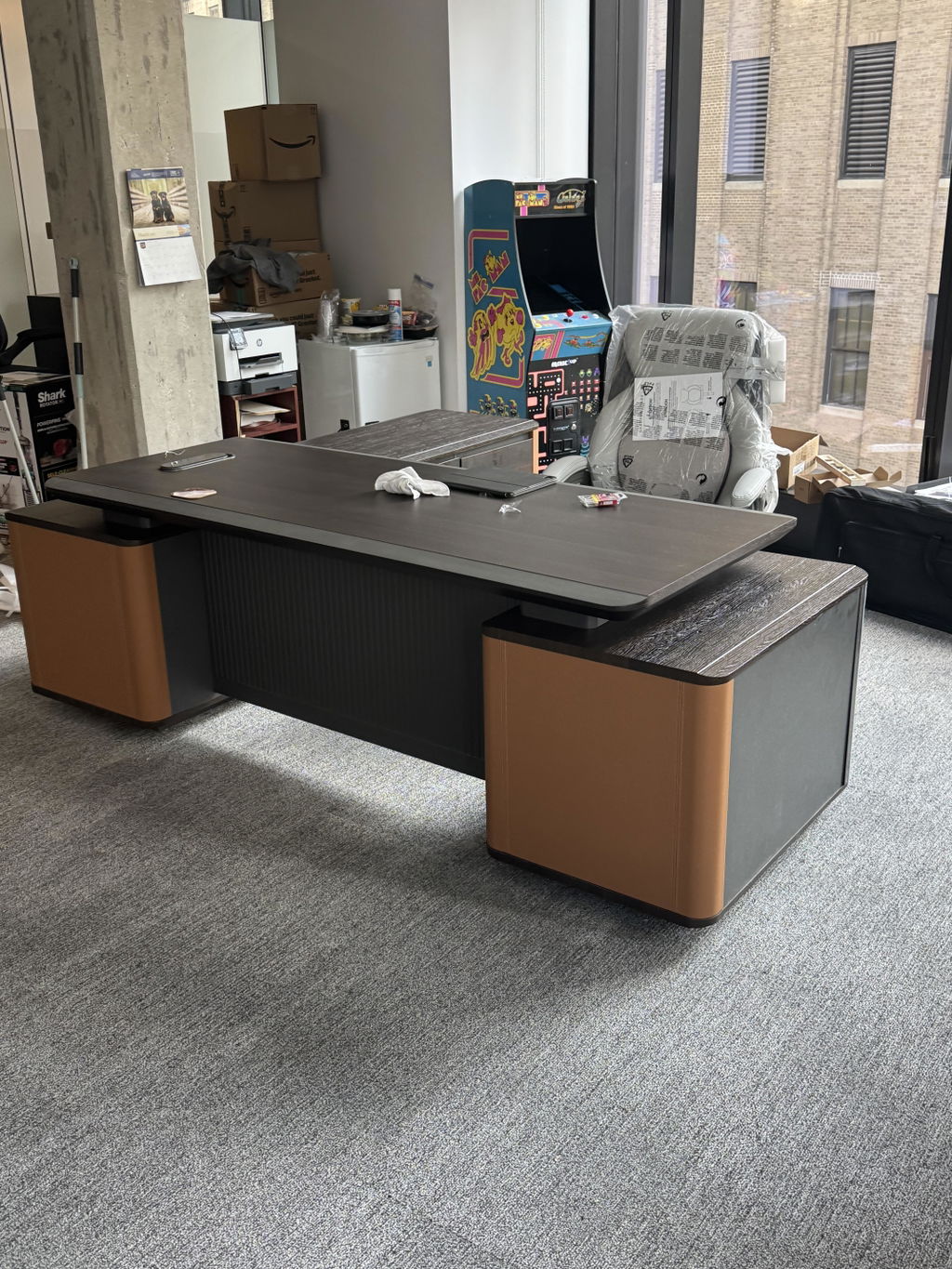
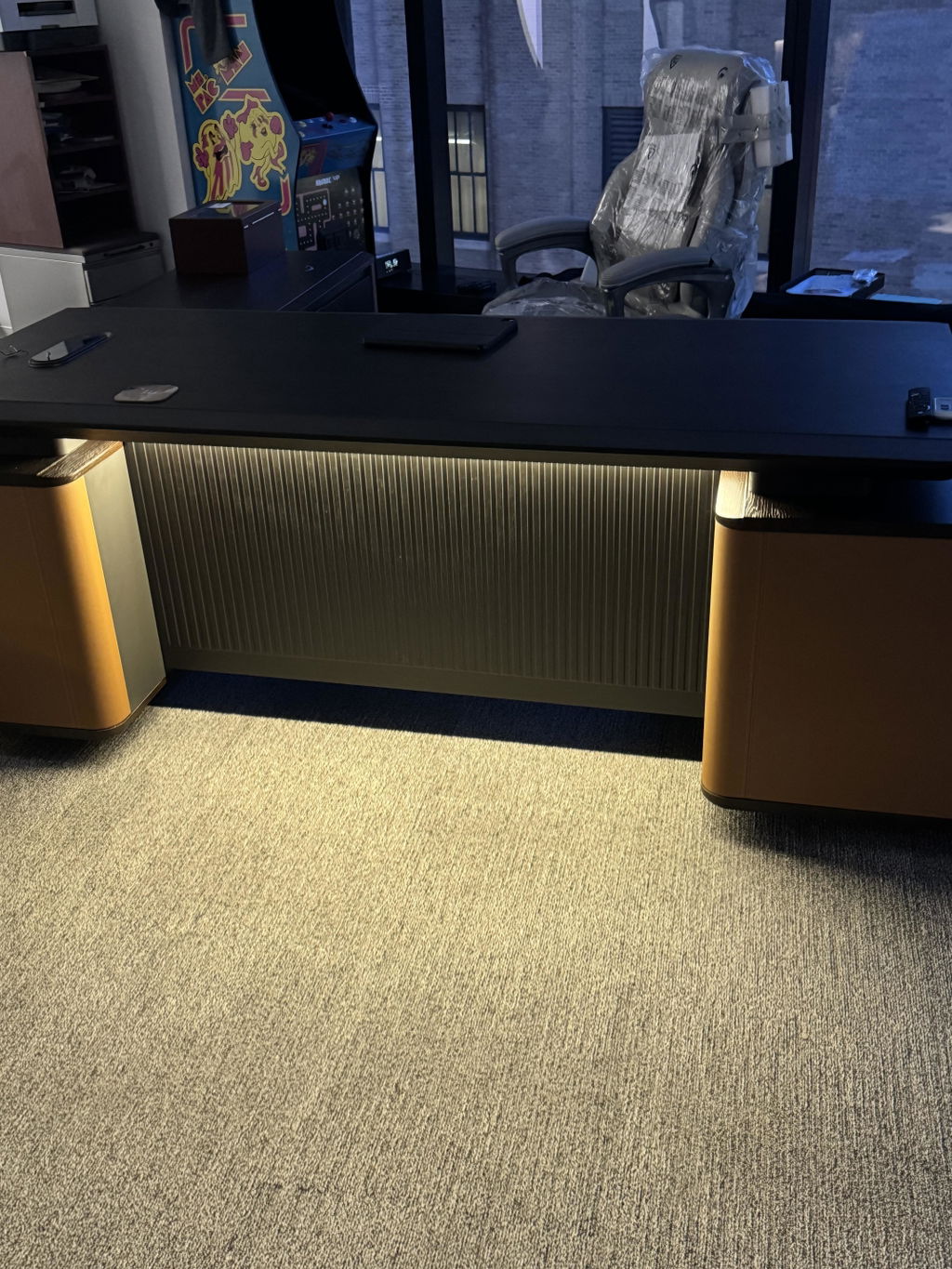
Executive office storage comes in three pieces: a credenza, cabinets, and shelving. How to choose, balance, place, and match them...
Read more →
Matching Sets
Storage & Shelving
Five smart wall shelving ideas for modern offices: modular systems, tall vertical storage, mixed open-and-closed units, desks with integrated shelving, and divider shelving — with shelf depth and height guidance.

Smart office shelving balances looks and function. Five layouts cover most needs: modular systems that reconfigure, tall units that use wall height, mixed open-and-closed storage, desks with integrated shelving, and divider shelving that defines zones. Plan 8 to 16 inches of depth by item, with the first shelf 48 to 54 inches up for seated access.
The right wall shelving turns simple storage into a design asset, storage that works harder and looks better than the usual options. Here are five proven layouts that solve real space challenges while elevating the office. Start with the wall shelving collection.

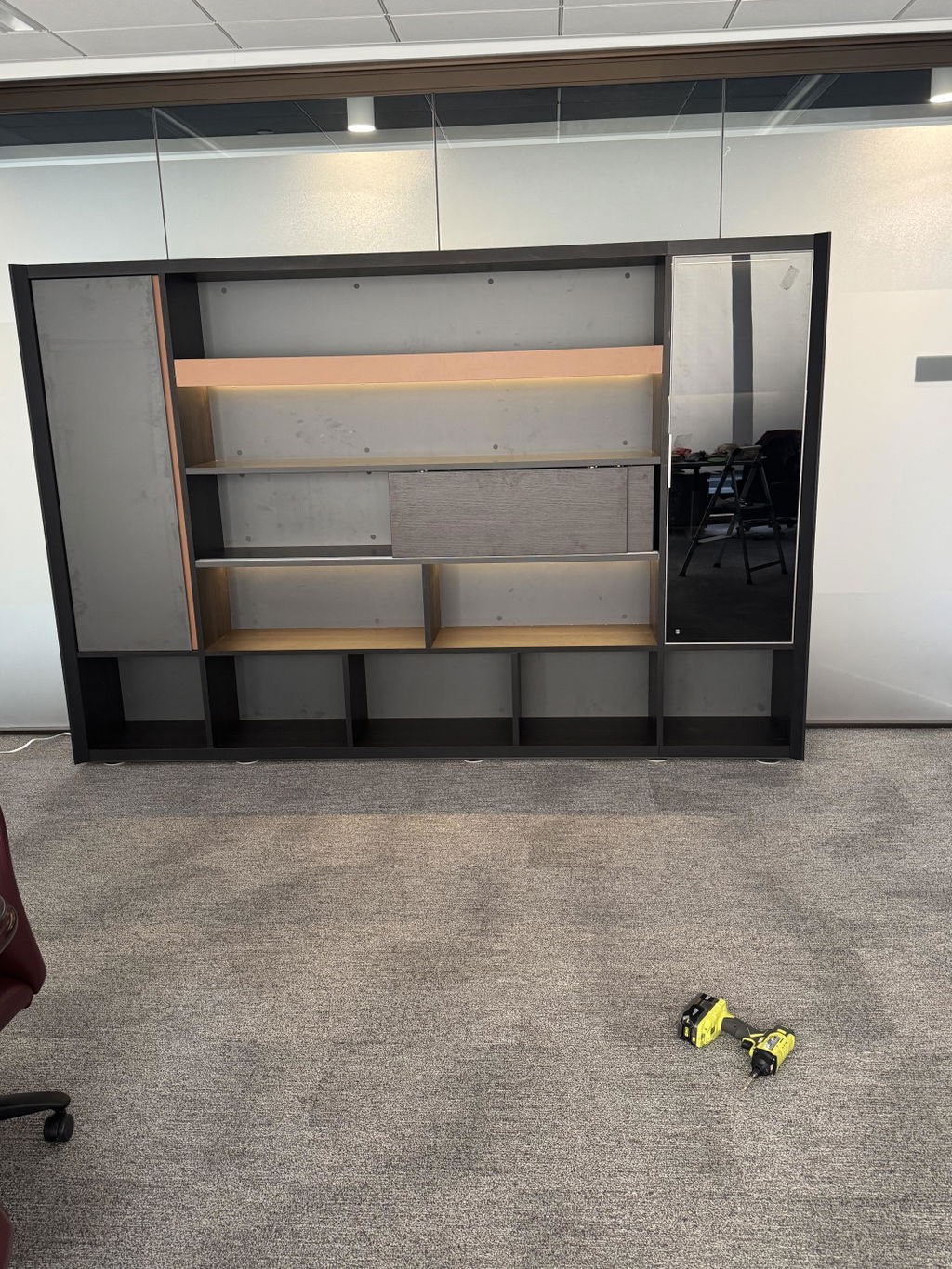
Modular systems adapt to your space and evolve as needs change. Wall-mounted tracks with adjustable components reconfigure without extra drilling, and the Bellam modular set shows the approach, open shelving integrated with closed storage for both function and presence. Popular configurations include L-shaped corner units, floor-to-ceiling systems, and desk-surrounding setups. Look for multiple shelf depths (8, 12, and 16 inches), 75-pound shelf capacity, integrated wire management, and optional cabinet add-ons.
Run shelving the full height of a wall and it becomes the room's largest visual element. The executive bookcase wall covers proportion, styling, and finish matching at that scale.

Tall wall shelving makes the most of vertical space when floor area is tight, turning empty walls into storage without eating the floor plan. These units, typically 48 inches or higher, deliver real capacity in narrow sections and corners; the Calder unit packs generous storage into a compact footprint. For a lighter look, the white shelving collection keeps the space feeling open.

Mixed storage gives you both worlds. Open shelving displays reference books, awards, and plants for visual interest; closed storage hides supplies and files that would otherwise read as clutter. The Altus unit shows the hybrid at its best, extensive open shelving for display above discreet cabinet storage below.

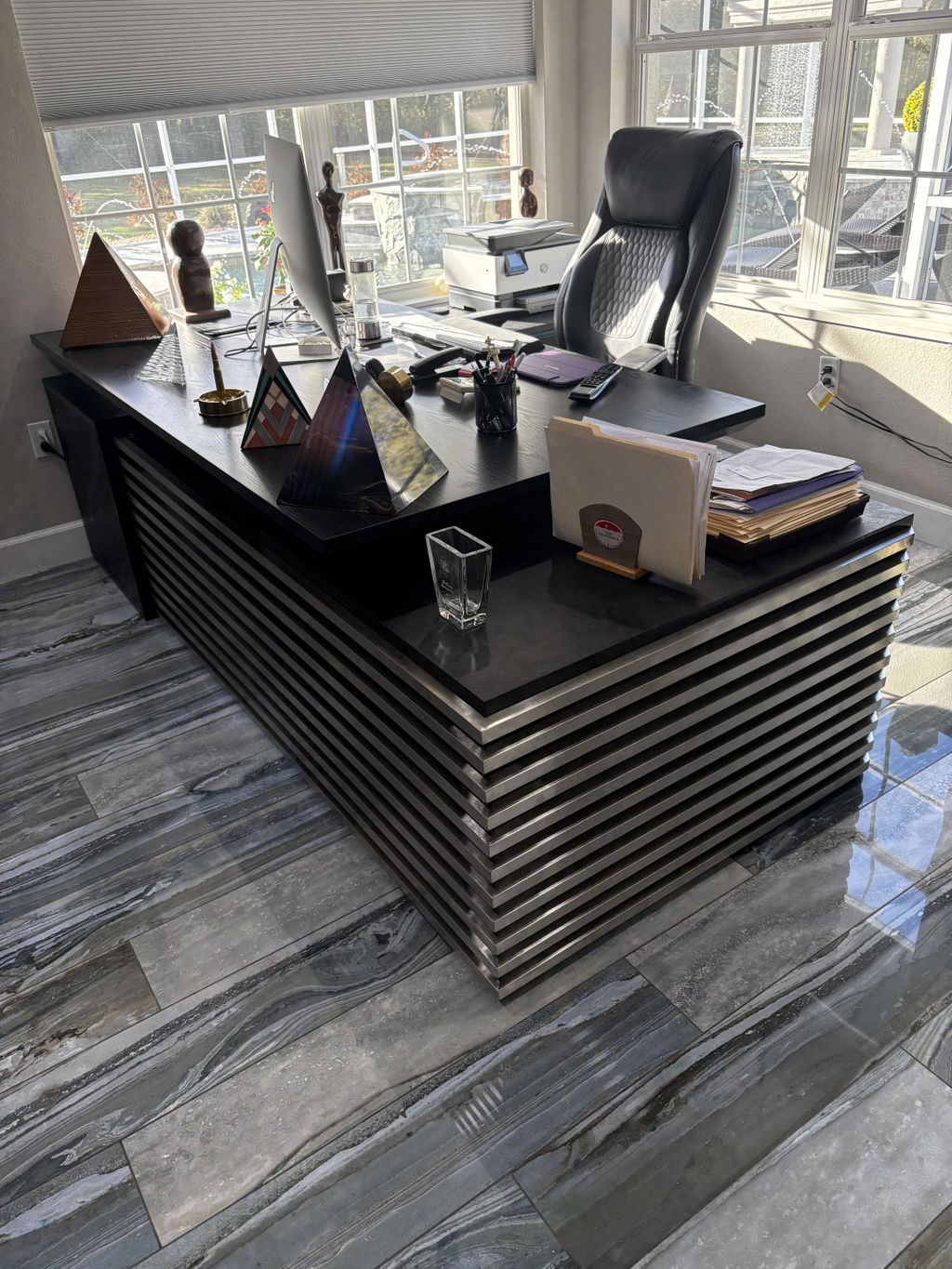
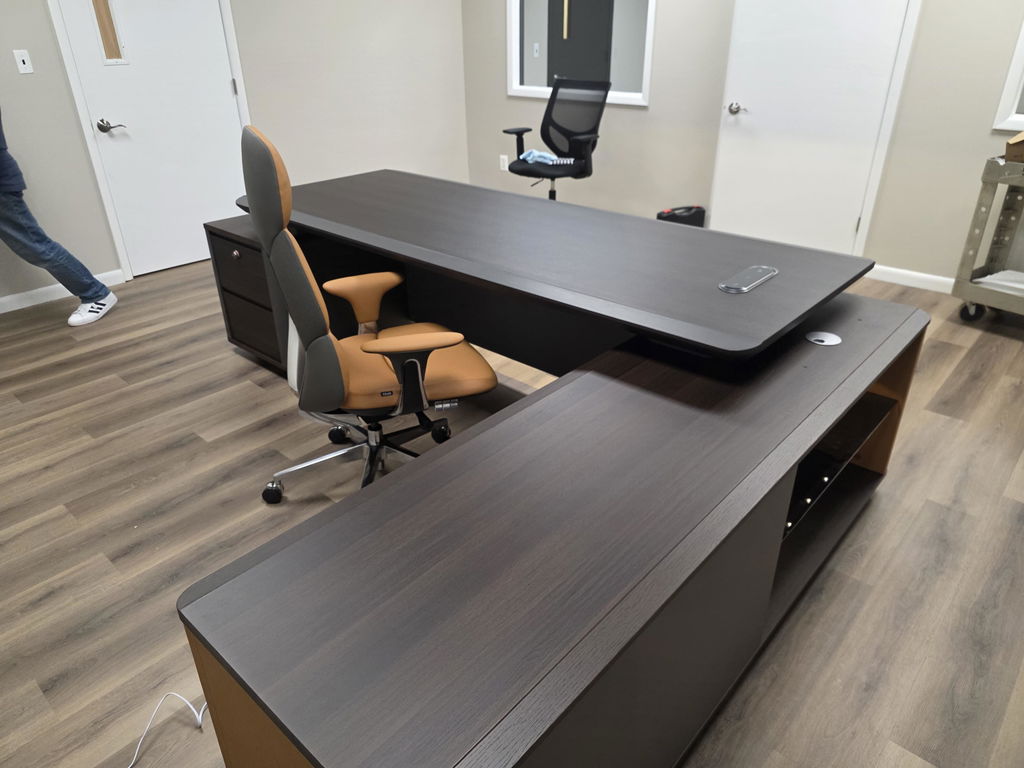
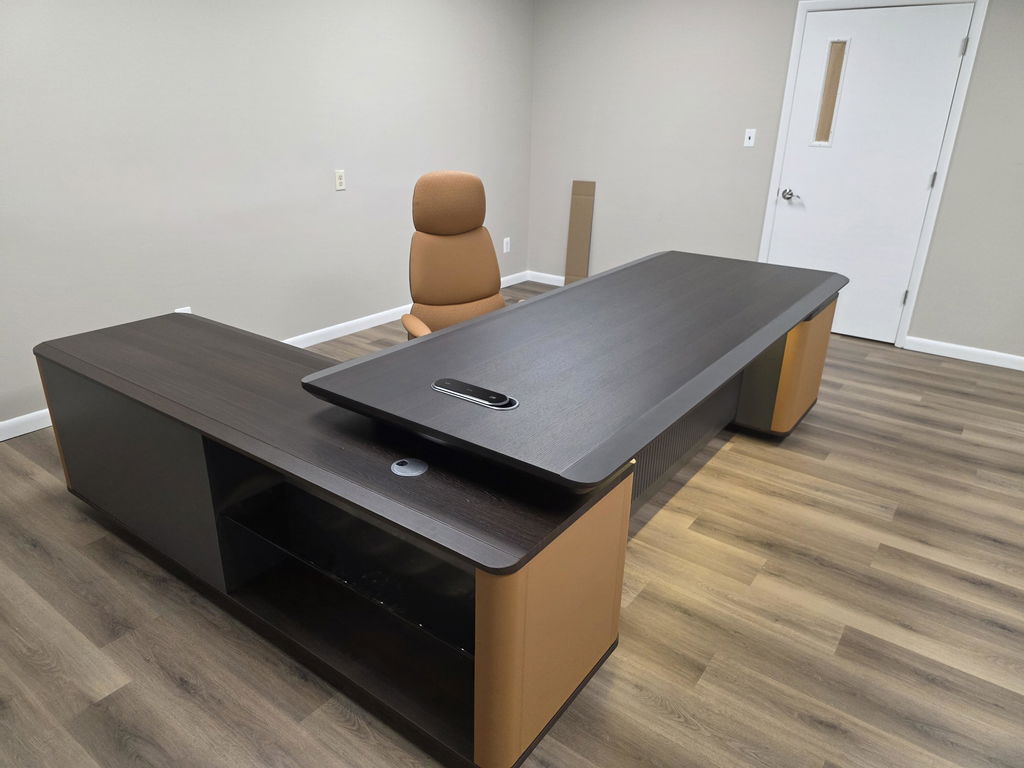
A desk with built-in shelving creates a complete workspace, keeping essentials visible and within reach while eliminating separate wall units. For compact offices where wall space is limited, the Echelon L-shaped desk combines a commanding work surface with integrated storage: the L-shape divides primary and secondary zones, and the shelving keeps important materials at hand, a complete command center in one footprint.

Divider shelving solves two problems at once, defining work areas and adding storage, without blocking light or closing a space off. The Penley unit shows it well: an open-backed design that creates clear boundaries at seated and standing heights while letting light flow freely between zones. For a bolder look, see the black shelving collection.
Shelf depth and height
| Storing | Shelf depth |
|---|---|
| Decorative items and small supplies | 8–10 in |
| Books | 10–12 in |
| Binders and larger equipment | 12–16 in |
For height, set the first shelf 48 to 54 inches from the floor if you reach it while seated, leave 12 to 15 inches between shelves for standard books, and keep the top shelf within comfortable reach, no more than about 80 inches up for most people.
The right wall shelving takes an office from merely functional to genuinely considered: modular, tall, hybrid, integrated, or divider, the key is matching the design to your needs and your professional image. Explore the office shelving and cabinets collection, or have a system built to your wall and dimensions. To complete the room, see the office desk handbook.
Related articles
Storage & Shelving
Executive office storage comes in three pieces: a credenza, cabinets, and shelving. How to choose, balance, place, and match them...
Read more →
Space Planning & Buying
Speccing custom executive furniture is five decisions in order: dimensions, configuration, finish, hardware, and sign-off. What to settle at each...
Read more →
Space Planning & Buying
Made-to-measure executive furniture gives you exact fit, your exact finish, and a coordinated suite. When bespoke earns its place, and...
Read more →