Space Planning & Buying
How to Spec Custom Executive Furniture: A Buyer's Guide
Speccing custom executive furniture is five decisions in order: dimensions, configuration, finish, hardware, and sign-off. What to settle at each...
Read more →
Matching Sets
Storage & Shelving
Executive office storage comes in three pieces: a credenza, cabinets, and shelving. How to choose, balance, place, and match them so storage looks designed.

Executive office storage comes in three pieces: a credenza for the working surface behind the desk, cabinets for what you need to hide, and shelving for what you want to show. Get the mix right and storage stops being an afterthought and becomes half of what makes the room look designed. Get it wrong and even a beautiful desk sits in a cluttered space.
Storage is the most under-designed part of most executive offices, usually a stray cabinet bought to solve a problem. Treated properly it does three jobs at once: it holds things, it displays things, and it gives the room architecture. The trick is choosing the right piece for each of those jobs.

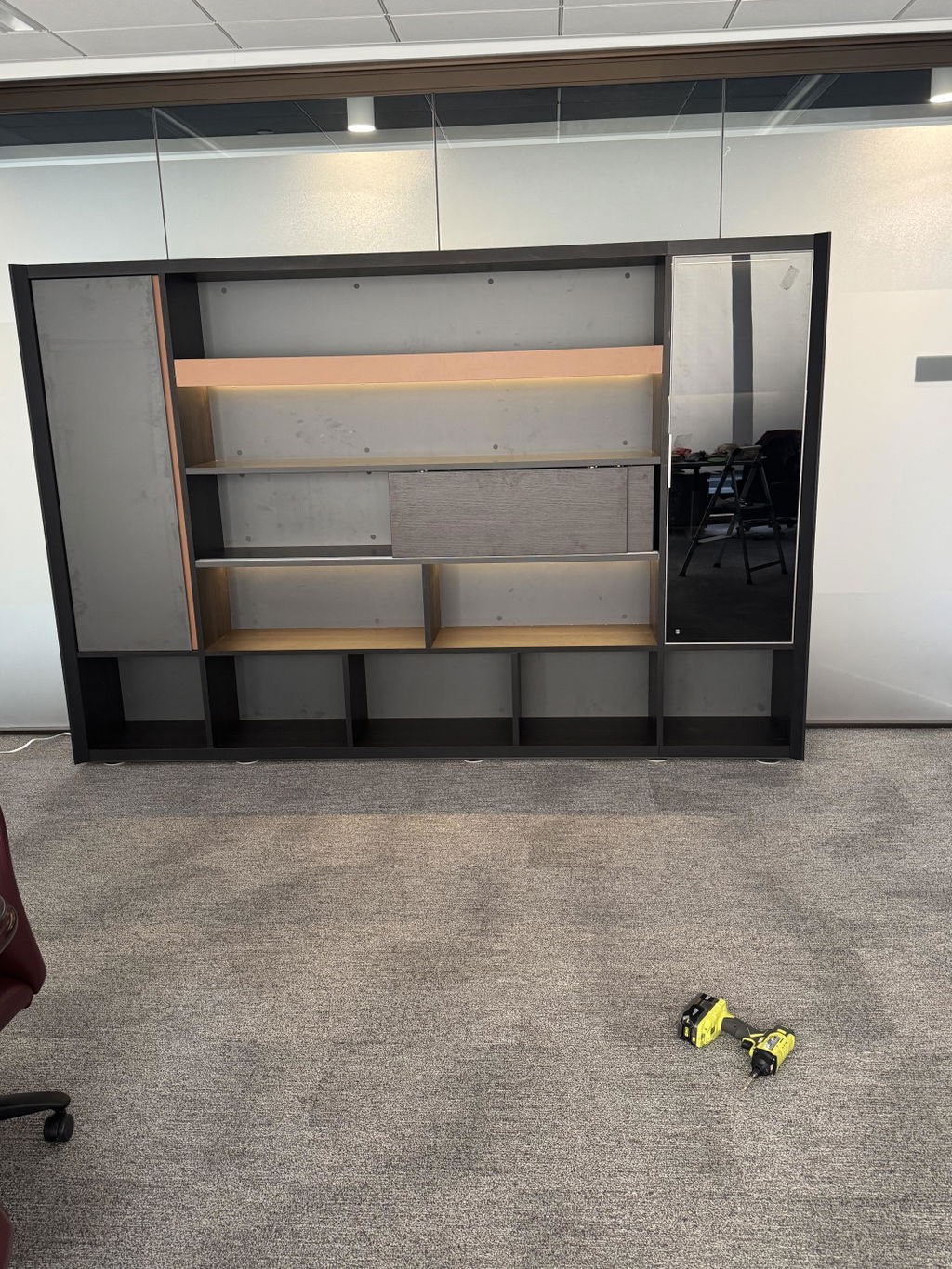
Shelving is your display and your biggest visual move, a full-height wall that holds books and objects at eye level and gives the room a backdrop; our guide to the executive bookcase wall covers it in depth. Cabinets are the opposite, closed storage for files, supplies, and the clutter a desk can't absorb. And the credenza sits between them, the piece that does the most quiet work in the room.

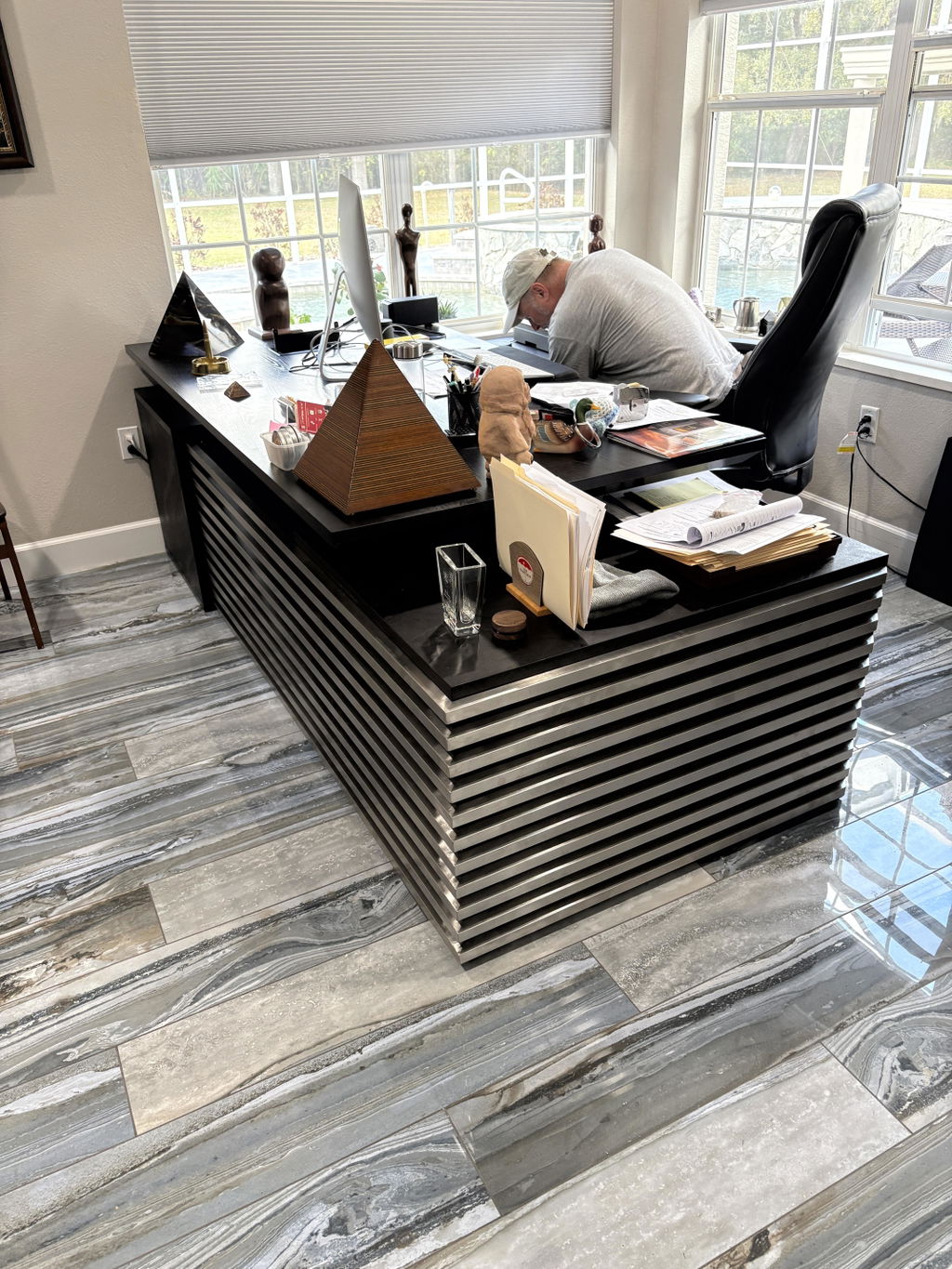
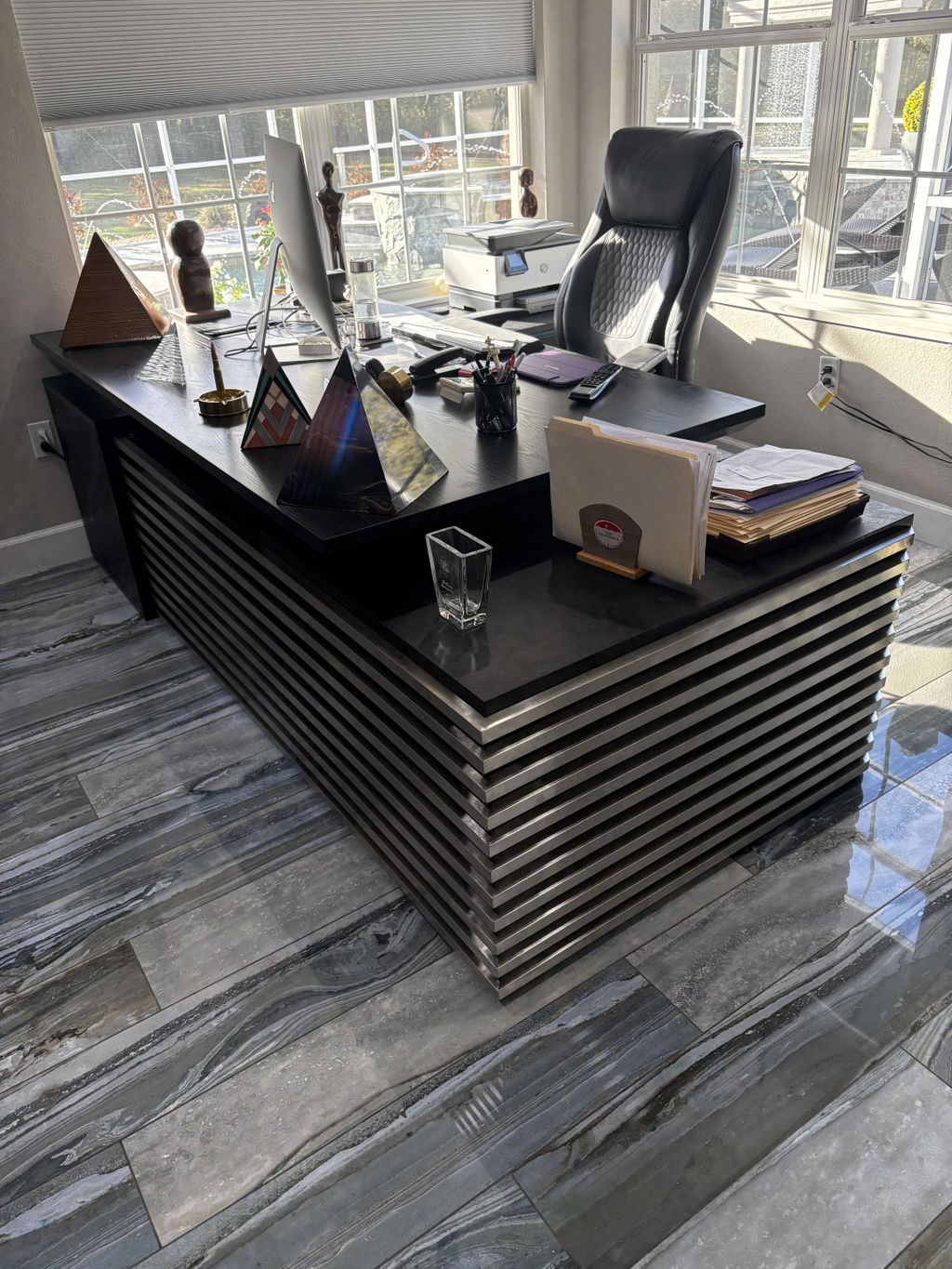
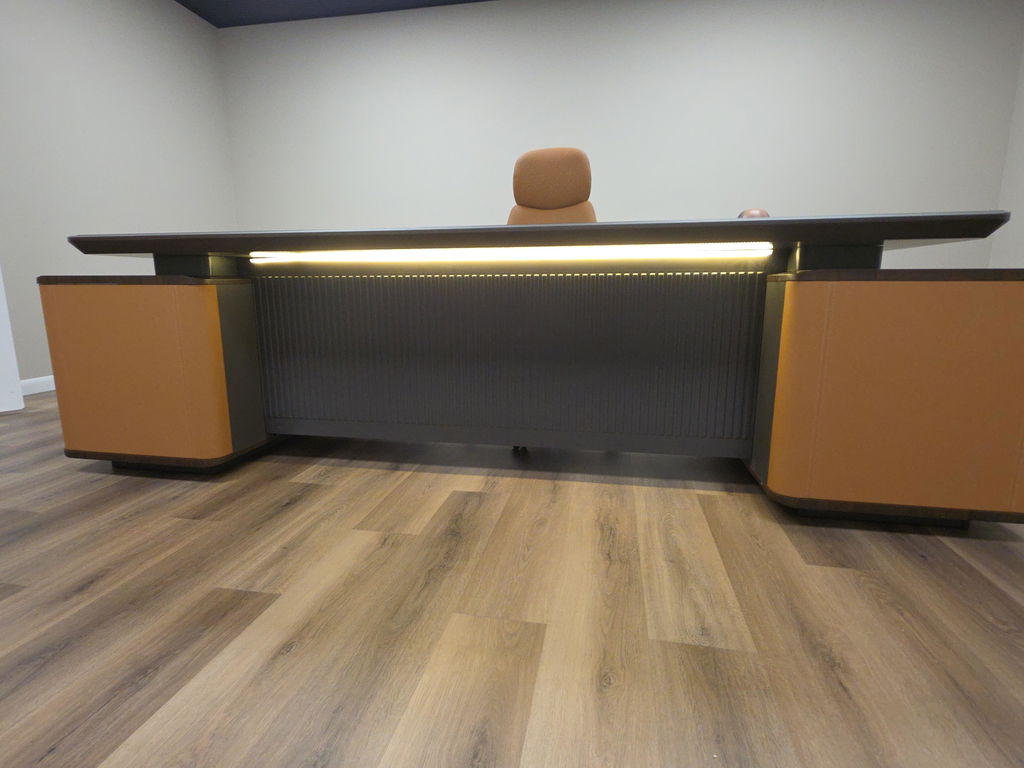
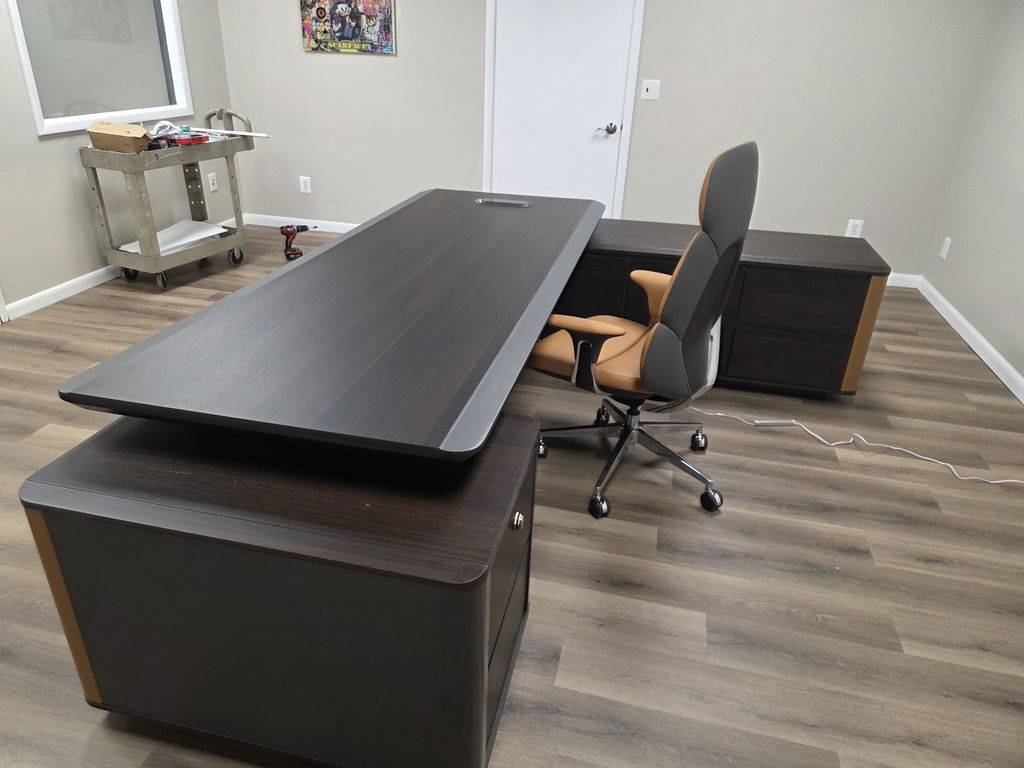
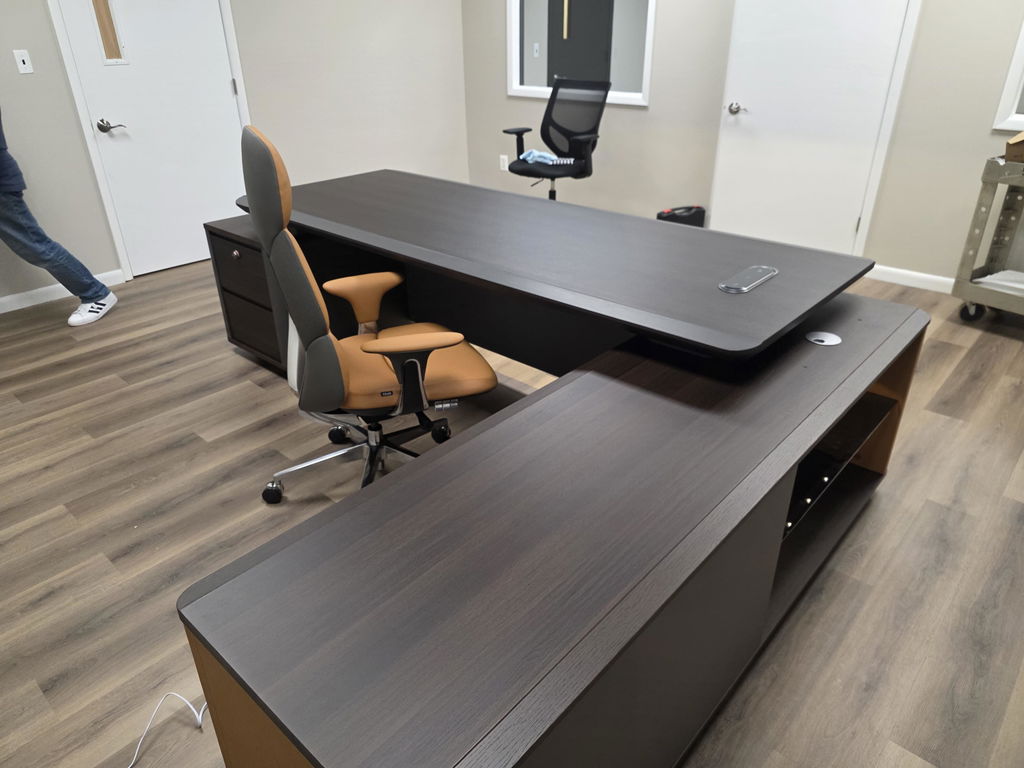
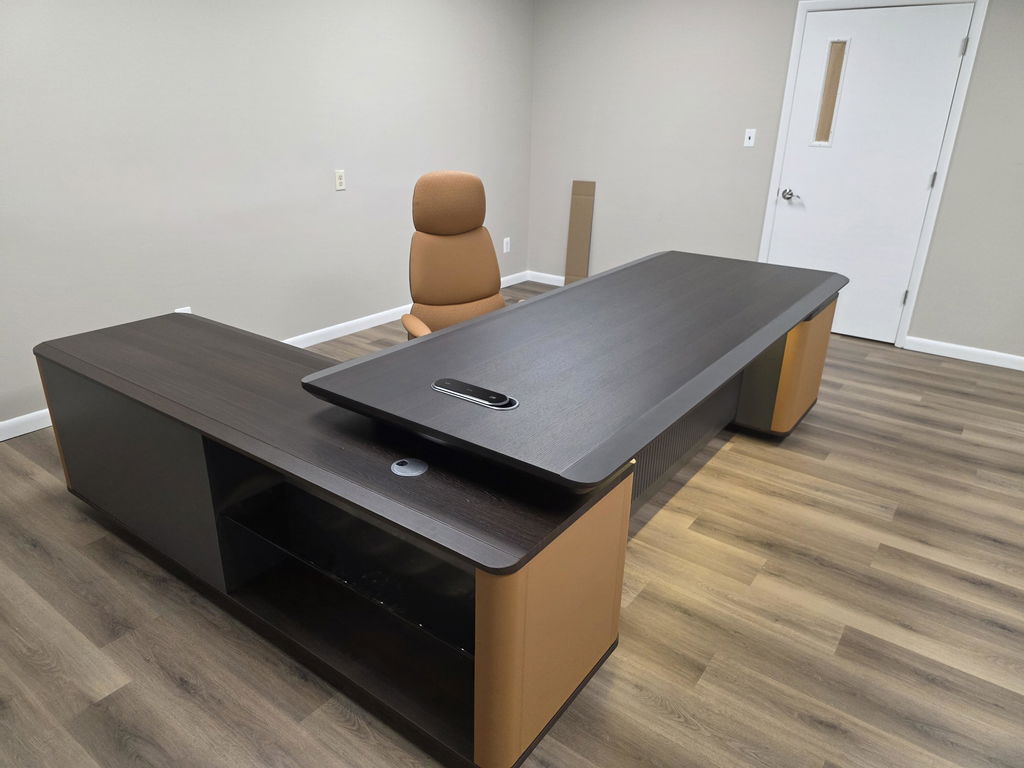
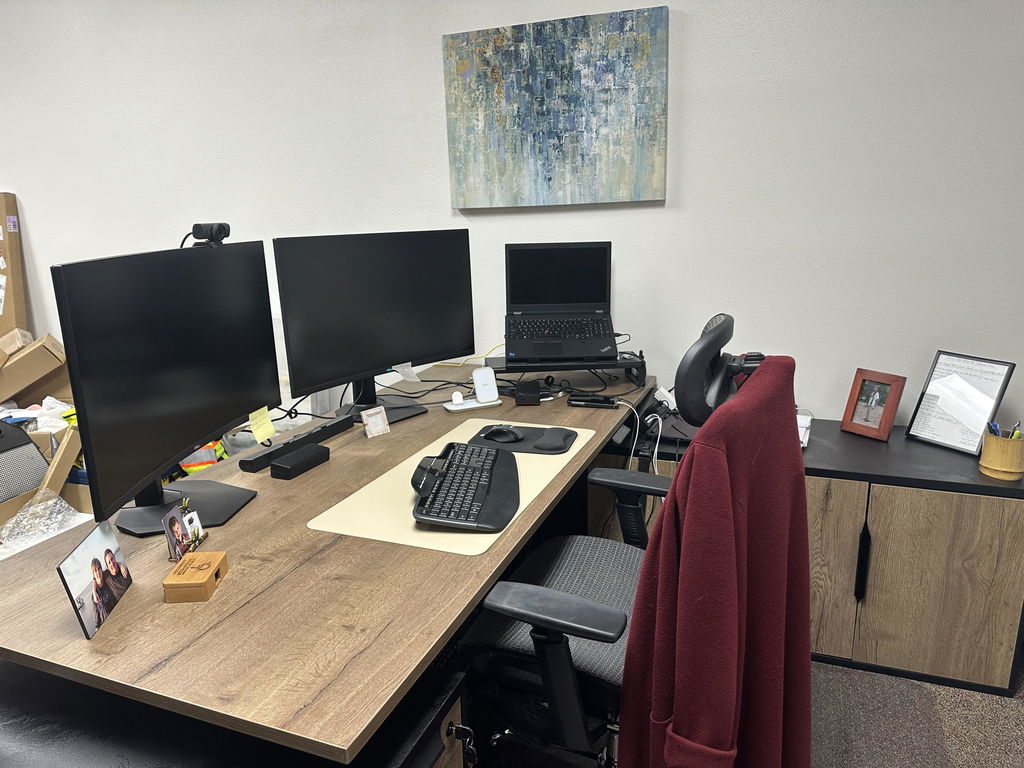
A credenza is a low cabinet, usually set behind or beside the desk, and it earns its place three ways: closed storage inside, a landing surface on top for a printer or a coffee tray, and a display shelf for a few framed pieces. Keep it at roughly seated-sightline height so it reads as a base rather than a wall, and it keeps the command zone clear without pushing storage across the room. If you buy one storage piece for an executive office, buy this.
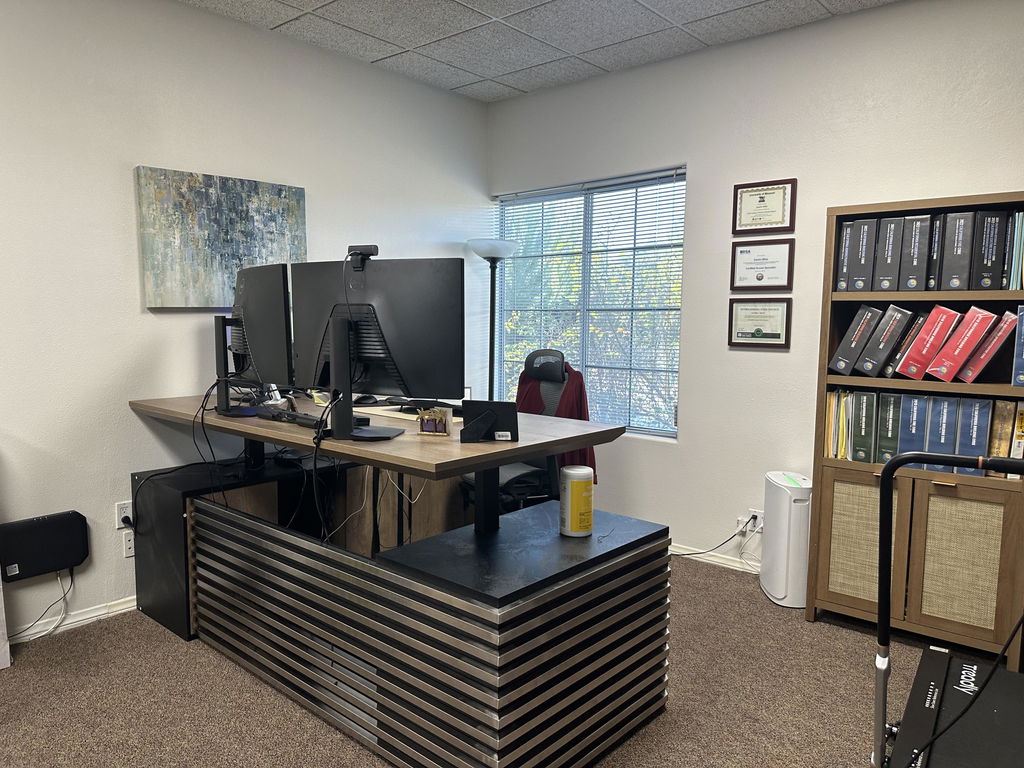
The balance between open shelving and closed doors sets the tone. Open storage displays and lightens; closed storage hides and calms. An executive office usually wants to lean closed, roughly a third open for books and objects, two-thirds behind doors, so the room reads as ordered rather than busy. The paperwork, the binders, the supplies all belong behind a front; the books, the awards, and a few good objects earn the open shelf.
Position follows function. Put the credenza directly behind or beside the desk within arm's reach, run the display shelving on the wall the desk faces or backs onto so it becomes a backdrop, and tuck closed cabinets where they're handy but not on show. Leave clear floor in front of any storage you open often, and don't block a window with a tall unit, keep those on solid walls.
The single thing that makes storage look built-in is coordination. Carry the same wood tone and hardware from the desk through the credenza, cabinets, and shelving, and the pieces read as one designed suite instead of separate purchases. Arc Grove® builds storage to match its desks exactly, in a shared finish and to your dimensions. Design your storage, or plan the whole room with our guide to designing an executive office.
Related articles
Space Planning & Buying
Speccing custom executive furniture is five decisions in order: dimensions, configuration, finish, hardware, and sign-off. What to settle at each...
Read more →
Space Planning & Buying
Made-to-measure executive furniture gives you exact fit, your exact finish, and a coordinated suite. When bespoke earns its place, and...
Read more →
Executive Desks & Offices
At the executive level, the material makes the desk. What distinguishes wood veneer, solid wood, and stone, and how to...
Read more →