Reception & Front-of-House
Single vs. Double Reception Desk: Which Does Your Lobby Need?
A single reception desk (one station, 60 to 72 inches) suits one receptionist and steady traffic; a double or multi-station...
Read more →
Matching Sets
Reception & Front-of-House
A reception area is your brand's first sentence. How the desk's material, form, and scale signal your brand, and how to design the whole area around it.

A reception area is your brand's first sentence, read in about three seconds before anyone says a word. The desk's material, form, and scale do most of the talking: solid dark wood says established and serious, clean light surfaces say modern and open, curved stone says premium and considered. Designing reception well means deciding what you want that first sentence to say, then choosing the pieces that say it.
Every visitor, candidate, and client forms an impression at the door, and reception is where they form it. That makes it one of the highest-leverage rooms in the building to get right, and one of the most commonly treated as an afterthought.

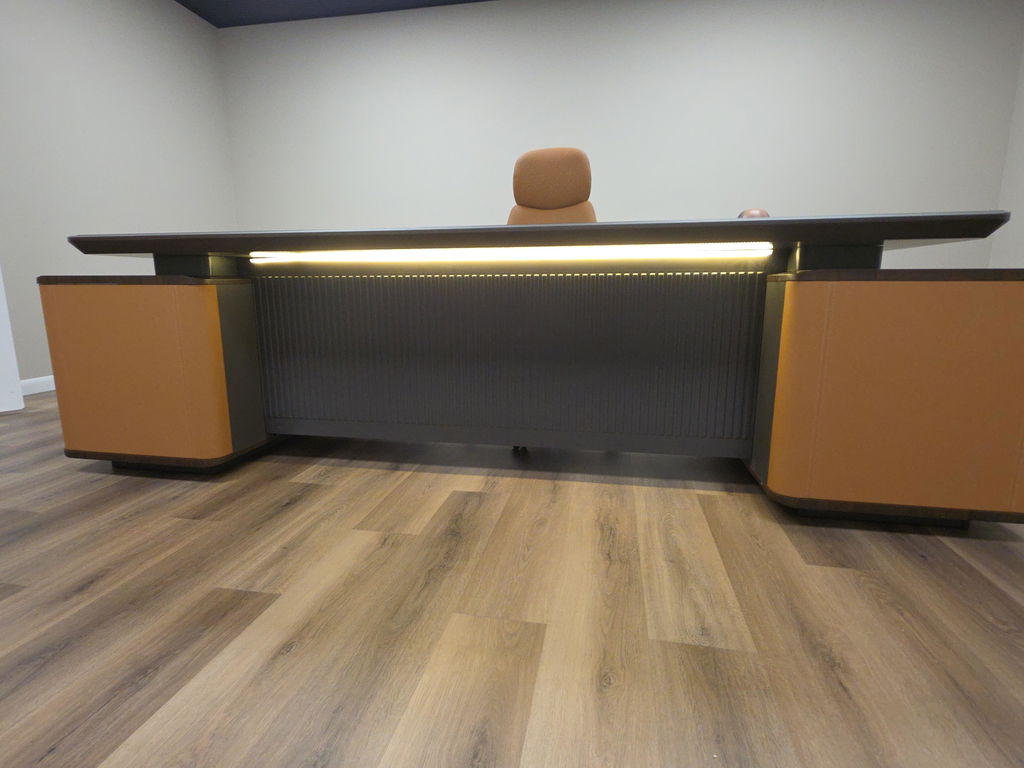
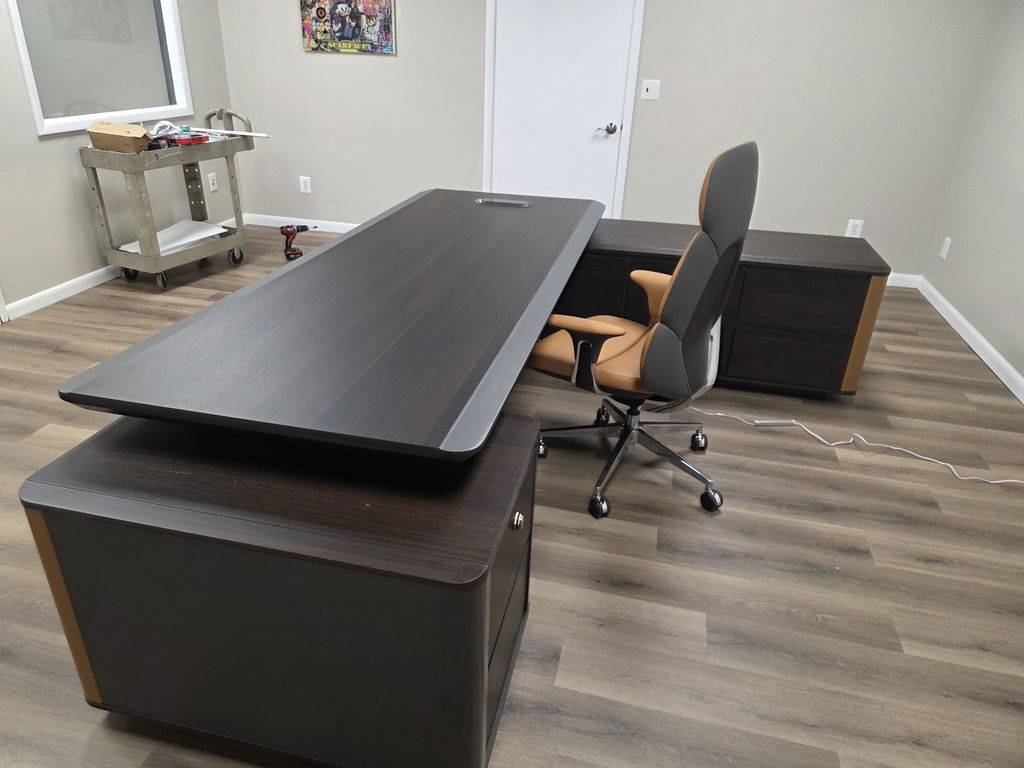
It's the hero piece, so start there. Its material and shape carry the brand signal more than any logo on the wall: a rounded, gloss-finished desk reads as contemporary and welcoming; a heavy, symmetrical wood desk reads as traditional and authoritative; stone or solid-surface fronts read as premium. Scale matters too, a generous desk anchors a large lobby, while an oversized one crowds a small entry and reads as trying too hard. Choose the form that matches how you want to be perceived, not just what fits.
The mapping is fairly intuitive once you name it. Law, finance, and professional services usually want solidity and symmetry in darker wood, the visual language of permanence and trust. Tech, creative, and design firms lean toward clean lines, lighter tones, and sculptural or curved forms that read as current and open. Hospitality, wellness, and retail want warmth and tactility, curves, soft materials, and finishes that invite touch. If your brand sits between these, a transitional desk, warm wood with clean lines, is the safe bridge.
The desk sets the tone; the surroundings confirm it. Put your logo and a lighting feature on the wall behind the desk, where every visitor looks, and echo the brand palette in the seating, flooring, and materials so the whole area speaks with one voice. A few well-chosen chairs, good light, and a considered material palette do more than expensive square footage. Keep sightlines clear from the door to the desk so a visitor knows instantly where to go.
Match the reception setup to your traffic and space. A single desk suits most offices; a busy or larger lobby may need a double or a longer run so no one waits in a queue, a decision our guide to the single vs double reception desk walks through. Whatever the size, leave an accessible approach and clear circulation so the space works as well as it looks.
Because the desk carries the brand, you'll want its finish and form exactly right. Arc Grove® builds reception desks in a range of materials, shapes, and finishes, and to custom dimensions, so the piece matches your identity and your lobby rather than forcing a compromise. Browse reception desks, or build one to your brand.
Related articles
Reception & Front-of-House
A single reception desk (one station, 60 to 72 inches) suits one receptionist and steady traffic; a double or multi-station...
Read more →
Reception & Front-of-House
16 reception desk design ideas — materials, shape, color, lighting, tech, and branding — plus the specs and ADA counter...
Read more →
Reception & Front-of-House
Hotel lobby design that earns its space: reception layout, seating zones, lighting, traffic flow, and biophilic touches — plus the...
Read more →