Executive Desks & Offices
Veneer, Solid Wood & Stone: A Guide to Premium Desk Materials
At the executive level, the material makes the desk. What distinguishes wood veneer, solid wood, and stone, and how to...
Read more →
Matching Sets
Executive Desks & Offices
Executive office lighting works in three layers: ambient, task, and accent. Target 30 to 50 footcandles on the desk, keep it warm, and put it all on dimmers.

Good executive office lighting comes in three layers: ambient light for the room, task light for the desk, and accent light for shelves and art. Aim for roughly 30 to 50 footcandles on the work surface, keep the tone warm rather than cold, and put it all on dimmers. One flat ceiling fixture, the default in most offices, is exactly what to avoid.
Lighting is the most overlooked part of an executive office and the one that most changes how it feels. The same room reads as warm and considered or flat and corporate depending entirely on how it's lit, and fixing it rarely means construction, just better sources in the right places.
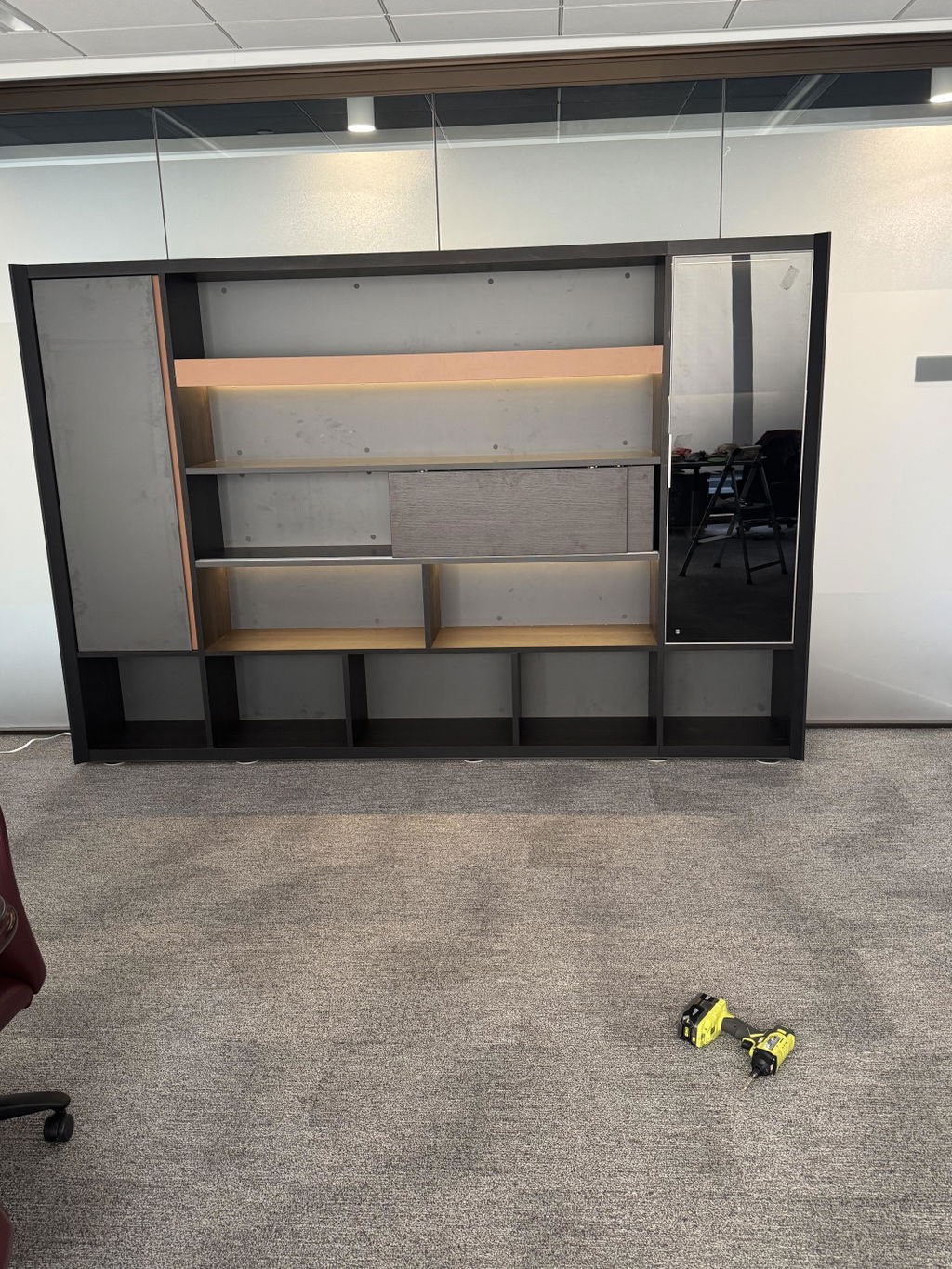
Think in layers, not fixtures. Ambient light fills the room evenly and sets the base level, ceiling fixtures, coves, or a floor lamp bouncing off the ceiling. Task light puts brightness where you actually work, a desk lamp on the surface, so you're not relying on the ceiling to reach your desk. Accent light picks out the bookcase, a piece of art, or a plant, adding the depth that makes a room feel designed. A good office uses all three; a poor one uses only the first.
Lighting levels by zone
| Zone | Target | Best source |
|---|---|---|
| Ambient / overall | 20–30 fc | Ceiling or cove, dimmable |
| Desk work surface | 30–50 fc | Task lamp plus ambient |
| Detailed reading | 50–75 fc | Focused task light |
| Shelves / accent | 10–20 fc | Directional accent |
Lighting guidance for general office work centers on about 30 to 50 footcandles on the task surface, with more for detailed reading. Overhead light alone rarely delivers that at the desk without glare, which is why a dedicated task light does most of the real work.
Illuminating Engineering Society — Office Lighting

Daylight is the best ambient light you have, as long as it comes from the side. Face the desk into a window and the glare washes out your screen; back it against one and you're a silhouette on every call. Set the desk so the window falls to your side, and use blinds or sheers to soften the harshest hours. Our guide to where to put your executive desk covers the placement in full.
Color temperature is what makes light feel warm or clinical. Most offices are lit at a cold 4000 to 5000 kelvin, efficient, but it drains the warmth out of wood and skin alike. For an executive office, keep ambient and accent light warm, around 2700 to 3000K, and let the task light run a touch cooler, 3500K or so, for clarity where you read. The warm base is what makes the room feel like an office someone chose, not one they were assigned. Warm light does most of the work in a dark and moody executive office.
The goal isn't more light, it's controllable light. Put the layers on separate switches or dimmers so you can drop the ambient for a call and lift the task light for paperwork. A single bright ceiling fixture flattens everything; three modest sources you can adjust give the room depth and let it shift through the day. That flexibility, more than raw brightness, is what reads as considered.
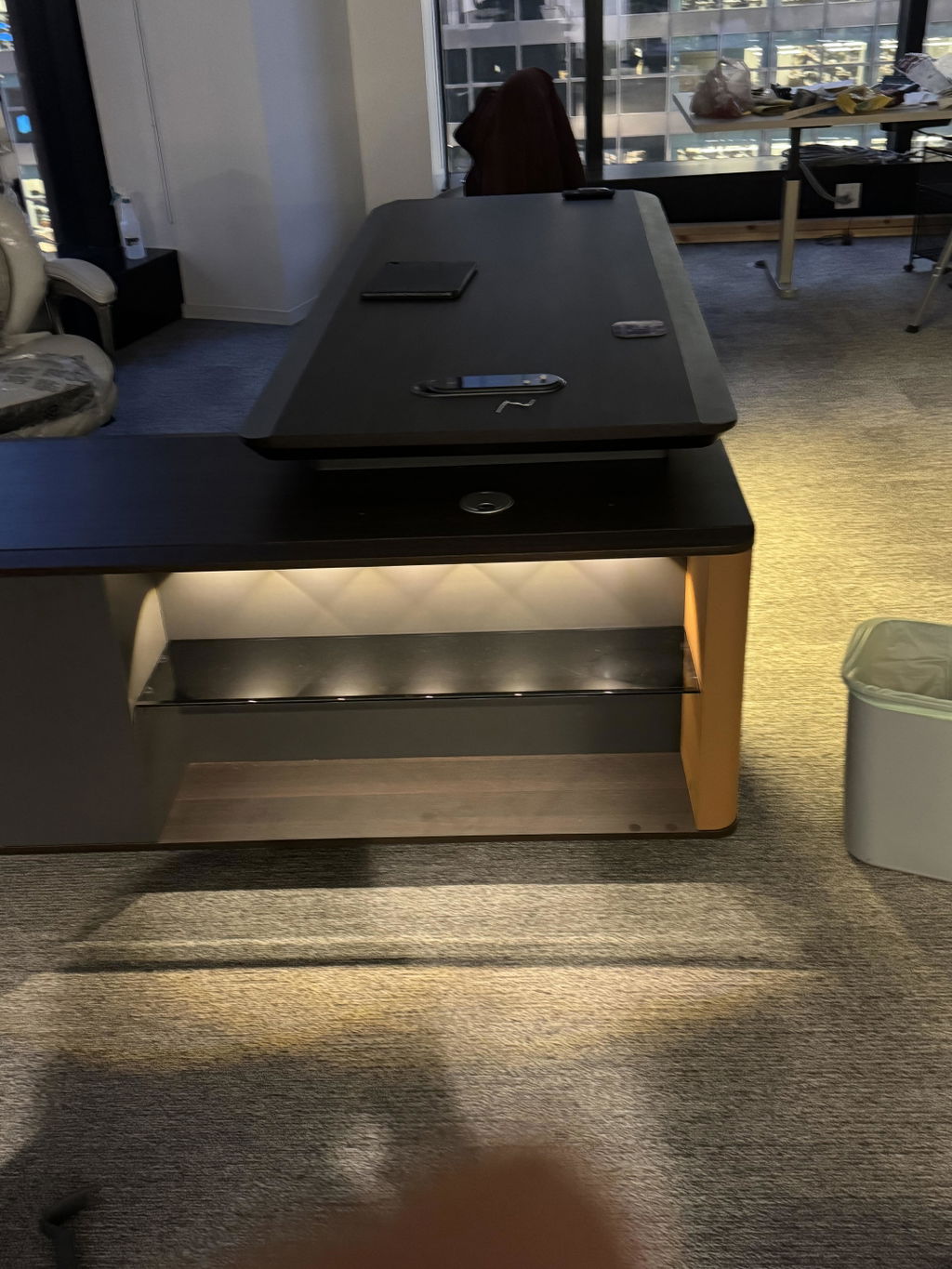
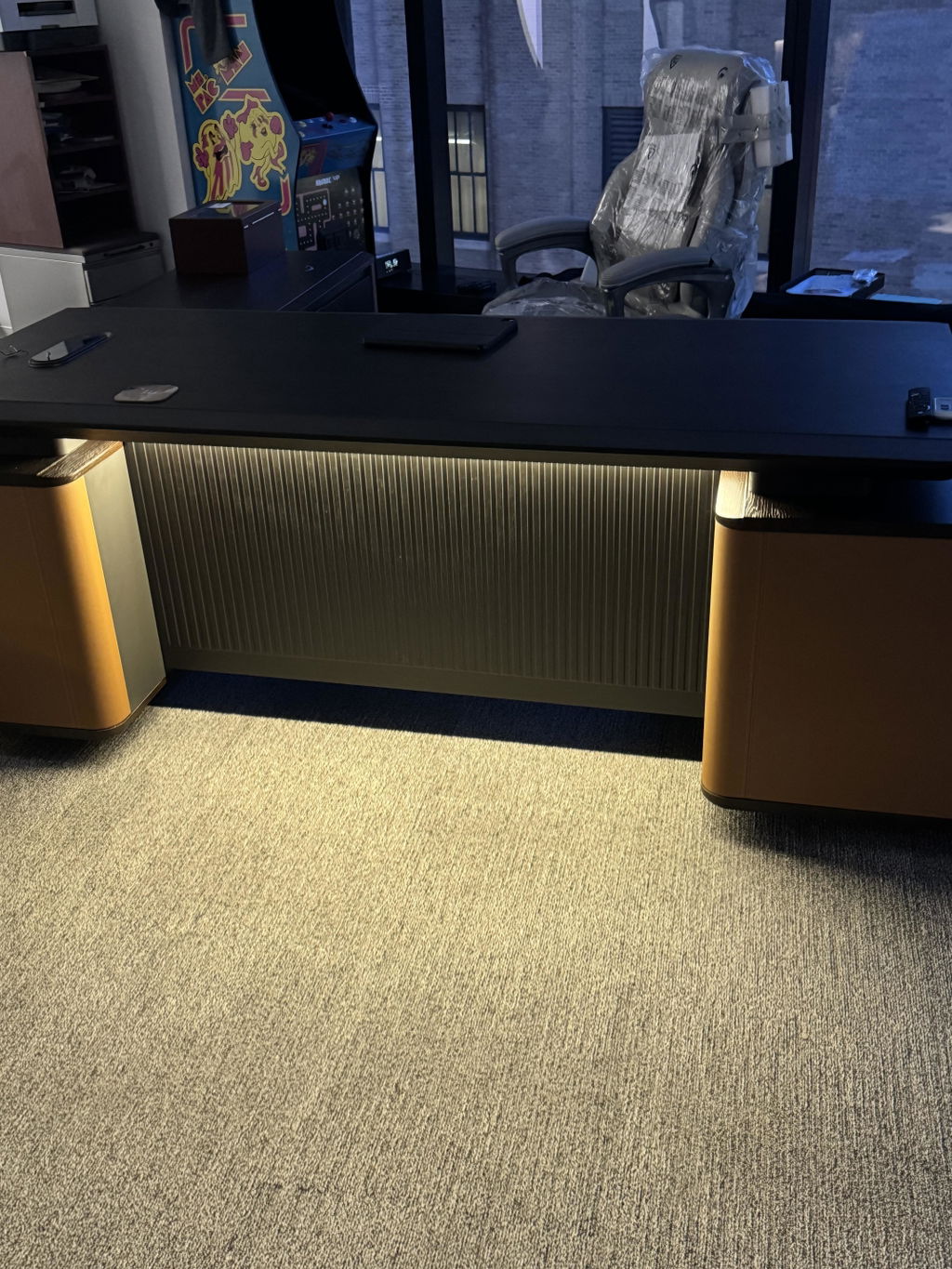
Lighting works best when the furniture is planned with it, a desk placed for daylight, a bookcase positioned to take an accent light, finishes chosen for how they hold warm light. Arc Grove® builds desks and storage to suit the room and its light, in finishes that read warm rather than flat. Plan your office, or see how lighting fits the whole room in our guide to designing an executive office.
Related articles
Executive Desks & Offices
At the executive level, the material makes the desk. What distinguishes wood veneer, solid wood, and stone, and how to...
Read more →
Executive Desks & Offices
With more than 150 finishes to choose from, the way to a coordinated office is a simple sequence: pick one...
Read more →
Executive Desks & Offices
A home executive office should be as considered as the one at headquarters. How to design a serious, presence-carrying space...
Read more →