Executive Desks & Offices
Veneer, Solid Wood & Stone: A Guide to Premium Desk Materials
At the executive level, the material makes the desk. What distinguishes wood veneer, solid wood, and stone, and how to...
Read more →
Matching Sets
Executive Desks & Offices
With more than 150 finishes to choose from, the way to a coordinated office is a simple sequence: pick one anchor finish, then build the palette around it.

A deep range of finishes, Arc Grove offers more than 150, is one of the real advantages of building to order: you can match a desk to your room exactly rather than settling for the nearest stock option. The flip side is that a lot of choice can overwhelm. The way through is a simple sequence: choose one anchor finish, then build everything else around it. Here's how to narrow the field to a palette that reads as designed.
The mistake is treating finishes as separate decisions, this desk, that cabinet, whatever chair looked good. A palette is a set of choices made together, keyed to one another, and that coordination is most of what makes a room look considered rather than assembled.

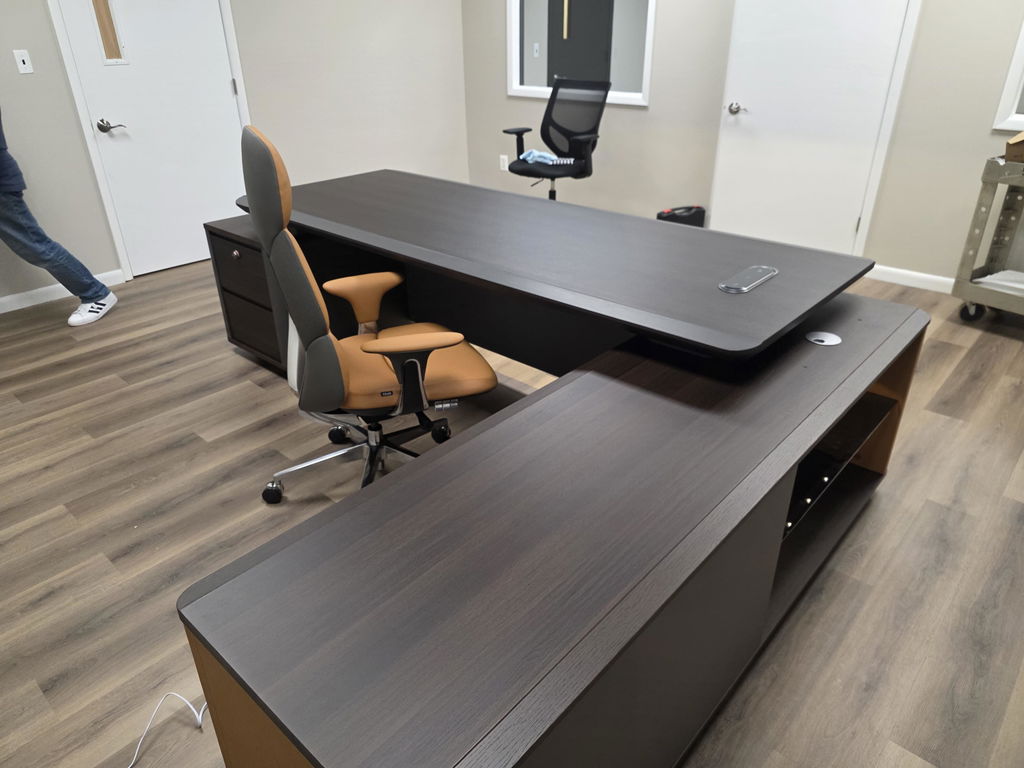
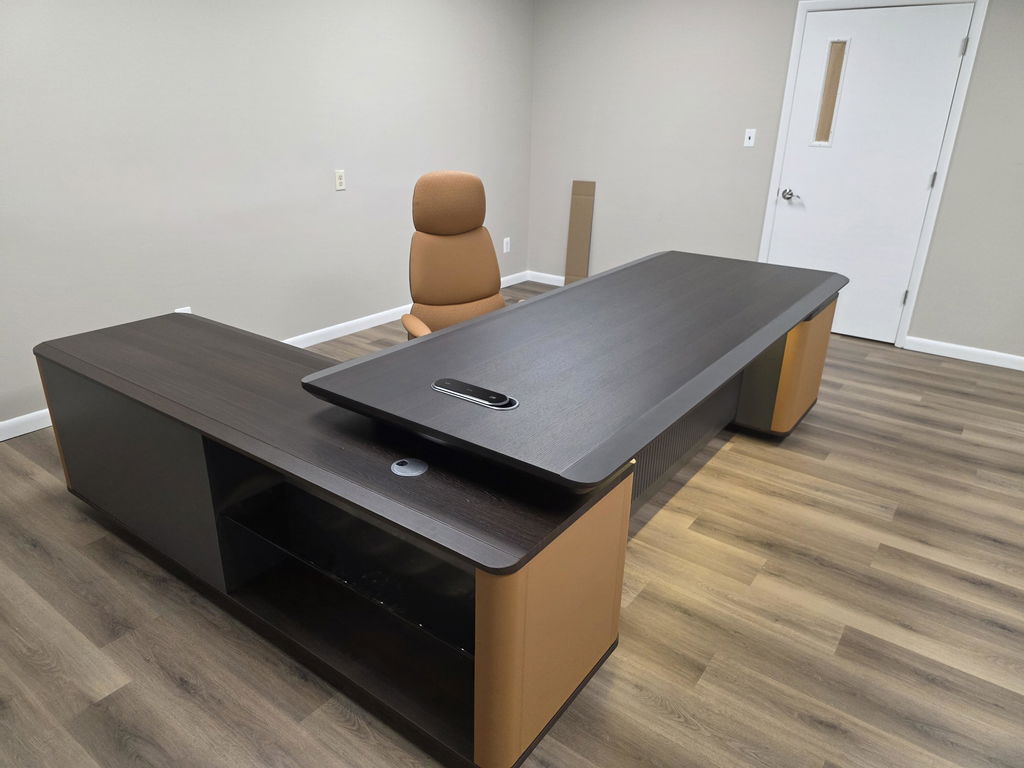
The desk is the largest finished surface in the room, so let its finish anchor everything else. Choose that one first, the wood tone, the depth, the sheen, and treat every subsequent choice as a response to it. Deciding the anchor before anything else turns 150 options into a manageable handful, because most of them simply won't sit right beside your chosen tone. One decision, made well, does most of the work.

Finishes fall into three broad directions, and naming yours narrows the field fast. Warm, oak, walnut, honey tones, reads inviting and classic. Cool, grays, pale woods, crisp neutrals, reads modern and calm. Dramatic, near-black, deep espresso, high-contrast, reads bold and authoritative. Decide which register suits the room and the message, and you can dismiss two-thirds of the options immediately. Our guide to choosing an office color palette goes deeper on the decision.
With the anchor set, choose the supporting finishes to agree with it rather than match it exactly. Storage and shelving usually work best in the same wood tone as the desk, for a coordinated suite; seating and accents can shift a shade or introduce a single complementary note. Aim for one wood tone and one metal across the room. Matching everything precisely looks flat; keeping it all in one temperature family looks intentional.
A finish is only ever as good as it looks in your room. The same wood can read warm and rich under south light and flat under cool north light, so judge samples in the actual office, at the times you'll use it, before you commit. This one step prevents the most common and most expensive finish regret.
A wide finish range is only useful if the pieces are built to share it. Arc Grove® builds executive desks, storage, and seating across more than 150 finishes, matched across the suite, so the palette you choose runs through every piece in the room. Explore the finishes, or see how they come together in our guide to designing an executive office.
Related articles
Executive Desks & Offices
At the executive level, the material makes the desk. What distinguishes wood veneer, solid wood, and stone, and how to...
Read more →
Executive Desks & Offices
A home executive office should be as considered as the one at headquarters. How to design a serious, presence-carrying space...
Read more →
Executive Desks & Offices
The furniture makes the room; styling finishes it. How to use a rug, art, objects, plants, and light to turn...
Read more →