Executive Desks & Offices
Luxury Home Office Design: Materials, Scale and Craft
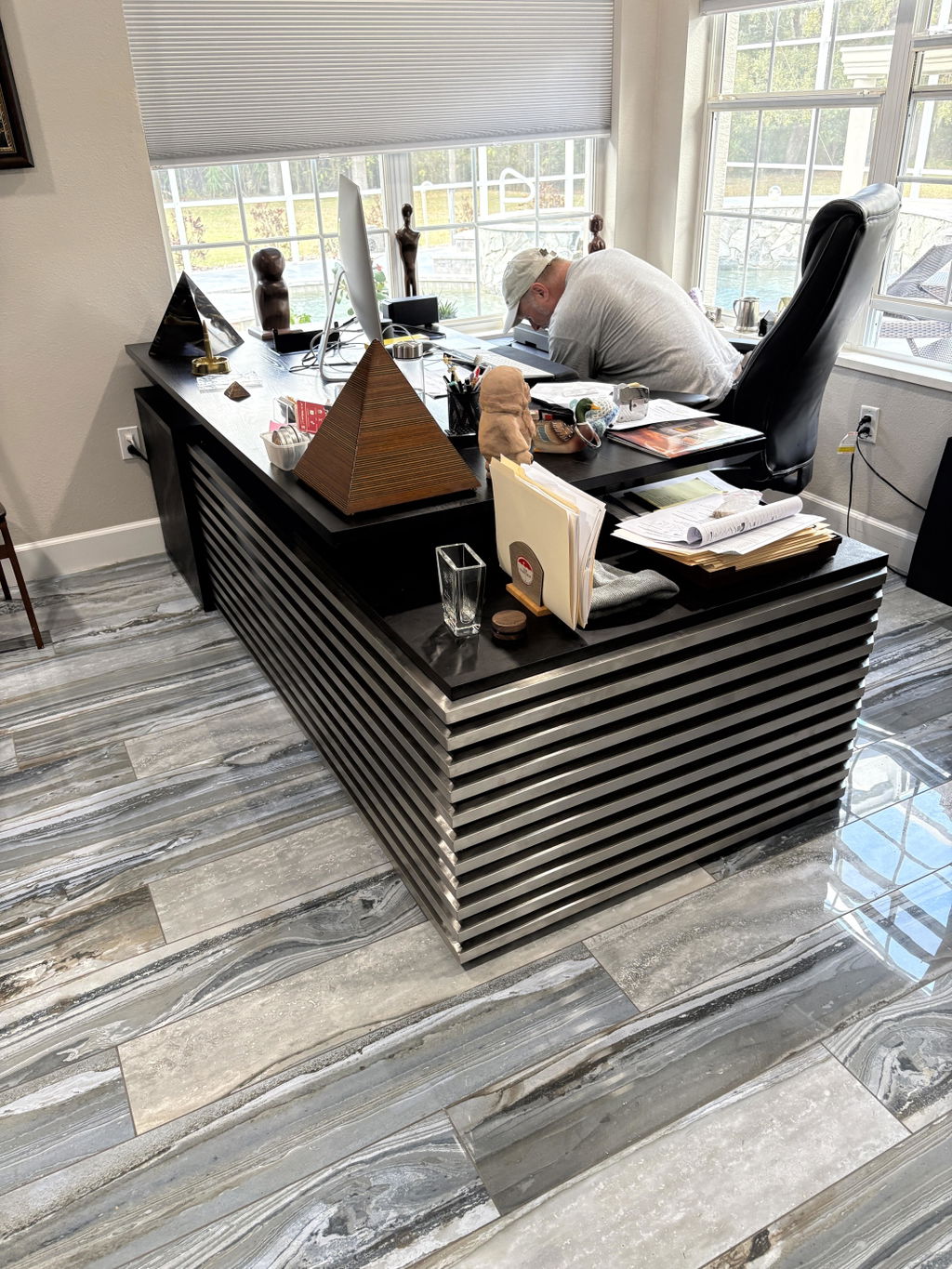
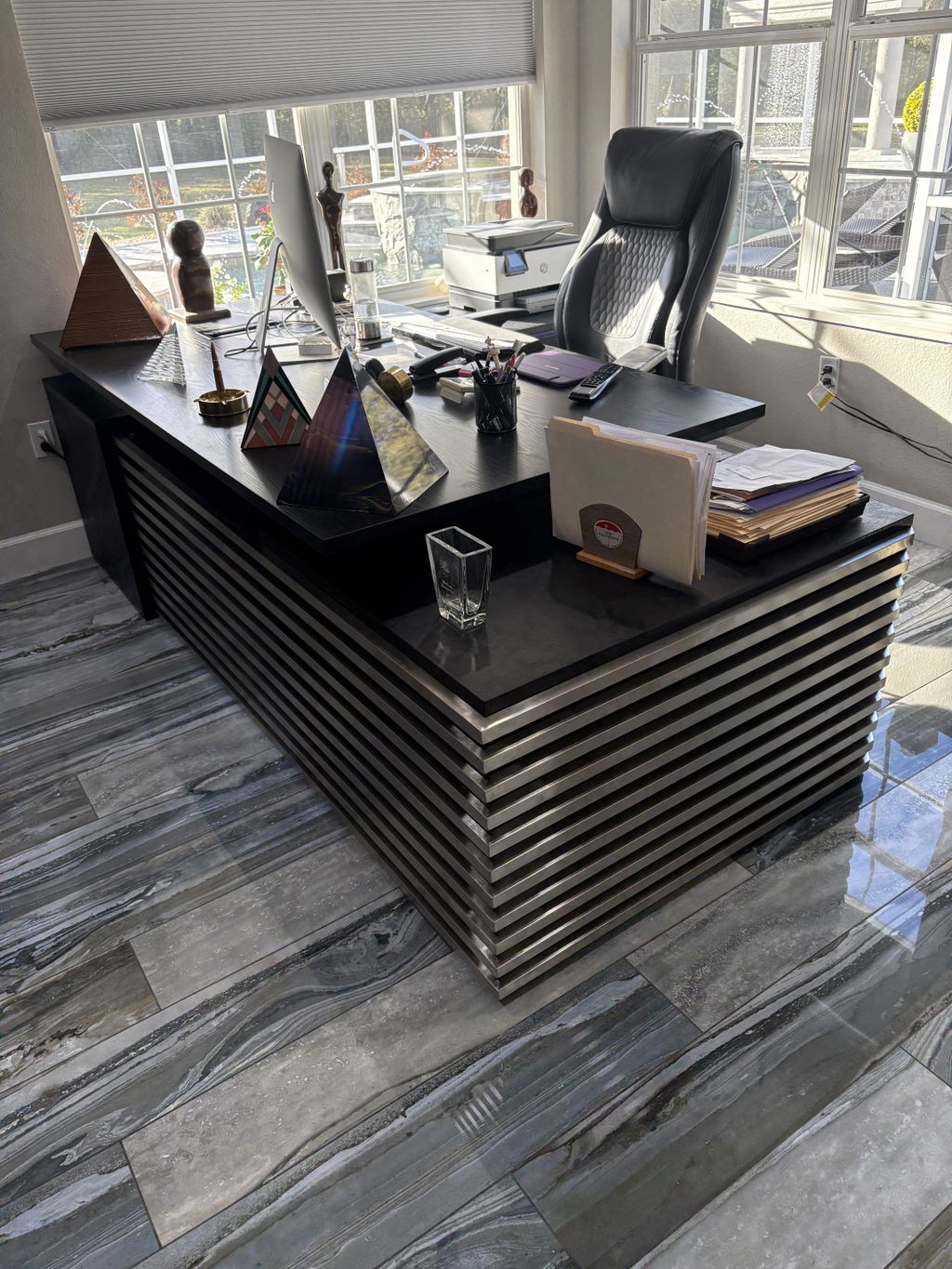
Material, scale and craft separate a luxury home office from a well-furnished one. How to choose the desk surface, size...
Read more →
Executive Desks & Offices
Leather ages into a patina, feels substantial, and reads as considered. Where to use it in an executive office, and which grade lasts the part.

Few materials say established quite like leather. It feels substantial under the hand, it ages into a patina rather than out of fashion, and it reads instantly as considered. In an executive office it's a status material, used well on a chair, a lounge grouping, or a writing surface. The trick is knowing where to use it, and which grade, so it looks and lasts the part. Here's how to choose.
Leather earns its status the honest way: it wears in, not out. Where most materials look their best on day one and decline, good leather looks better in year five, softening and darkening into a surface no finish can fake. That's the quality an executive space is reaching for, so it's worth understanding what you're actually buying.

It's a mix of the tactile and the symbolic. Leather is warm and substantial to touch, which registers as quality before you've thought about it, and it carries decades of association with craft, permanence, and the corner office. A leather chair or a leather lounge grouping tells a visitor the space was done properly, without saying a word. Like any strong material, it works best as an accent rather than everywhere: one or two leather pieces against calmer surfaces read as luxurious, a whole room of it reads as a hotel bar.
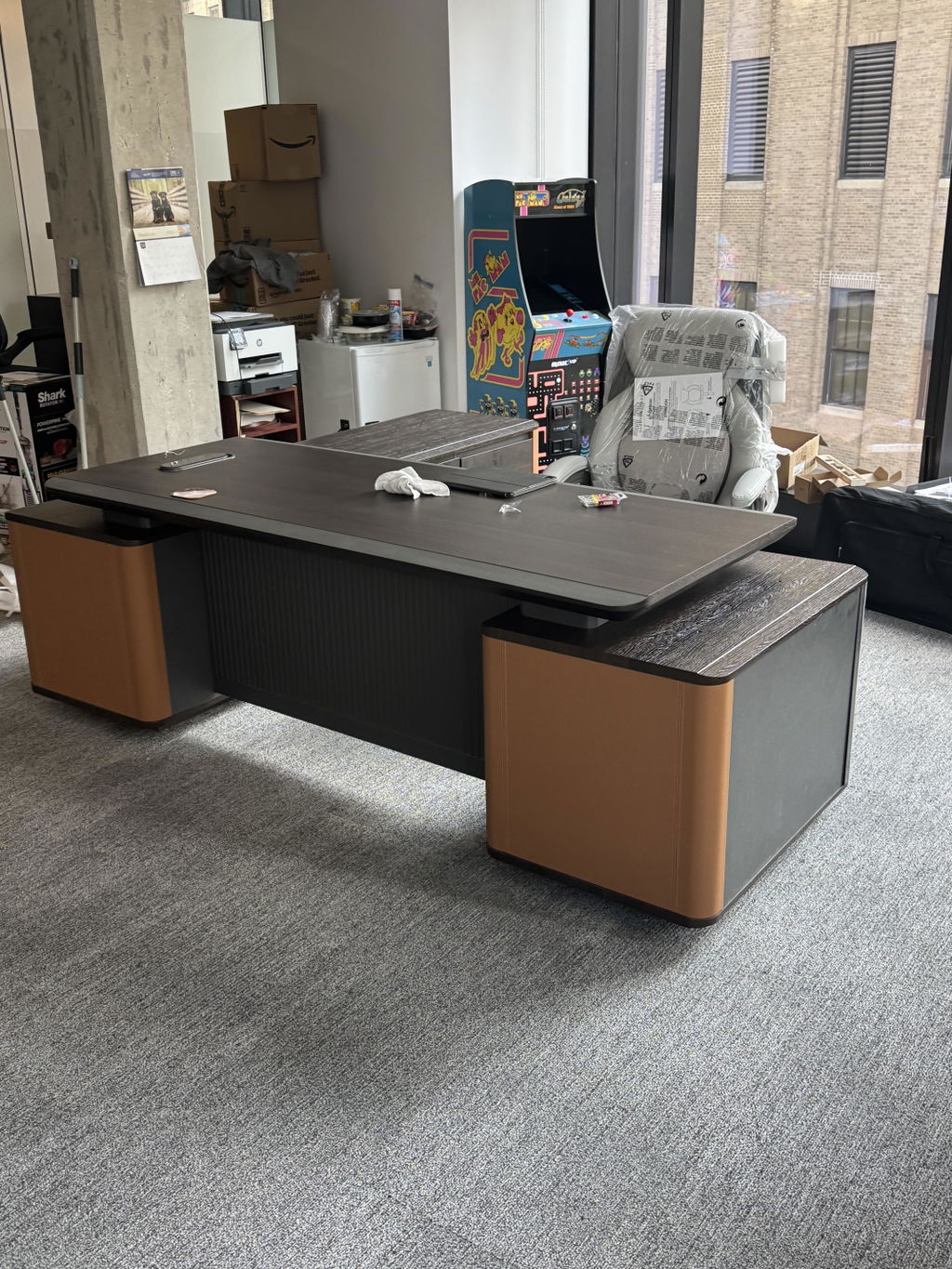
Three places earn it. The executive chair, where you feel it all day and a guest sees it across the desk. The private seating area, where a leather lounge or a pair of leather chairs makes the conversation zone feel like a destination. And, occasionally, a leather inlay on the desk's writing surface, a quiet, traditional detail. Keep it off high-wear, high-spill zones like the main worktop and the reception counter, where a harder surface serves better.

Not all leather is equal, and the grade decides how it ages. Full-grain is the top of the tree: the natural hide surface intact, the most durable, and the one that develops the best patina. Top-grain is lightly sanded and finished, a touch more uniform and still excellent for an executive piece. Below those, corrected-grain and so-called genuine leather are more processed and less characterful, and bonded leather, made from leather scraps, is best avoided where longevity matters. There's also a strong practical option: quality engineered leathers, PU and microfiber, resist scuffs, spills, and fading far better than natural hide and are easy to keep clean, which is why they suit high-traffic office lounge and waiting areas. The honest rule is to spend on full or top-grain where the piece is felt and seen closely, and use a good engineered leather where durability and easy care matter more.
Real leather rewards a little care and asks for little. Keep it out of direct sun and away from radiators, which dry and crack it, wipe spills promptly, and condition natural leather occasionally to keep it supple. Do that and a good hide lasts for many years and looks better for the wear. Engineered leathers ask even less, a wipe is usually all they need, which is part of their appeal for a busy office.
Used with restraint, leather is one of the quickest ways to lift an executive office from furnished to considered. Arc Grove® offers lounge and executive seating in leather and quality engineered-leather finishes to suit the room and the wear. Browse lounge seating, or see how it fits the whole room in our guide to designing an executive office.
Related articles
Executive Desks & Offices
Material, scale and craft separate a luxury home office from a well-furnished one. How to choose the desk surface, size...
Read more →
Executive Desks & Offices
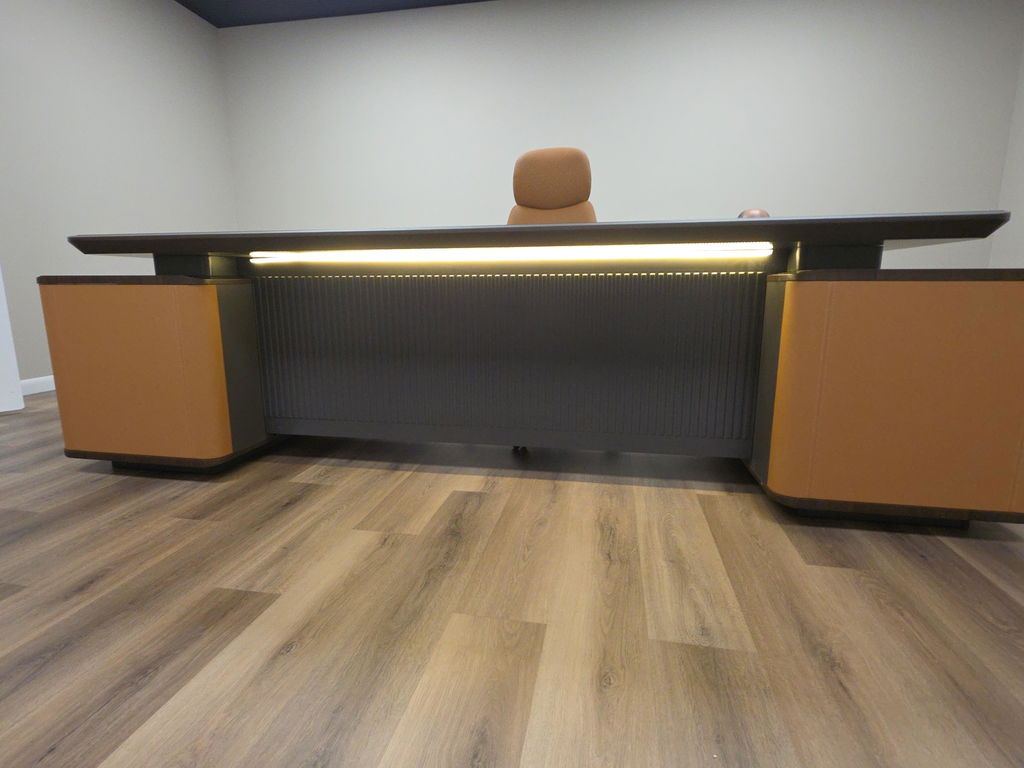
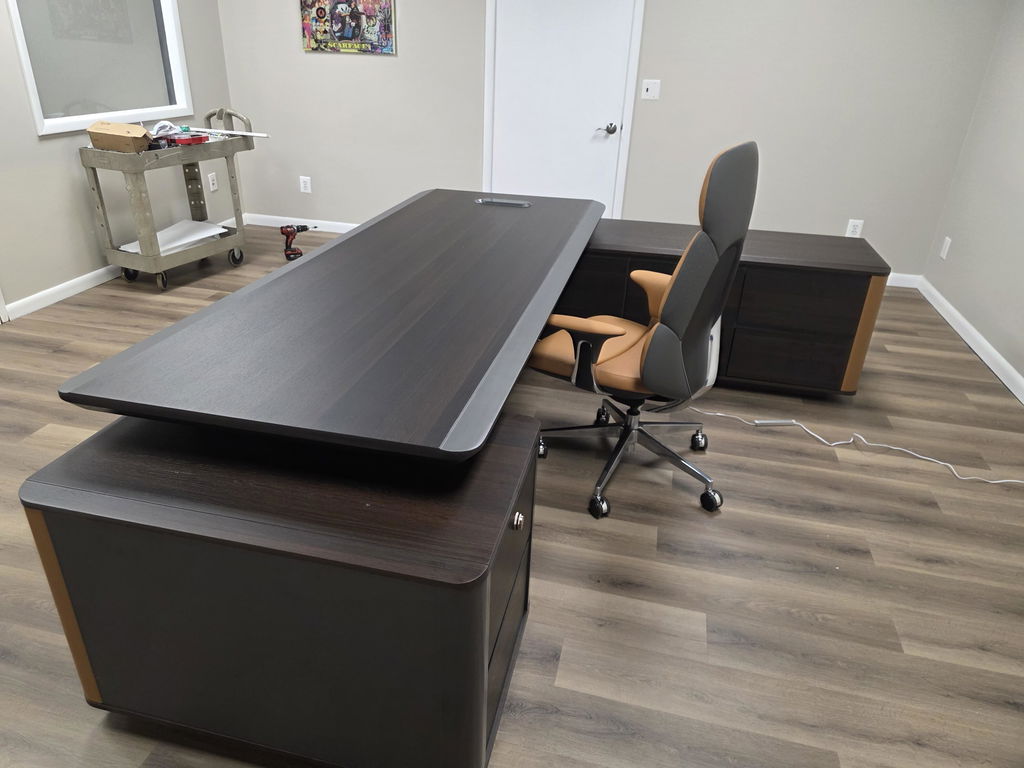
A desk and credenza that match read as one piece of architecture. What a matching office set includes, how to...
Read more →
Executive Desks & Offices
At the executive level, the material makes the desk. What distinguishes wood veneer, solid wood, and stone, and how to...
Read more →