Executive Desks & Offices
Veneer, Solid Wood & Stone: A Guide to Premium Desk Materials
At the executive level, the material makes the desk. What distinguishes wood veneer, solid wood, and stone, and how to...
Read more →
Matching Sets
Executive Desks & Offices
Put your executive desk in the command position: facing the door, back to a wall, daylight from the side. Here's why it works and the two placements that quietly undercut a room.

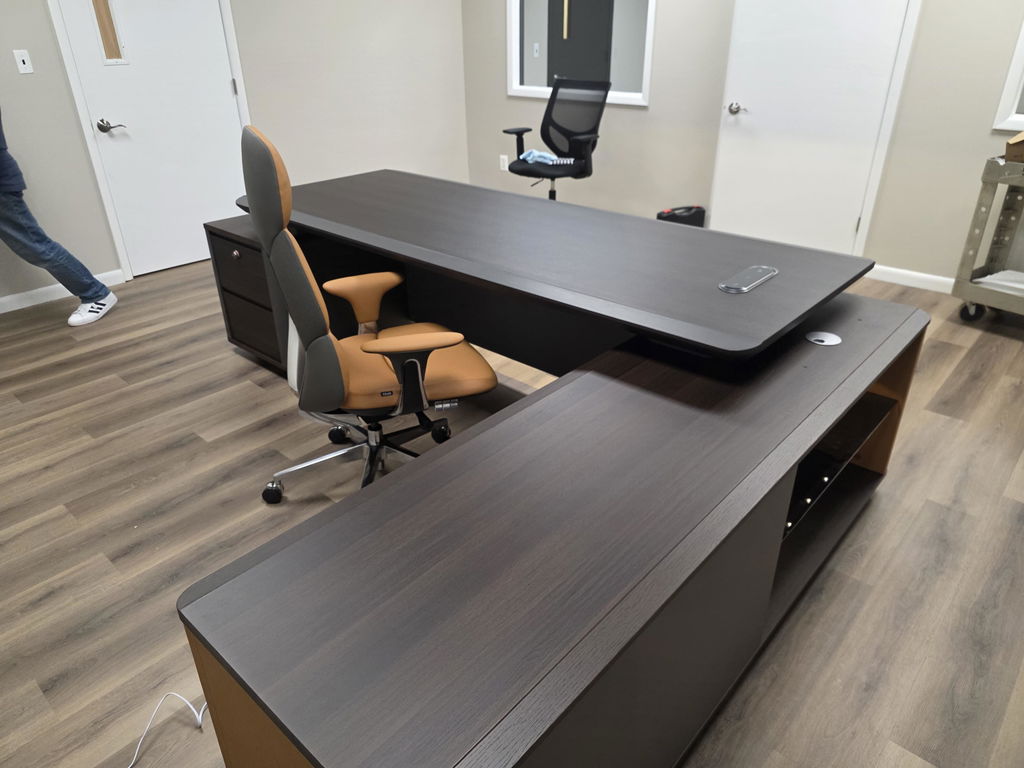
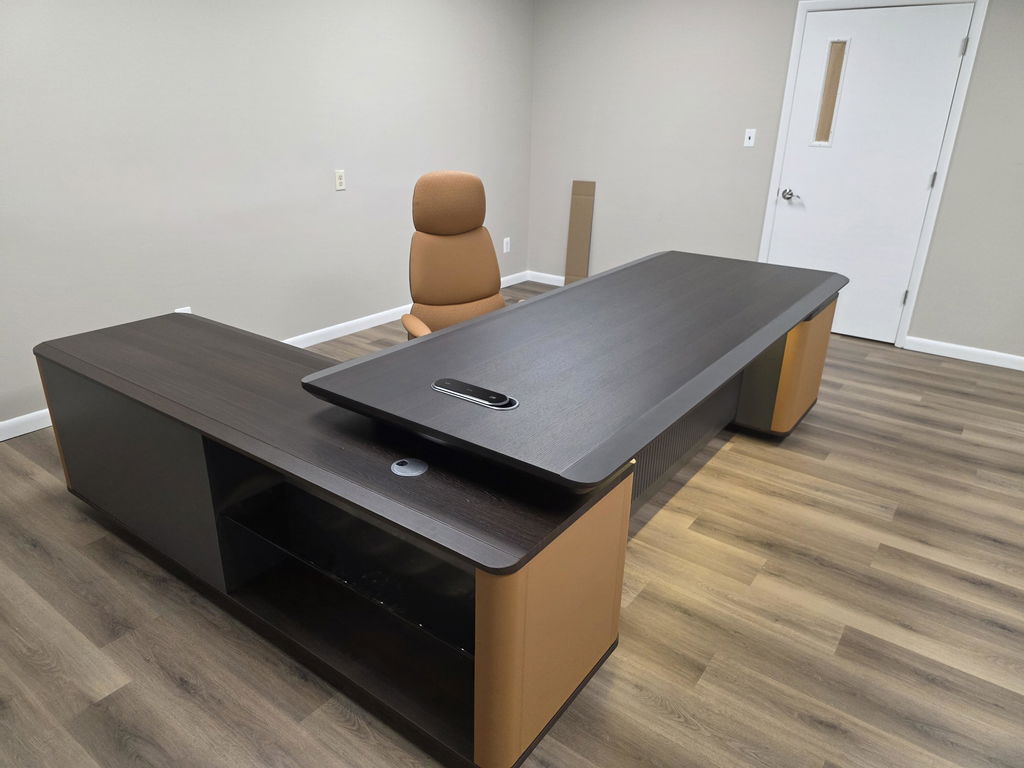
The best place for an executive desk is the command position: facing the door, with your back to a solid wall and daylight coming from the side. It reads as control, it keeps you from being startled mid-thought, and it looks composed on a video call. Here's why the position works, and the two placements that quietly undercut a room.
Placement is the cheapest upgrade in the office. The same desk can feel commanding or precarious depending on where it sits, and the difference costs nothing to get right. It comes down to what you can see and what's behind you.


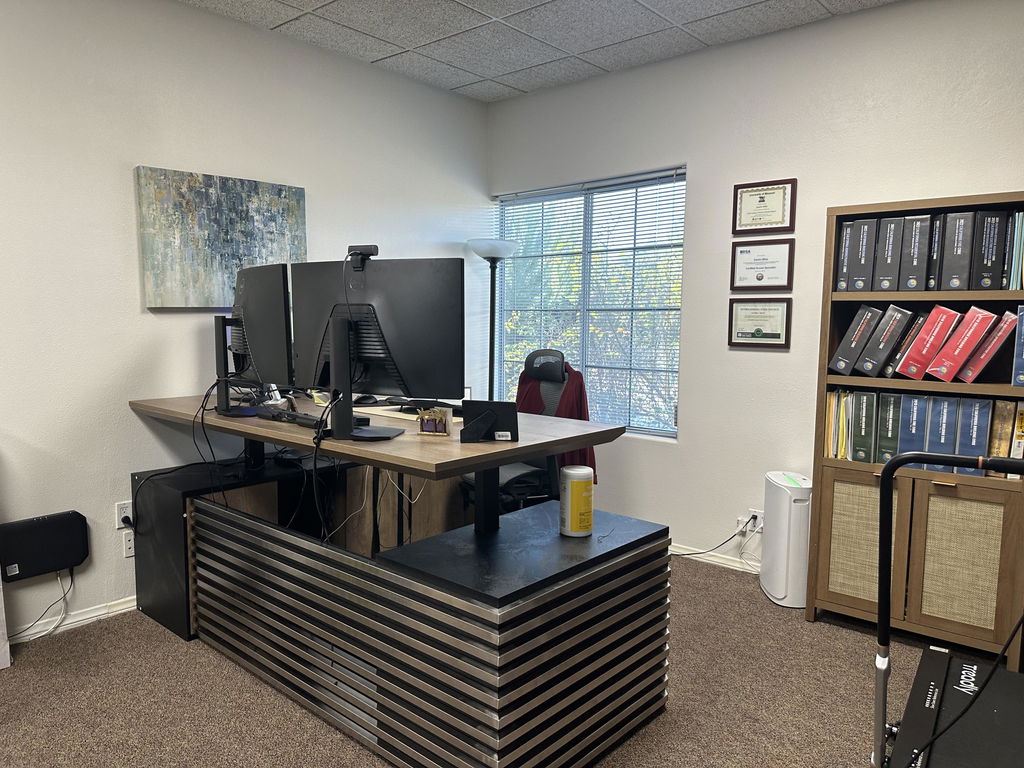
Face the door with a wall behind you and two things happen. You see who comes in, so no one arrives unannounced at your shoulder; and nothing sits behind you, so you can settle into work instead of half-guarding your back. Designers borrow a term for it, prospect and refuge: a clear view out, plus a protected spot to sit. It's the arrangement people instinctively choose, and it isn't just a feeling.
Spaces that pair prospect, an open view, with refuge, a place where your back is protected, are consistently rated lower in stress and higher in comfort and concentration. It's why the desk facing the door, wall behind, simply feels better to work at.
Terrapin Bright Green — 14 Patterns of Biophilic Design
You don't need the desk dead-center or dead-ahead of the door. Angle it, set it off to one side, tuck it into a bay, as long as the seat looks toward the entry and backs onto something solid, a wall, a credenza, or a bookcase.
Back to the door is the big one. Sit facing a wall with the entry behind you and you spend the day slightly braced, glancing over your shoulder when someone knocks. It undercuts the calm authority the room is supposed to project. If the layout forces it, put a mirror or a low credenza where you can catch the doorway in your side vision.
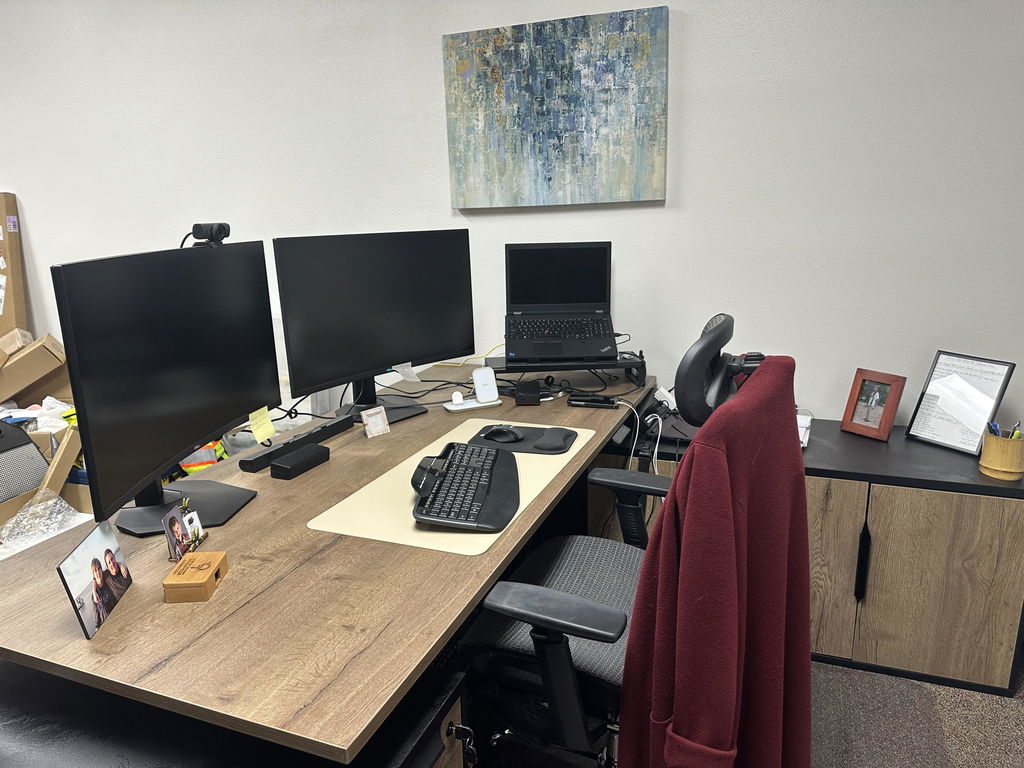
Facing a window is the other. Point the desk at the glass and the screen washes out with glare all afternoon; back it right up to the glass and you become a silhouette on every video call, a dark shape against a bright rectangle. Neither is the look you want.
Daylight belongs to the side of the desk, not in front of it or behind it. Set the long axis of the desk perpendicular to the window so light rakes across the surface instead of into your eyes or the camera. Then add a task lamp: a work surface wants roughly 30 to 50 footcandles, and overhead light alone rarely gets there without glare, a point worth its own layered approach.
Placement isn't only orientation, it's clearance. Leave 42 to 48 inches behind the chair so you can push back and stand without hitting the wall, 48 inches of clear floor in front so a visitor can walk up and sit, and about 36 inches for any walkway around the desk. Those numbers also keep the room comfortable to move through, not just to sit in. For how the desk fits with everything else, see our guide to designing an executive office.
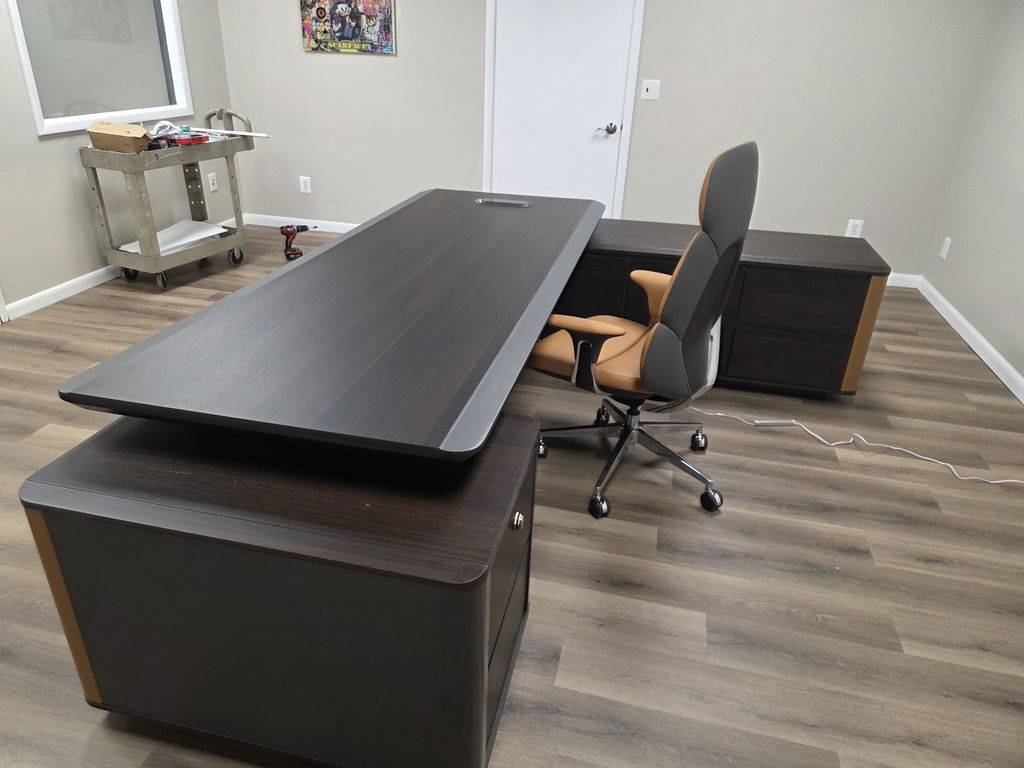
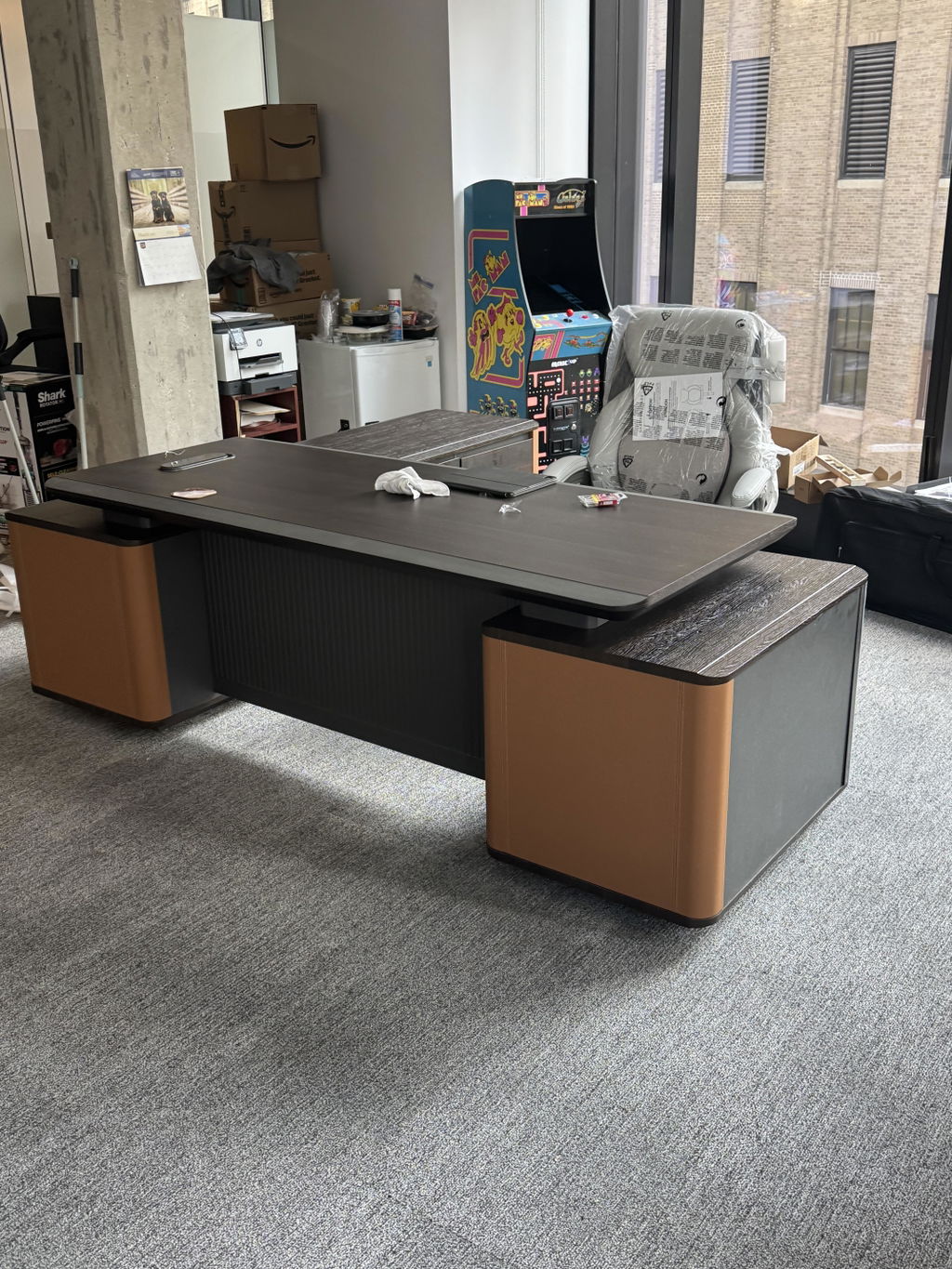
Not every office cooperates. A door in the wrong wall, windows on two sides, or a narrow footprint can make the textbook command position impossible with a stock desk. That's where a shape built to the room helps: Arc Grove® builds L- and U-desks to an exact size and hand, so the return lands on the side that keeps you facing the door. Build one to your layout, or start with the executive desk buyer’s guide.
Related articles
Executive Desks & Offices
At the executive level, the material makes the desk. What distinguishes wood veneer, solid wood, and stone, and how to...
Read more →
Executive Desks & Offices
With more than 150 finishes to choose from, the way to a coordinated office is a simple sequence: pick one...
Read more →
Executive Desks & Offices
A home executive office should be as considered as the one at headquarters. How to design a serious, presence-carrying space...
Read more →