Executive Desks & Offices
Veneer, Solid Wood & Stone: A Guide to Premium Desk Materials
At the executive level, the material makes the desk. What distinguishes wood veneer, solid wood, and stone, and how to...
Read more →
Matching Sets
Executive Desks & Offices
An executive desk buyer's guide: how to choose by fit, material, ergonomics, storage, and style — plus desk types, price ranges, and what to check on warranty and delivery.

Choosing an executive desk comes down to five things: fit (measure the room and leave 3 to 4 feet of clearance), material (solid wood, veneer, metal, or glass), ergonomics (the right height and legroom), storage (drawers, file cabinets, a hutch), and a style that matches your office. Match those to how you actually work and the desk will earn its place for years.
With so many options, it is easy to get stuck between styles, sizes, and features. Whether you are setting up a new office or upgrading an existing one, the right desk changes how you work and feel through the day. This guide walks through what to look for, from L-shaped designs to desks with built-in storage, so you can choose without wasting time or money.

An executive desk is distinctly larger than a standard office desk, with ample room for paperwork, devices, and supplies. It is typically built from higher-quality materials for a polished look, with multiple drawers and cabinets for documents and personal items: a combination meant to lift productivity and project a professional image.
An executive desk is larger than a standard office desk and built from more elegant materials, in styles suited to positions of authority. It also carries more storage, file drawers included, and reads as the more sophisticated piece.
An executive desk suits roles that need significant storage and workspace, like executives or managers; a standard desk suits employees who need fewer features in a smaller footprint.

Choosing the right desk means weighing your office size and layout, materials, ergonomics, storage, and a style that complements the room.
Measure the room so the desk fits comfortably, noting other furniture and traffic flow. A desk too large crowds the space; one too small looks out of place. Leave enough room to move around and open drawers.
Material affects both look and function. Solid wood reads classic, while metal and glass suit a modern office. Weigh durability and maintenance too, wood needs more care to avoid scratches; metal and glass clean easily, since this shapes how the desk ages.
Ergonomics matter for long workdays. Watch desk height and legroom, and if the workspace must accommodate every client, review the accessible desk-height and knee-clearance guidelines in the 2010 ADA Standards. Look for adjustable height and a keyboard tray so the desk fits you, not the other way around.
Keep wrists straight and hands at or slightly below elbow level, elbows bent between 90 and 120 degrees, with the work surface at a height that lets forearms rest parallel to the floor.
OSHA — Computer Workstations eTool, neutral posture
Balance storage against the desk’s overall design: drawers, cabinets, or shelves keep you organized, but too much bulk overwhelms the room and too little falls short. Aim for a design that integrates enough storage without disrupting the aesthetic.
The desk should align with your office decor and your professional image. Traditional desks feature intricate detail; modern styles go sleek and minimal. Choose one that complements the existing color scheme and furnishings for a cohesive look.
Four styles cover most executive offices. If you are deciding between the two dominant ones, compare modern and traditional executive office styles side by side.

Traditional executive desks are about timeless style and solid craftsmanship: usually hardwoods like mahogany, cherry, oak, or walnut, with rich finishes and decorative detail like raised panels, molding, and antique-style hardware. Heavy and durable, with spacious drawers and file cabinets (sometimes a locking drawer), they work well in private offices where a strong impression matters.
Modern executive desks focus on clean design and function: metal, glass, engineered wood, or high-gloss laminate, with smooth surfaces, minimal hardware, and tech-friendly touches like built-in cable management and charging ports. A strong choice for a clean, efficient workspace, and popular in creative fields, startups, and open-plan offices.
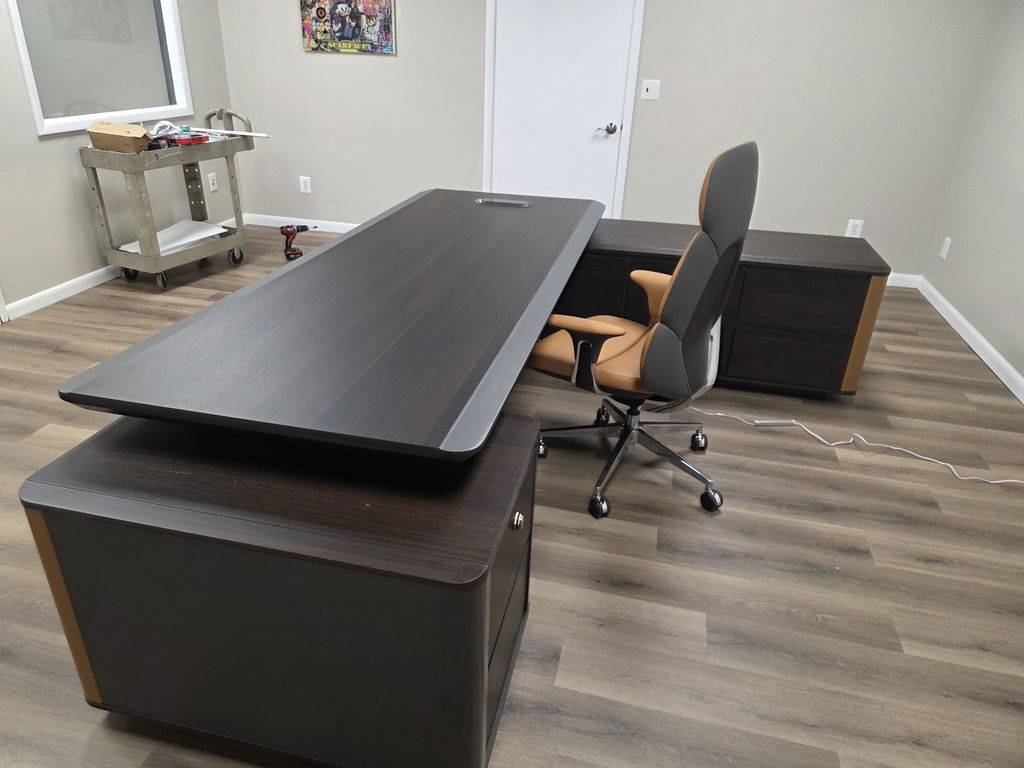
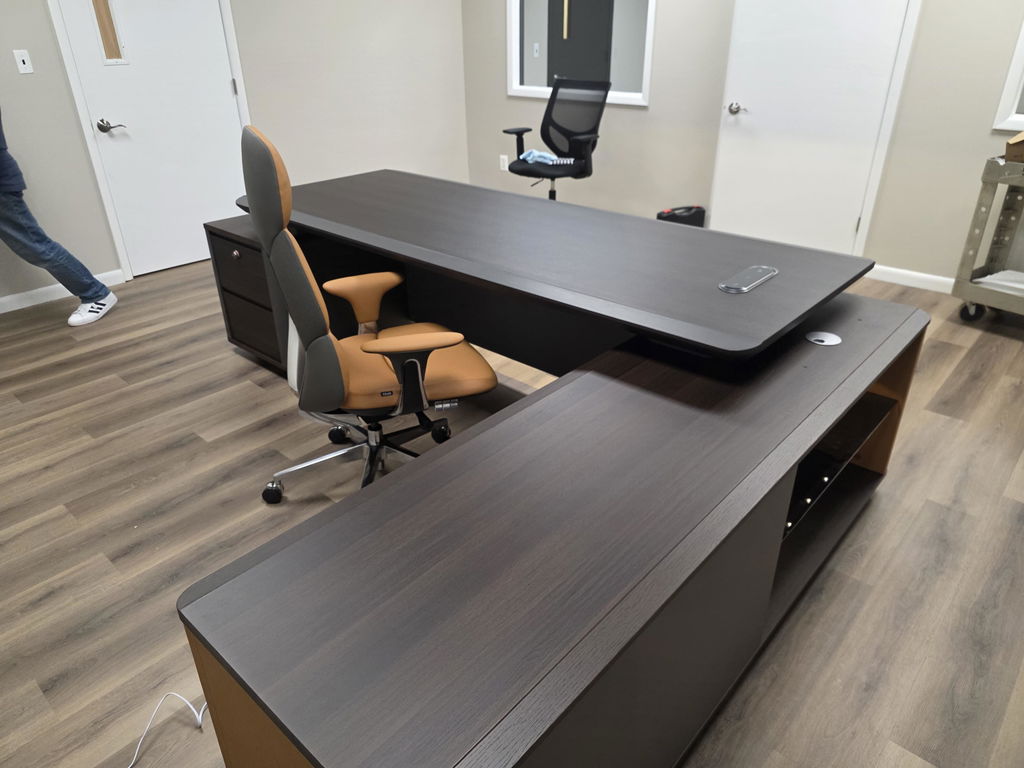
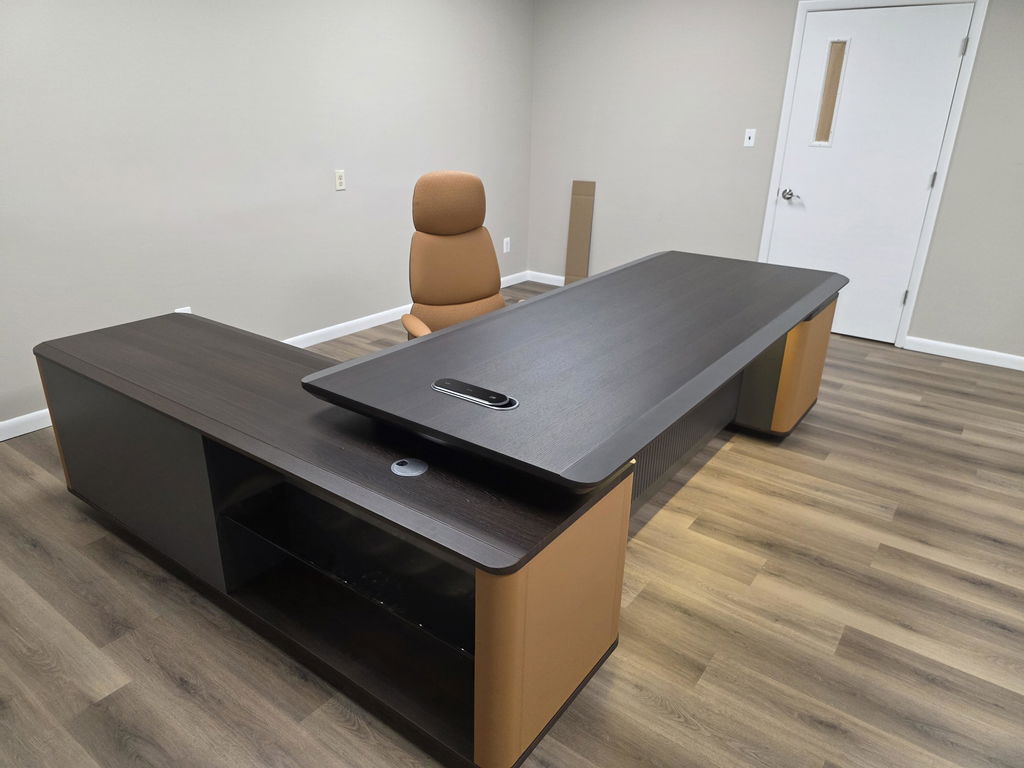
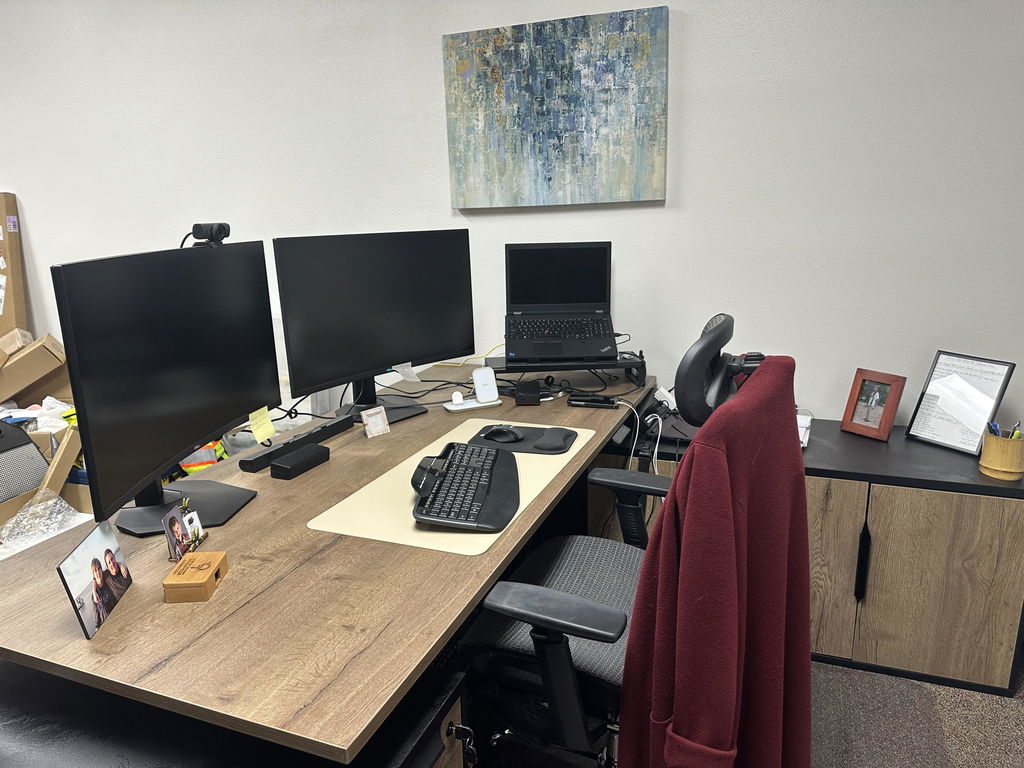
L-shaped and U-shaped desks give professionals room to spread out. L-shaped desks fit corners and offer two connected surfaces, separating computer work from writing or meetings. U-shaped desks wrap around three sides for maximum surface and storage. Both often include file drawers, shelves, and cabinets, making them ideal for executives managing multiple projects, clients, or monitors.
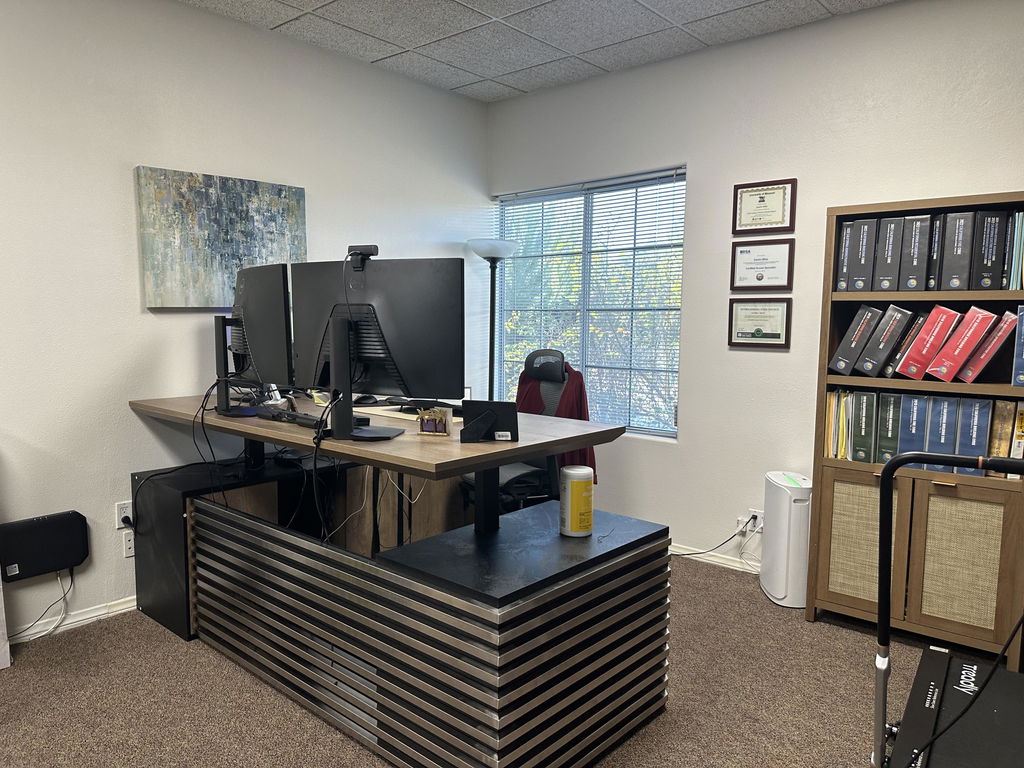
Standing executive desks bring ergonomic benefits to high-level workspaces, letting you switch between sitting and standing to reduce fatigue and ease back and neck strain. Many feature electric height adjustment with memory presets, plus cable management, storage, and durable tops that withstand daily use: a strong fit for professionals who want to prioritize movement without sacrificing style.

Executive desks vary widely in price. For specific picks at each tier, see the best executive desks by budget. Knowing what drives the cost (materials, construction, and craftsmanship) helps you balance quality and budget.
Executive desk price ranges
| Tier | Price | Typical construction |
|---|---|---|
| Entry-level | $200–500 | MDF or laminate, simpler designs |
| Mid-range | $500–2,000 | Veneer over engineered wood, more storage and features |
| Premium | $2,000+ | Solid hardwood, detailed craftsmanship, custom options |
To find value, favor durable construction over decorative extras, compare options on materials, construction, and warranty, and prioritize the features you will actually use. A quality executive desk is an investment in your workspace’s atmosphere and productivity, worth spending up for when the materials and craftsmanship justify it.
A great desk supports productivity and workflow. The features worth checking:
Look for multiple drawers, including deep file drawers for documents and shallow ones for supplies. Built-in hutches add overhead storage without using floor space, L- and U-shaped desks build in the most, and a lockable drawer or cabinet matters if you handle sensitive documents or expensive gear.
Messy cords ruin a clean setup and create hazards. Look for grommet holes, cord trays, or back panels that route cables out of sight, and confirm the system flexes smoothly on a standing desk as the height changes. Desk-mounted clips and sleeves help bundle the rest.
Match the shape to your habits and space: L-shaped for multitasking across two surfaces, U-shaped for maximum surface and storage, and corner desks to save space in smaller rooms. Measure carefully and leave room for your chair, movement, and any extra furniture.
Before you buy, get clear on warranty, returns, and delivery: the details that protect the investment.
Check the warranty period and what it covers, the whole desk or specific parts, since a strong warranty signals the maker’s confidence. Review the return policy too, including any trial period, restocking fees, or return shipping costs, so nothing surprises you after purchase.
Confirm how the desk ships and what it costs, and whether assembly is included. Lead times and cost drivers for a made-to-size desk are in custom office furniture: process, timeline and cost. Professional assembly is worth considering for a heavy or complex desk, it saves time and ensures the piece is set up correctly for function and longevity.
The right executive desk fits your space, your work, and your image, and it lasts. Decide what you actually need, then choose the material, shape, and storage to match. Explore the executive desks collection, any of which can be built to your exact dimensions and finish.
Related articles
Executive Desks & Offices
At the executive level, the material makes the desk. What distinguishes wood veneer, solid wood, and stone, and how to...
Read more →
Executive Desks & Offices
With more than 150 finishes to choose from, the way to a coordinated office is a simple sequence: pick one...
Read more →
Executive Desks & Offices
A home executive office should be as considered as the one at headquarters. How to design a serious, presence-carrying space...
Read more →