Executive Desks & Offices
Veneer, Solid Wood & Stone: A Guide to Premium Desk Materials
At the executive level, the material makes the desk. What distinguishes wood veneer, solid wood, and stone, and how to...
Read more →
Matching Sets
Executive Desks & Offices
37 types of desks for home and office — writing, executive, standing, L-shaped, reception, workstation, and more — grouped by use case, with how to choose the right one.

Desks fall into a few broad families: work-style desks (writing, computer, executive, standing), space-savers (floating, foldable, ladder, secretary), collaborative desks (bench, workstation, circular), and specialty desks (reception, carrel, lectern, vanity). The right one comes down to your space, your work, and how much storage you need.
The right desk can transform how you work: an executive desk for a professional look, an L-shaped desk for extra workspace, or a compact writing desk for a tight room. Each type is built for a purpose. Here are 37 of them, and how to pick the one that fits.
Desk types by use case
| Use case | Desk types to consider |
|---|---|
| Small spaces | Writing, secretary, floating, foldable, ladder, Murphy, kitchen |
| Executive and professional | Executive, pedestal, wood, credenza, bow-front |
| Collaborative and open-plan | Bench system, workstation, circular |
| Health and movement | Standing, adjustable, treadmill, wave |
| Specialty | Reception, carrel, lectern, vanity, lap, gaming, armoire, roll-top |
A writing desk is a flat surface built for focused work: ample room for a laptop, notebooks, and paperwork, often with a shallow drawer for supplies. Its sleek, simple design keeps a workspace uncluttered and suits small apartments, home offices, and students. The trade-off is limited storage, so it pairs well with shelves or a cabinet.

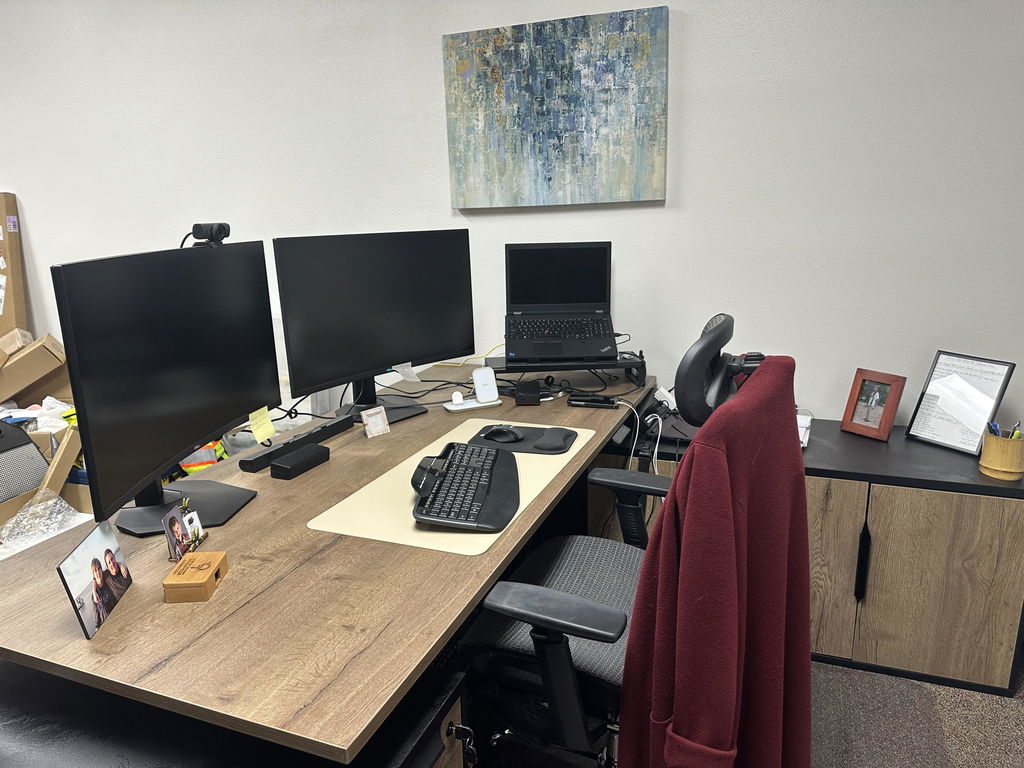
A computer desk provides a sturdy surface for a desktop or laptop setup plus room for accessories: often with a slide-out keyboard tray, cable management, and sometimes a raised monitor shelf. It fits offices, study rooms, or a bedroom corner. Check the keyboard-tray size and cable routing before you buy.

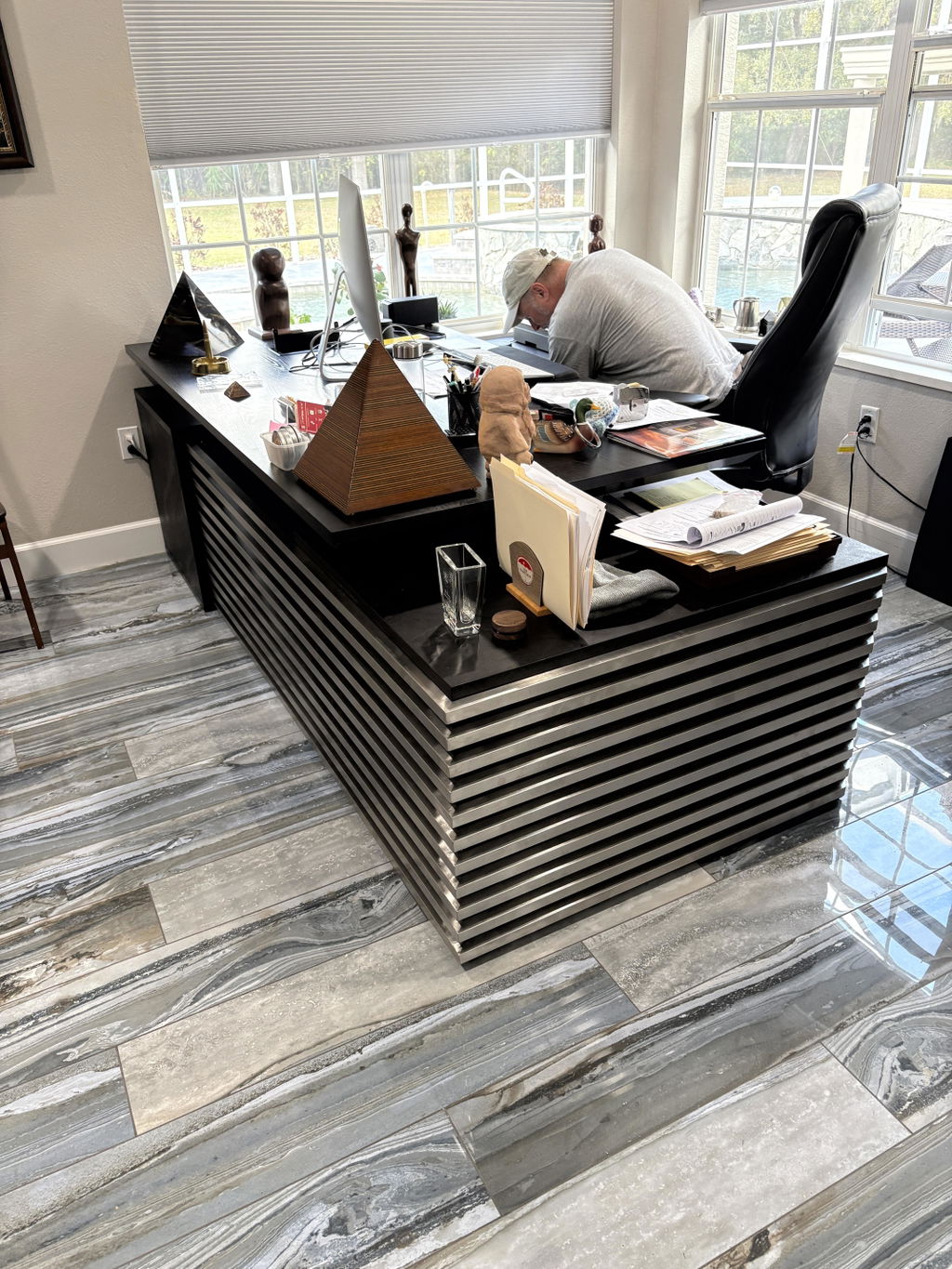
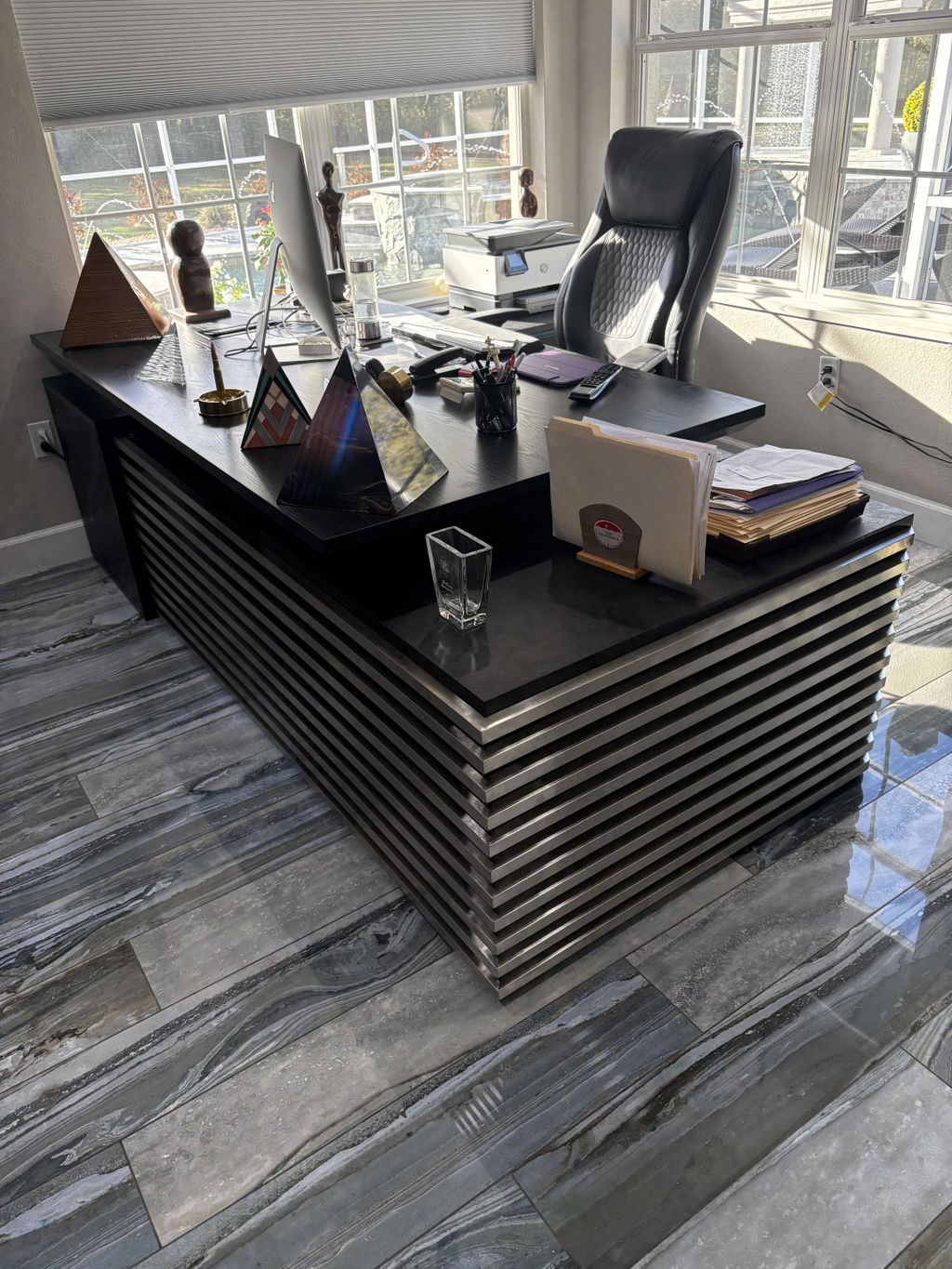
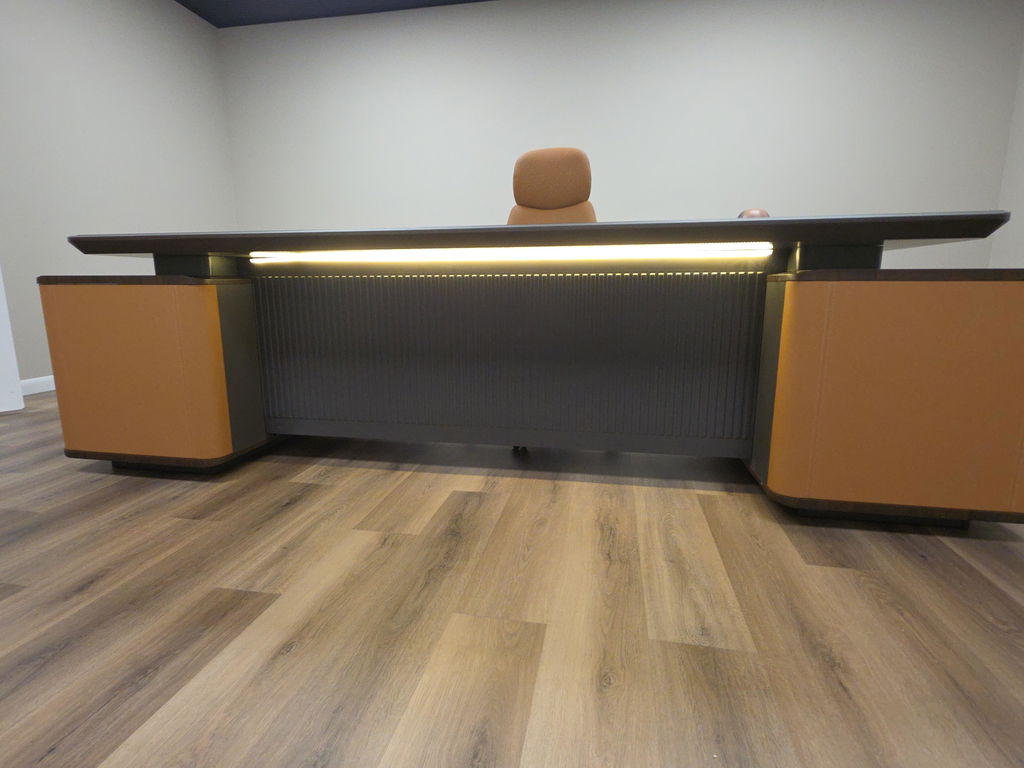
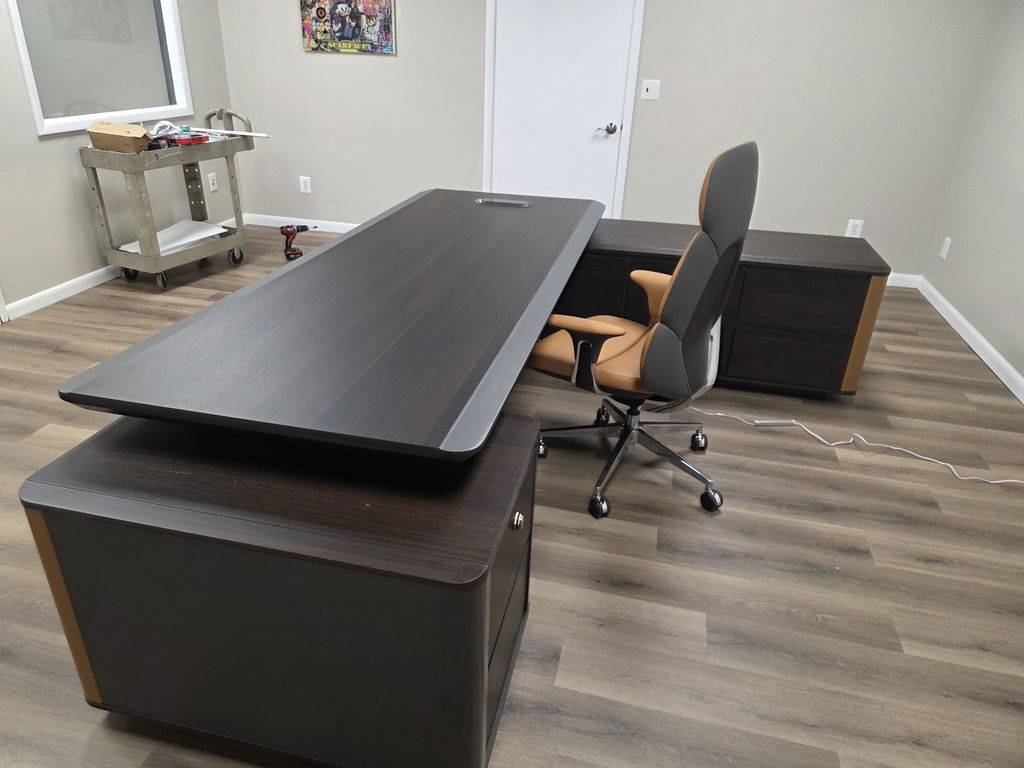
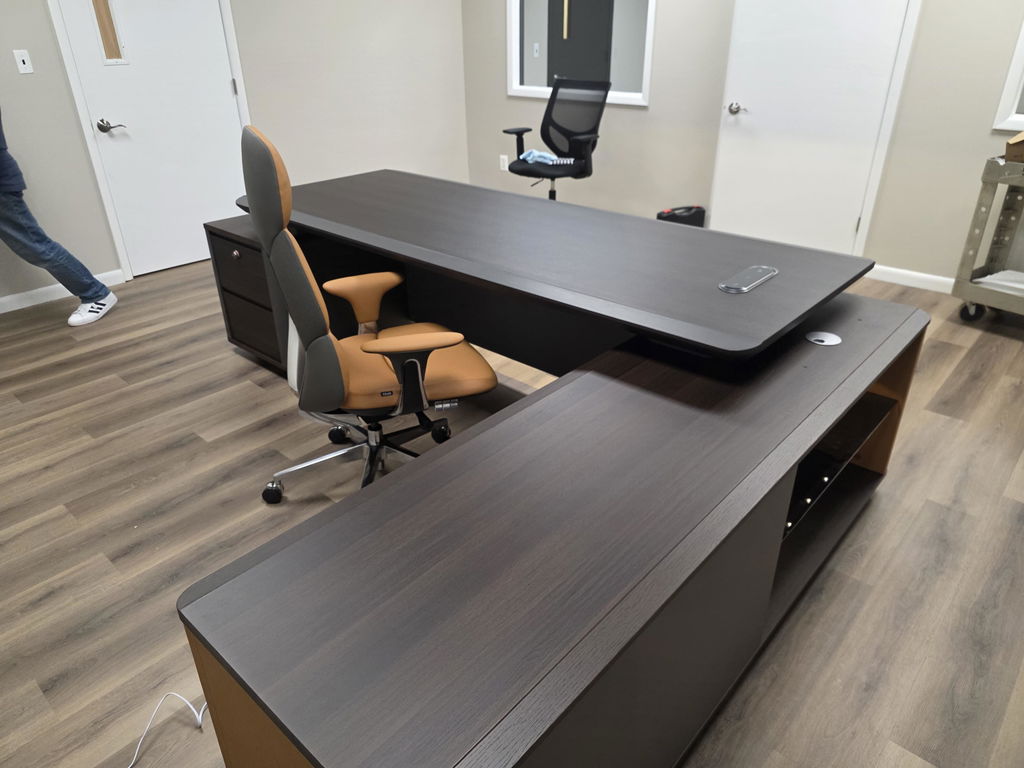
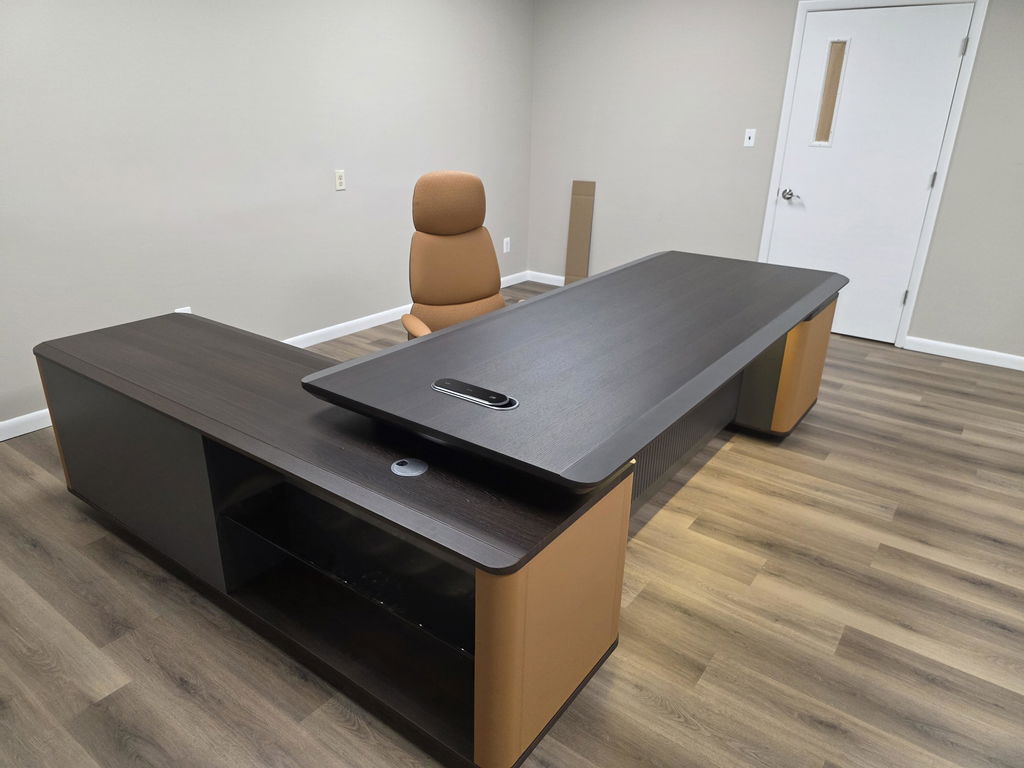
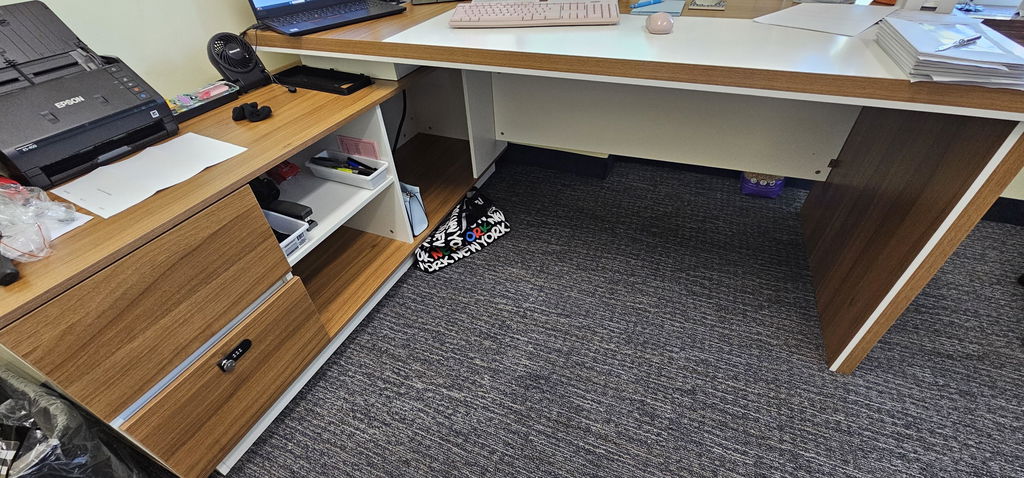
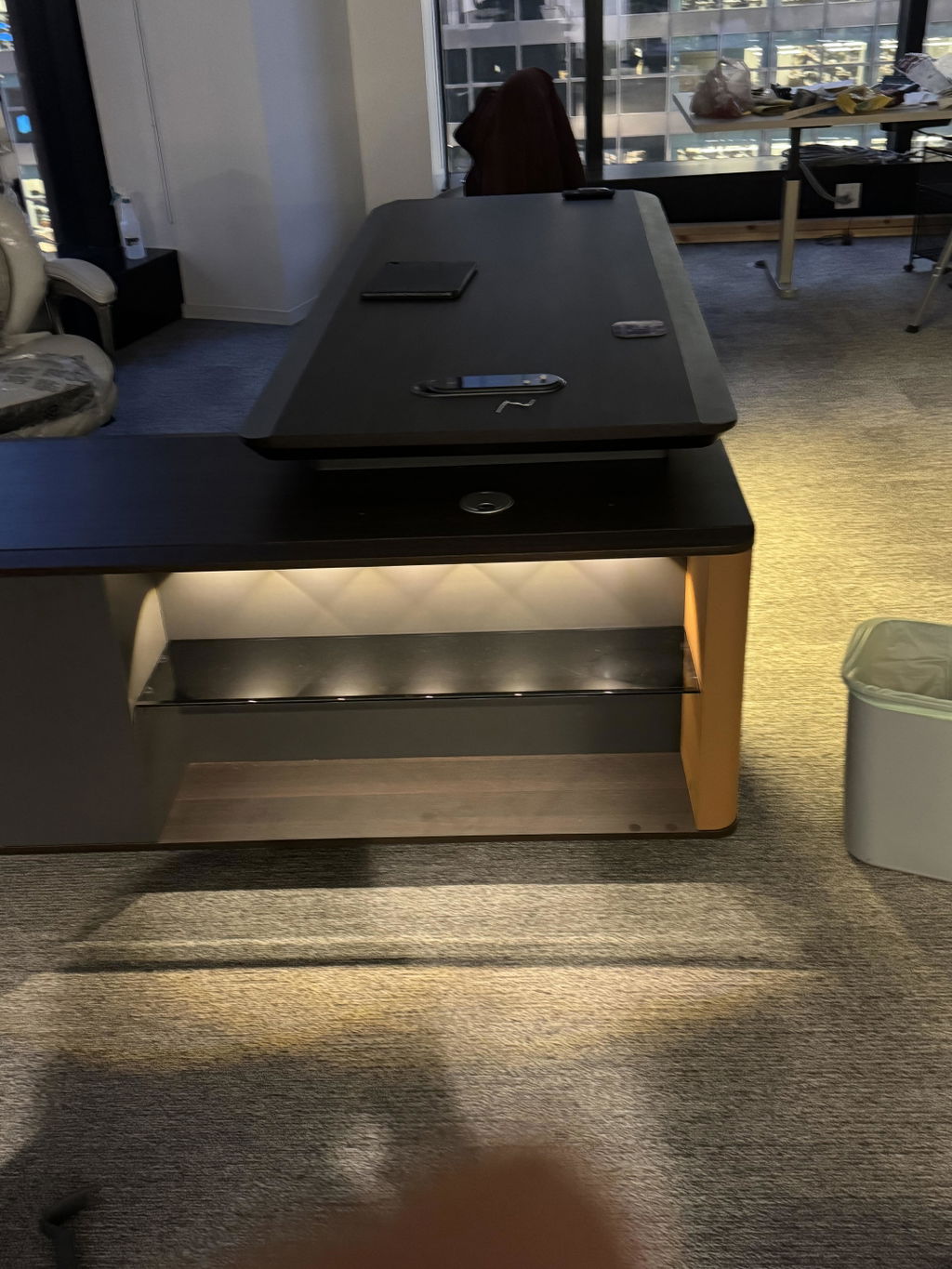
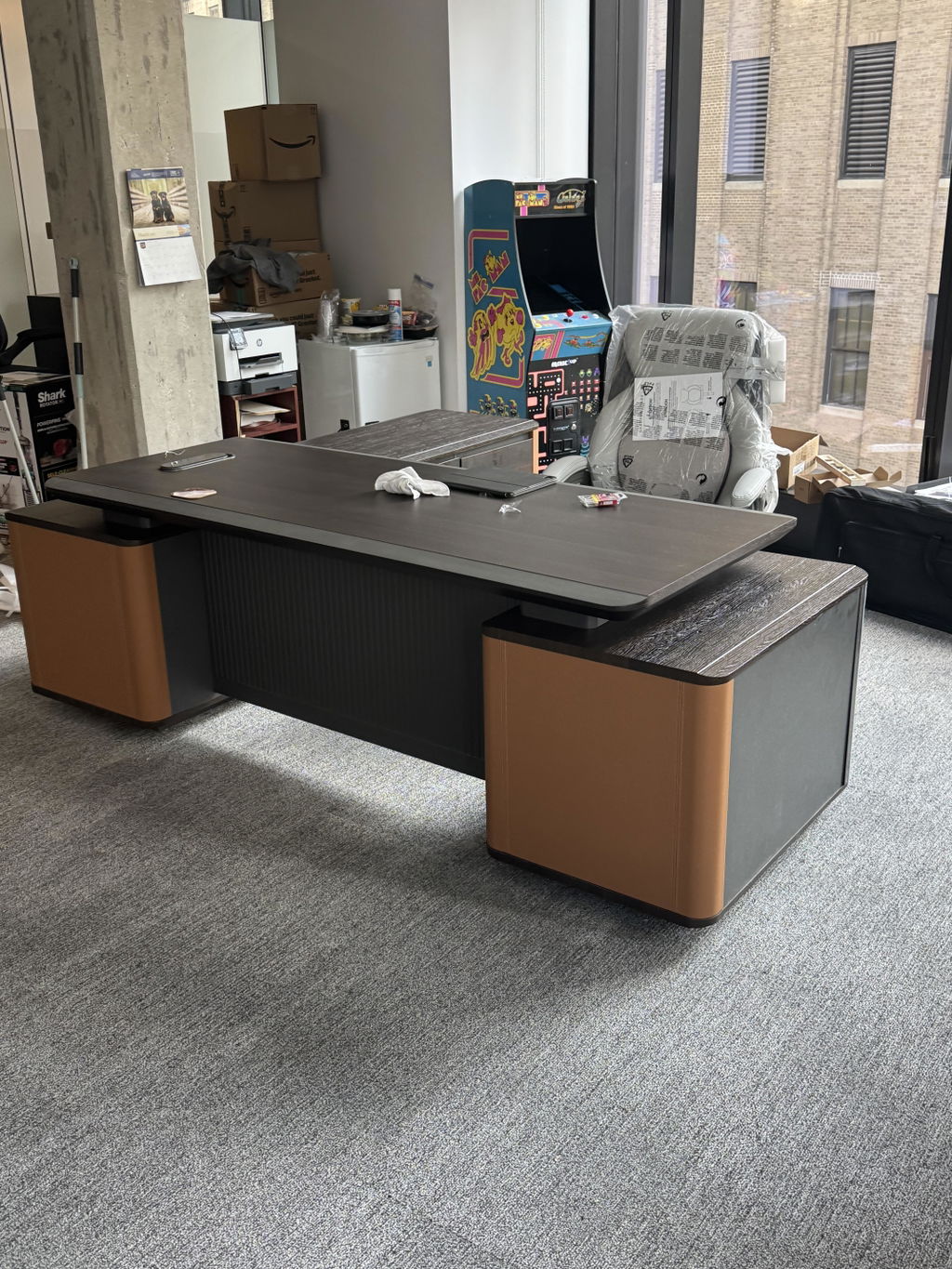
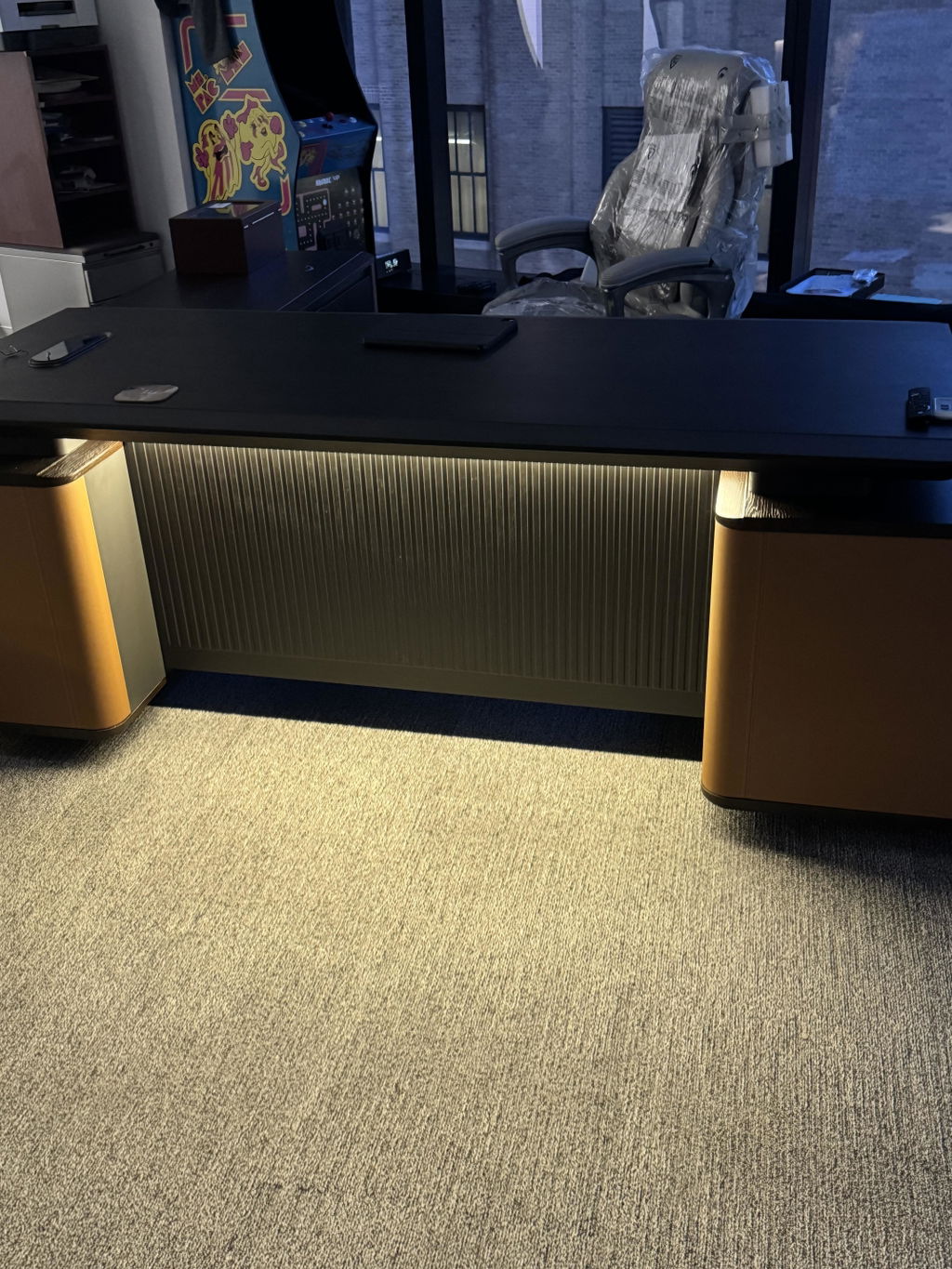
An executive desk pairs style with a large work surface and serious storage: multiple drawers, sometimes cabinet doors to hide clutter, in wood, metal, or glass finishes. It anchors a private office or executive suite and signals authority. Just confirm it fits the room and matches your decor.
A secretary desk is an elegant, compact piece with a fold-down writing surface, usually over a stack of drawers and often topped with a hutch for books and supplies. The interior cubbies suit letters and small items, making it ideal for tight spaces and a classic, vintage look.
A credenza desk is long and low, typically placed against a wall or behind a main desk as a secondary surface and storage piece. Built-in cabinets and shelves make it a stylish organizational solution for formal offices that need extra storage without a bulky footprint.

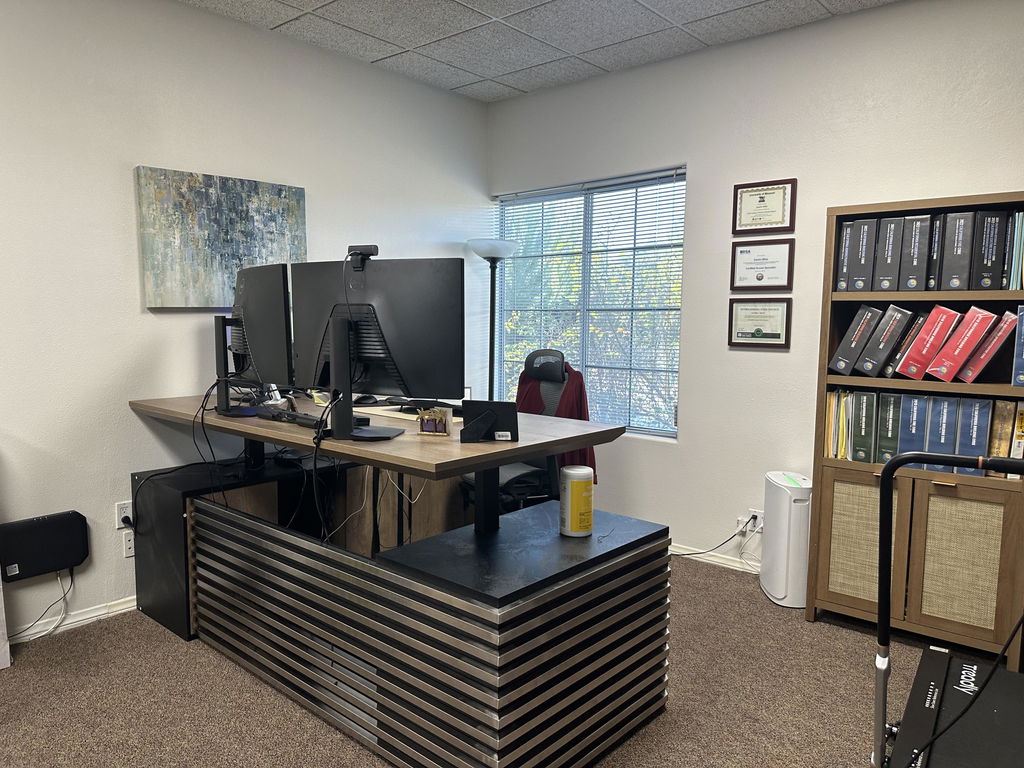
Corner desks make use of otherwise wasted corners, and the L-shaped desk is the most popular kind, two connected surfaces that separate computer work from writing or meetings. They suit small home offices, dual-monitor setups, and anyone who multitasks. Consider how much surface and storage you need before choosing a left- or right-return.
A U-shaped desk wraps around on three sides for the largest possible work surface: ideal for spreading out across a computer, paperwork, and reference materials at once. It needs more room, so it suits executives and technical roles with the floor space to match.

A standing desk lets you switch between sitting and standing through the day, which can ease back strain and lift energy. The best models adjust electrically with memory presets and keep cable management intact as the height changes.
Whether seated or standing, keep the top of the monitor at or slightly below eye level, elbows bent between 90 and 120 degrees, and wrists straight with forearms parallel to the floor.
OSHA — Computer Workstations eTool, neutral posture
A classic pedestal desk rests on one or two drawered supports (small drawers for stationery, a larger one for files) in wood or metal. It is a sturdy, well-organized choice for home offices and corporate spaces alike.
A treadmill desk combines a walking treadmill with a work surface so you can stay active while working. Most are height-adjustable with adjustable walking speeds and enough room for a laptop and essentials.

A carrel desk uses panels on the back and sides to create a private, focused workspace: the kind found in libraries and schools. Available sit-down or stand-up, it reduces distraction and suits any setting that needs quiet, individual study areas.
A lap desk is a lightweight, portable surface for working from a sofa, bed, or on the go: often with a cushioned base, a tilt feature, and slots for a tablet or phone. It suits remote workers, travelers, and minimalists who want a clutter-free setup.
Gaming desks make room for multiple monitors and accessories, frequently with adjustable height, cable management, and small comforts like cup holders. They keep an immersive setup organized and within reach.
A wood desk is both functional and timeless. Oak brings durability, walnut a rich dark finish, cherry a warm tone that ages well, and maple a light, smooth grain. Traditional versions feature carved detail; contemporary ones keep clean, minimal lines, either a long-lasting investment.
A metal desk is built for durability, with a sleek look that suits modern decor. Common styles include single pedestal (simple and functional), double pedestal (more storage and stability), and L-shaped for corners.

Minimalist desks focus on simplicity and clean lines, usually in neutral colors like white, black, or oak that blend into any room. The pared-back design keeps the focus on the work.
An adjustable desk switches between sitting and standing heights to support a healthier routine. Electric models add convenience at a higher price; manual ones cost less. Either way, the surface stays stable at any height, check that the footprint fits your room.
A floating desk mounts directly to the wall with no legs, freeing the floor beneath it: ideal for small rooms, bedrooms, and living areas. Many include shelves or a foldable surface. Mount it to a sturdy wall and follow the weight guidance.

A reception desk is often the first thing visitors see, so it has to be welcoming and functional: in wood, metal, or glass, with storage, counter space, and straight, L-, or U-shaped options. For busy lobbies, size it for two or more people, and look for ADA-compliant counter dimensions so it works for everyone. Standard heights, widths, and depths are in reception desk dimensions.
A bench system desk is an extra-long shared surface that seats several people together: built for collaborative, open-plan offices, with configurations and built-in cable management. It fosters communication but offers less personal storage and privacy, so add dividers where focus matters. A shared surface with no storage at all is a table rather than a desk, a distinction covered in table vs. desk.
A hutch desk adds an attached storage unit on top of the work surface (open shelving for display, closed cabinets to hide clutter) using vertical space to combine a desk and storage in one footprint. Measure for both height and width before you buy.
An armoire desk hides a full workspace behind cabinet doors, so you can close it away when you are done: shelves, drawers, and sometimes a fold-out surface inside. It suits small or multi-use rooms where the work needs to disappear at the end of the day.
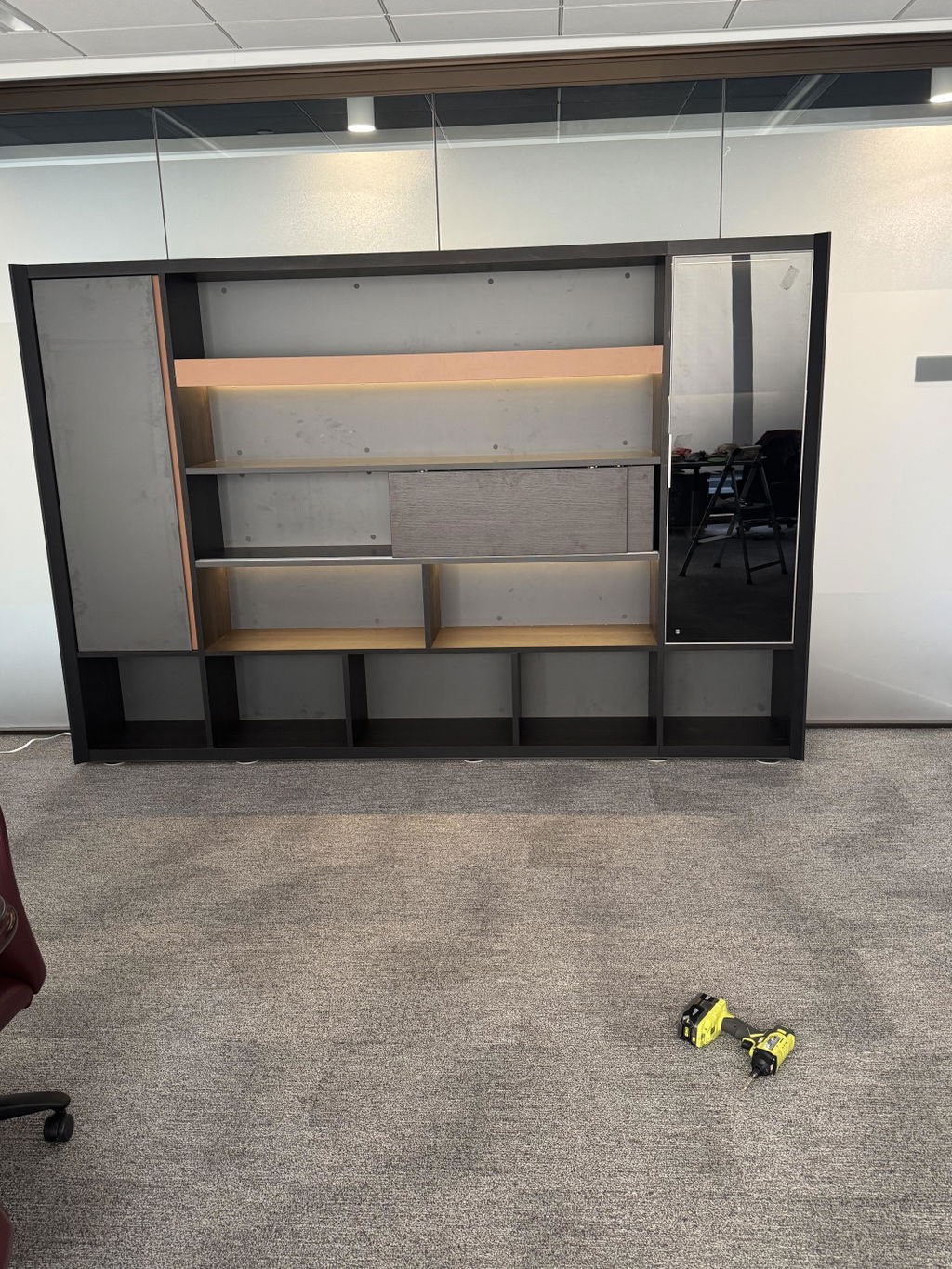
A cabinet desk builds storage right in (cabinets, drawers, or shelves) to keep the surface clear for a computer, books, and essentials. A practical choice for anyone who needs more organization without a separate storage piece.
A vanity desk pairs style with function for grooming and makeup, usually with a mirror and drawers to keep cosmetics and accessories organized. It doubles as a light writing surface in a bedroom or dressing area.
A foldable desk sets up and stows away quickly, in wood, metal, or plastic, sometimes with shelves: ideal for apartments, dorms, temporary workspaces, and mobile offices. Check the weight capacity and how easily it folds before choosing.
A wave desk has a gently curved front, deeper on one side than the other, that supports a natural arm position and extra room for your dominant hand: comfortable for writing or mouse work, and a striking shape for a home office.
A roll-top desk has a slatted cover that pulls down to hide the workspace, so a messy desk disappears in seconds. For people who work from home, closing it at day’s end helps separate work from the rest of the house.
A butler’s desk looks like a chest of drawers with a fold-down top that reveals a small writing surface and file storage. It works best as a secondary surface for paperwork and quick tasks in a home office or hallway.
A telephone desk is a small, antique-style piece (like a tall end table, sometimes with a built-in seat) originally made to hold a landline and a notepad. Today it serves as decorative furniture or a compact spot for quick tasks.
A lectern desk has a slanted top that holds books or notes without your having to hold them. Tall versions suit standing speeches and lectures; shorter ones suit seated reading and study, with the angle easing neck strain.
A ladder desk leans against the wall like a ladder, combining a work surface with built-in shelves above. Its slim footprint suits small home offices and apartments that need storage and a desk in one stylish piece.
A kitchen desk is a small built-in workspace, often where a dry bar might go: for paying bills, organizing schedules, or quick remote work, keeping papers and a laptop within reach while blending into the kitchen.
A Murphy desk folds up flat against the wall on hinges when not in use, freeing the room entirely. It is a smart solution for small spaces and remote workers without a dedicated office.
A peninsula desk extends out from a shelving unit or drawer return to create a connected work surface plus storage: a space-saving way to fit both a desk and a cabinet when the room cannot hold them separately.
A bow-front desk curves gently toward the user, adding writing room at the center, useful for taking notes alongside a computer. It makes a comfortable, spacious desktop workstation.
A circular desk is round and open so several people can sit around it, sharing space and conversation easily. It suits offices, classrooms, and meeting areas where teamwork and communication matter.
A workstation desk groups several desks together in an open-plan area, using dividers to give each person some privacy. It keeps a shared office organized and focused while supporting collaboration.
With this many desk types, the right one comes down to your space, your work, and your storage needs: a simple writing desk, an ergonomic standing desk, or a spacious executive desk all create very different workspaces. Explore the desk collections and matching shelving, or have any piece built to your space and finish.
Related articles
Executive Desks & Offices
At the executive level, the material makes the desk. What distinguishes wood veneer, solid wood, and stone, and how to...
Read more →
Executive Desks & Offices
With more than 150 finishes to choose from, the way to a coordinated office is a simple sequence: pick one...
Read more →
Executive Desks & Offices
A home executive office should be as considered as the one at headquarters. How to design a serious, presence-carrying space...
Read more →