Executive Desks & Offices
Veneer, Solid Wood & Stone: A Guide to Premium Desk Materials
At the executive level, the material makes the desk. What distinguishes wood veneer, solid wood, and stone, and how to...
Read more →
Matching Sets
Executive Desks & Offices
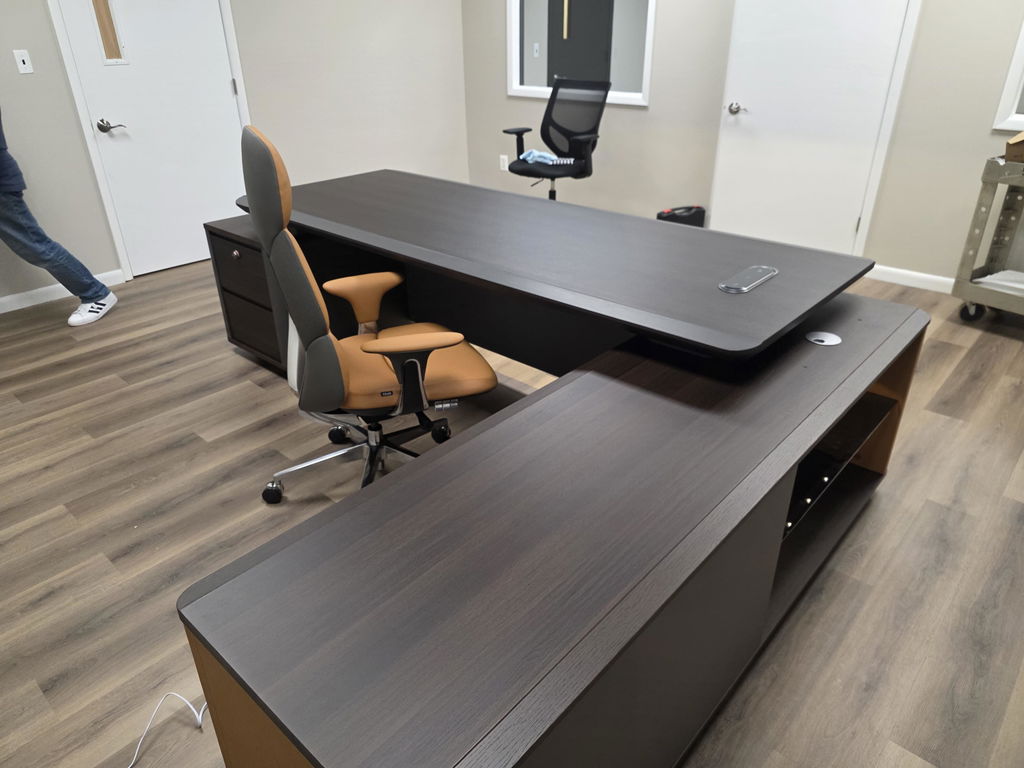
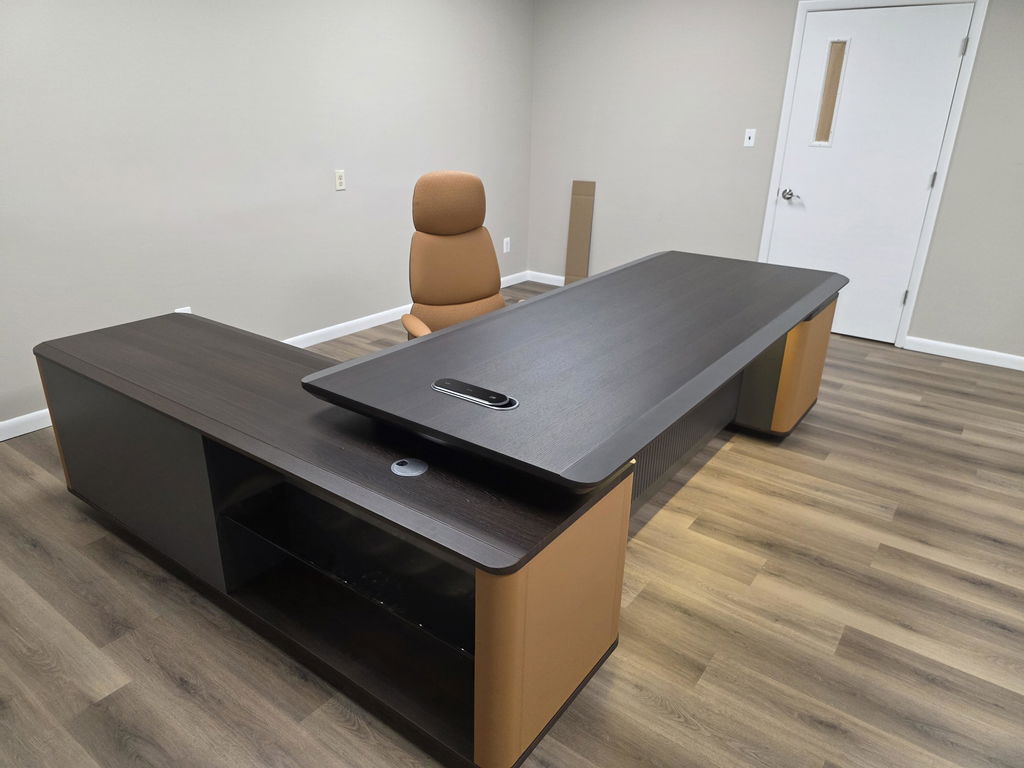
An executive desk runs 60 to 72 inches wide (71 to 95+ for a statement), 30 to 36 inches deep, and 29 to 30 inches high, with a 42-to-47-inch L-return. Here's how to size it to your room.

An executive desk runs 60 to 72 inches wide for a standard office, or 71 to 95 inches for a statement piece. Depth is 30 to 36 inches. Height is a standard 29 to 30 inches. Most add an L-return of 42 to 47 inches for a monitor or a guest-facing edge.
Size is where an executive desk earns or loses its presence. Too small and it undercuts the authority the room is meant to project; too big and it crowds everything else out. The numbers below are the working ranges; the trick is matching them to your floor and your day.

Executive desk dimensions
| Dimension | Range | Notes |
|---|---|---|
| Width | 60–95″+ | 60–72″ standard; 71–95″+ for a statement or grand office |
| Depth | 30–36″ | 30″ is comfortable; 36″ suits dual monitors and a guest edge |
| Height | 29–30″ | Standard seated height; sit-stand models move about 25–50″ |
| L-return | 42–47″ long × 24″ deep | Adds a perpendicular surface; a U-desk adds a second return |
| Knee clearance | 24–26″ high, 20″+ deep | Room to sit and cross your legs |

Width is the number people feel first. Specific desks at each width are covered in the best executive desks roundup. A 60-to-72-inch desk works in most private offices; a 71-to-95-inch desk, or wider, makes a statement in a large room. But the real ceiling isn't the catalog, it's the floor: keep the desk to about a quarter or a third of the room's area so it commands without swallowing the space. A 95-inch grand desk wants a 250-square-foot office to breathe; drop it into 150 square feet and the room feels blocked.
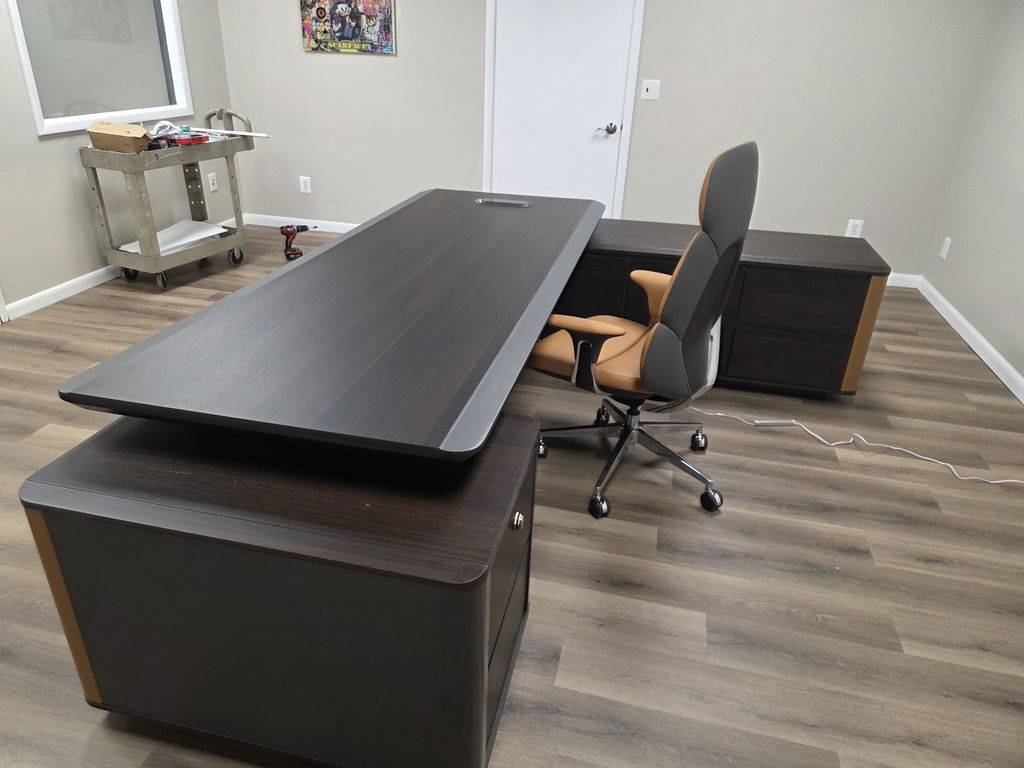
A 30-inch depth is comfortable for a keyboard, a monitor, and working room; 36 inches gives you space for dual monitors and a guest-facing edge without reaching. The L-return, a perpendicular surface 42 to 47 inches long and about 24 inches deep, is what turns a desk into a command station: somewhere for a second monitor, a signing surface, or the paperwork you'd rather not have in front of you. A U-shaped desk adds a second return for a full wraparound.
Executive desks hold the standard 29-to-30-inch seated height. If you alternate sitting and standing, a height-adjustable base moves roughly 25 to 50 inches; set it so your forearms rest parallel to the floor with elbows near 90 degrees. Leave 24 to 26 inches of knee clearance and at least 20 inches of depth underneath, so you can sit and move without meeting a modesty panel.
The desk and the room are one decision, not two. Measure the floor, hold the desk to a quarter or a third of it, and leave 42 to 48 inches of clearance behind the chair and 48 inches in front for a visitor to approach. For the full room plan, see how the desk fits among the five zones in our guide to designing an executive office, and our desk dimensions guide for every other desk type.
Few offices are sized to a catalog. Arc Grove® builds executive desks to an exact width, depth, return, and finish, so the desk fits your room and your reach rather than the other way around. Build one to your dimensions, or start with the executive desk buyer’s guide.
Related articles
Executive Desks & Offices
At the executive level, the material makes the desk. What distinguishes wood veneer, solid wood, and stone, and how to...
Read more →
Executive Desks & Offices
With more than 150 finishes to choose from, the way to a coordinated office is a simple sequence: pick one...
Read more →
Executive Desks & Offices
A home executive office should be as considered as the one at headquarters. How to design a serious, presence-carrying space...
Read more →