Executive Desks & Offices
Veneer, Solid Wood & Stone: A Guide to Premium Desk Materials
At the executive level, the material makes the desk. What distinguishes wood veneer, solid wood, and stone, and how to...
Read more →
Matching Sets
Executive Desks & Offices
Ideal desk dimensions for home and commercial offices: standard, standing, L-shaped, executive, reception, and cubicle workstation sizes — plus how to find the right desk height for you.

Standard desks run 48 to 72 inches wide, 24 to 30 inches deep, and 28 to 30 inches tall. Executive desks reach 60 to 84 inches wide; L-shaped desks 60 to 72 by 48 to 60; reception counters sit 40 to 45 inches high. A depth of 30 inches keeps your monitor at a comfortable distance: the single measurement most worth getting right.
The right desk dimensions can make or break productivity, whether you are outfitting a corporate office or a home workstation. From compact cubicles to expansive executive desks, here are the measurements that matter, and how to fit them to your body and your space.
Standard desk dimensions
| Desk type | L × W × H (inches) | Use cases |
|---|---|---|
| Standard desk | 48–72 × 24–30 × 28–30 | General office work, computer tasks, writing, home offices |
| Standing desk (electric) | 48–72 × 24–30 × 24–50 (adjustable) | Modern offices, ergonomic and tech-forward workstations |
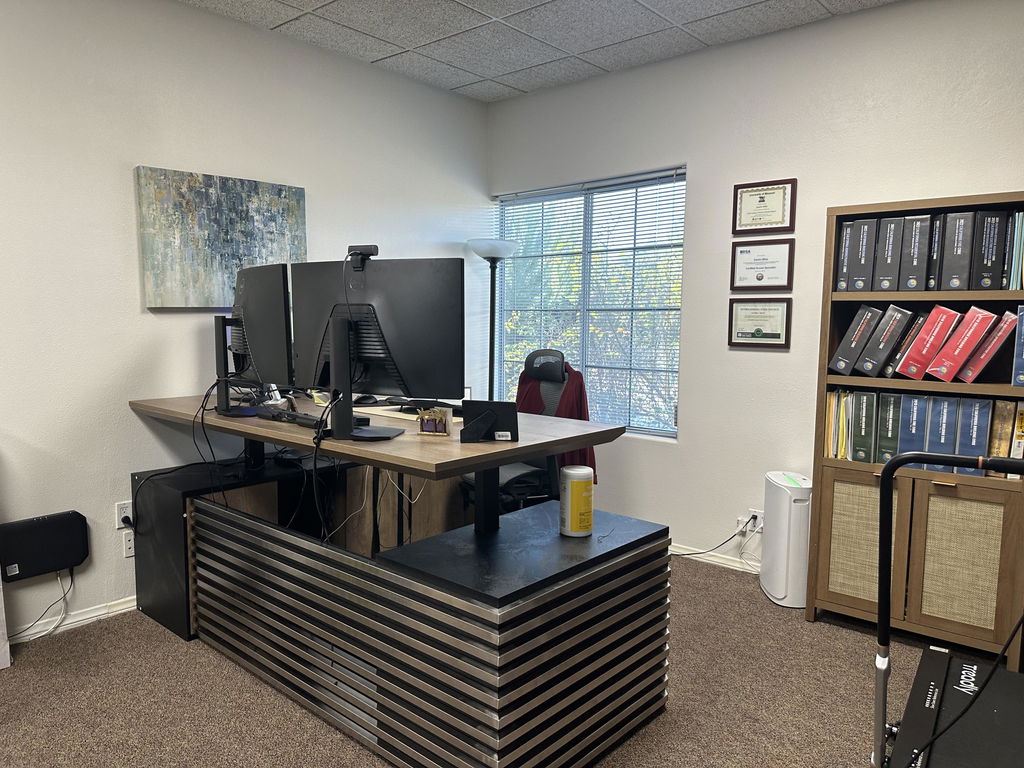
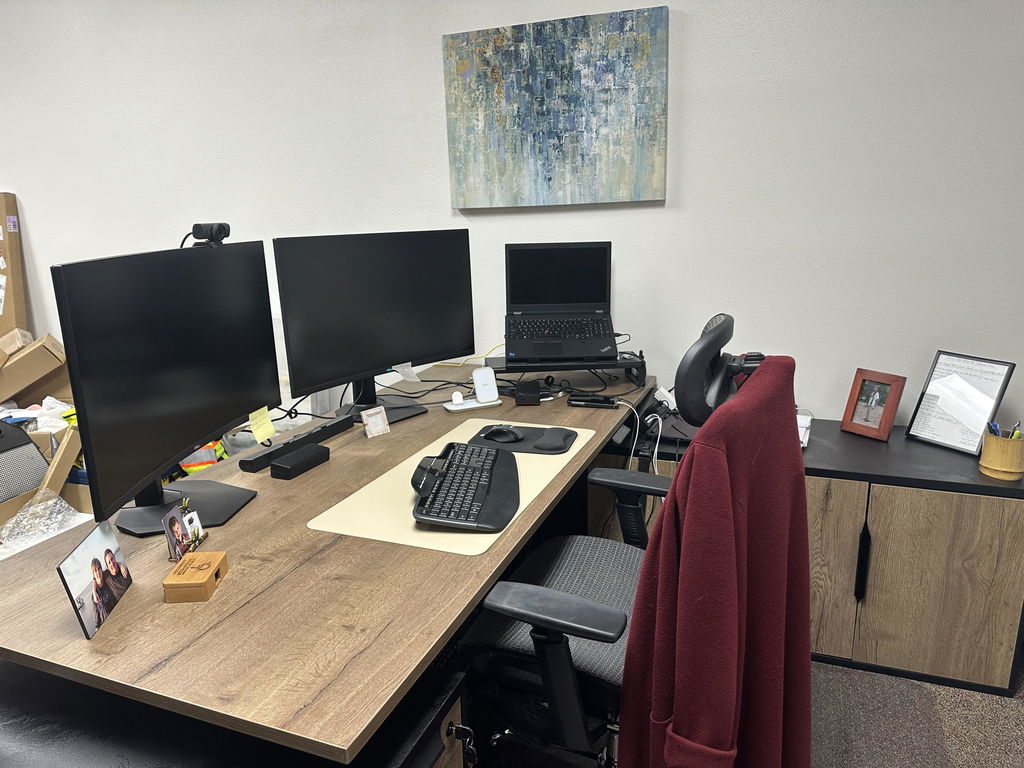
| L-shaped desk | 60–72 × 48–60 × 28–30 | Multitasking, dual-monitor, and gaming setups |
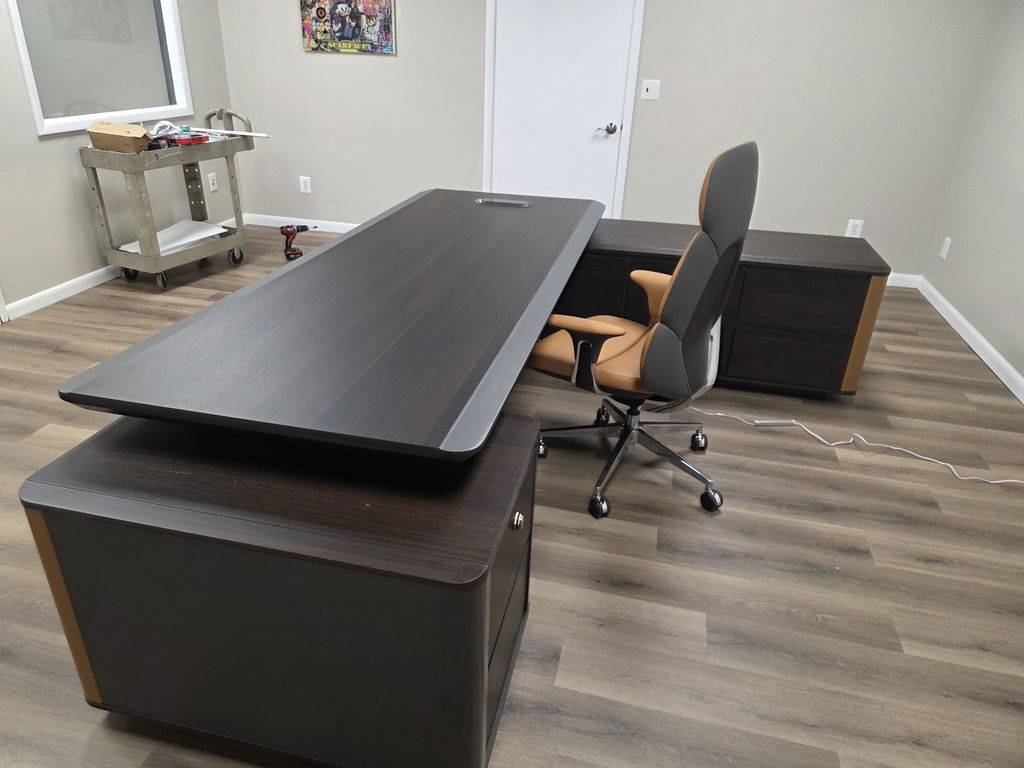
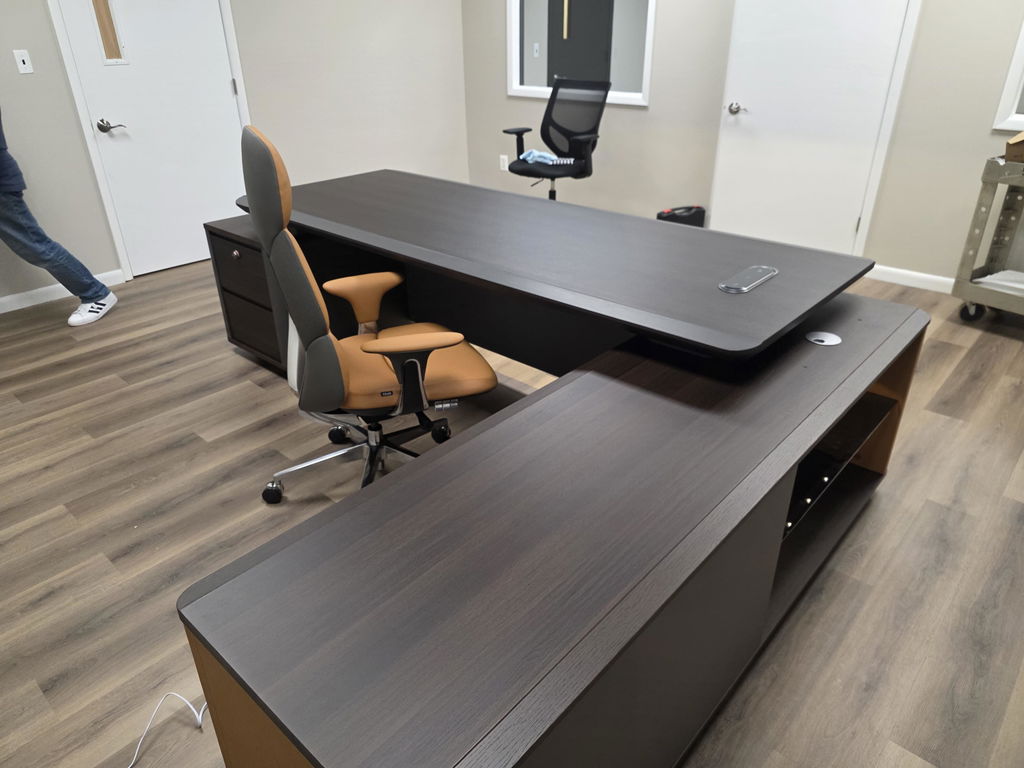
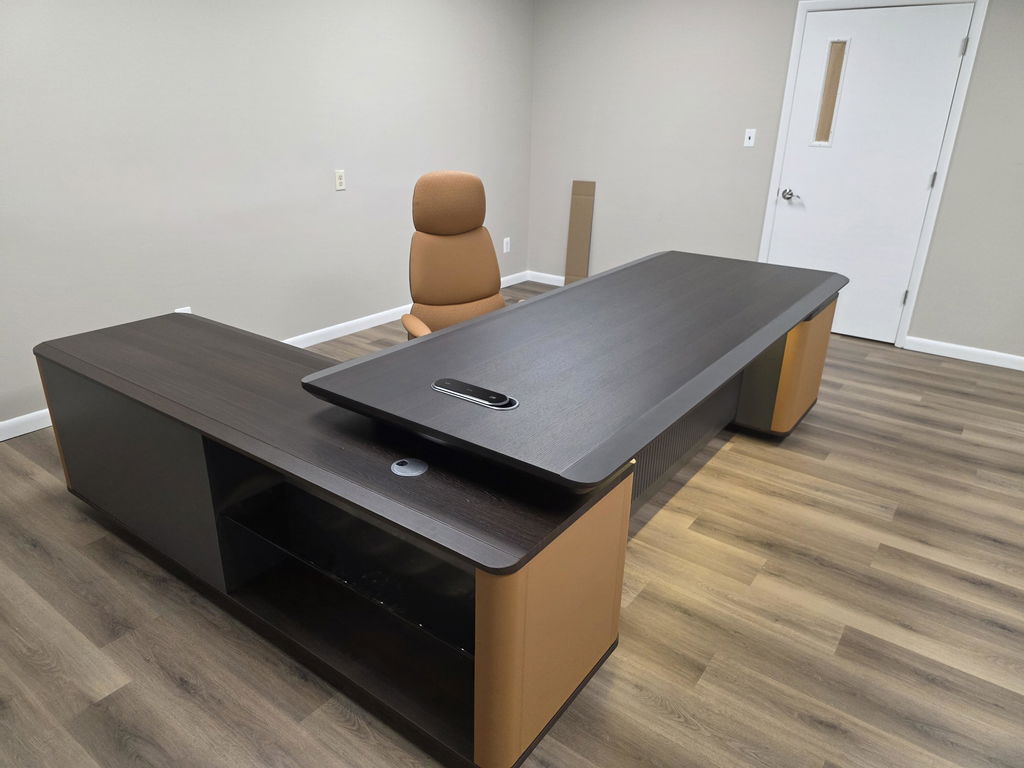
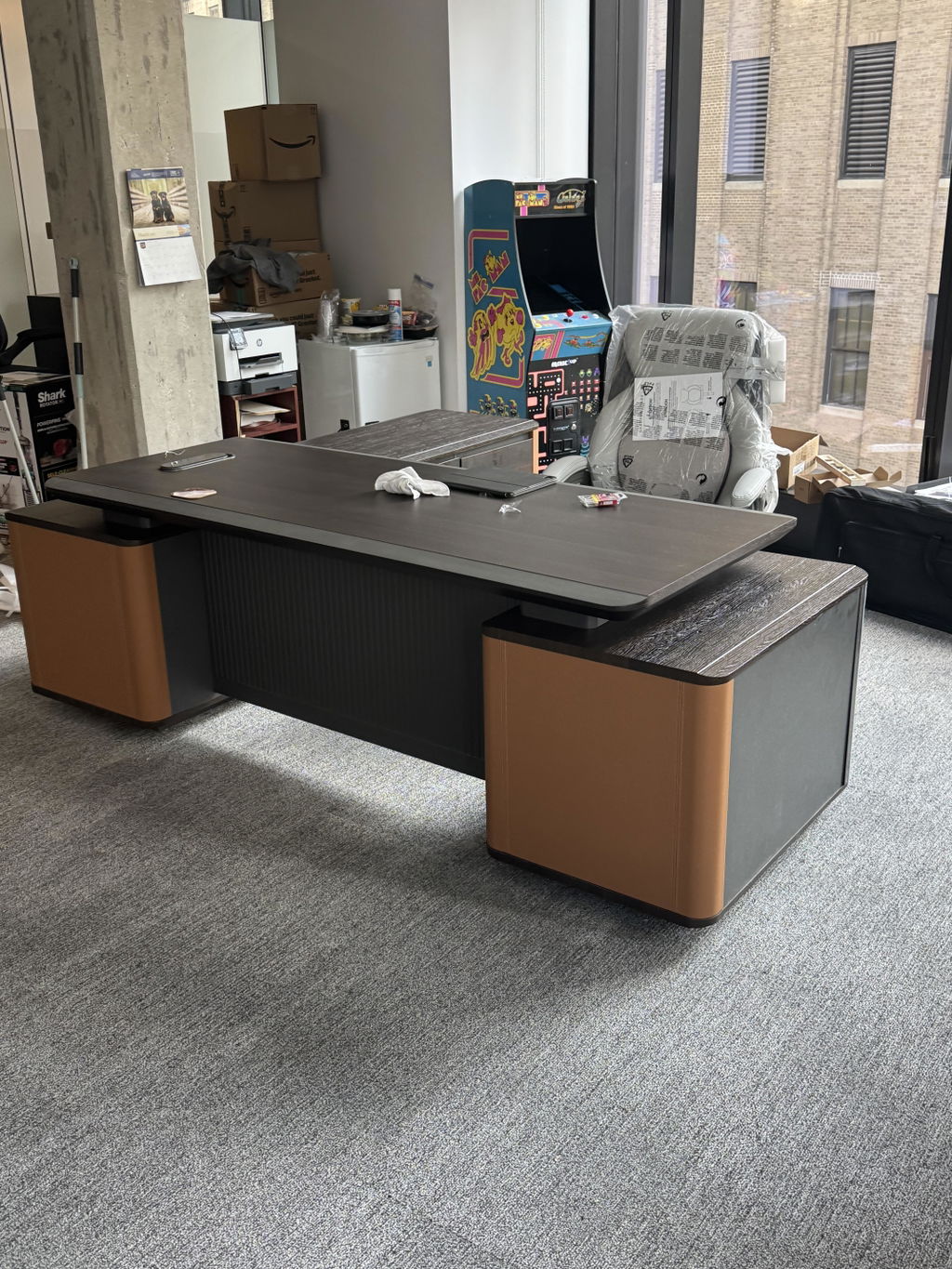
| Executive desk | 60–72 × 30–36 × 28–30 | C-suite offices, management, client-facing roles |
| Reception desk | 60–90 × 24–30 × 40–45 (counter) | Front office, visitor greeting, customer service |

Good workstations work for both solo focus and team collaboration: their own space to concentrate, but easy to share ideas when needed.
A single workstation can be customized for documents, multiple monitors, or specialized equipment. The guidelines:
Single workstation dimensions
| Dimension | Recommended | Notes |
|---|---|---|
| Width | 60–63 in | Ample space for computer and materials |
| Depth | 30–32 in | Allows proper monitor distance |
| Height | 29 in (adjustable) | Standard sitting height |
| Clearance behind | 24–30 in | Room to move your chair freely |

Modular workstations serve team spaces, customizable for several users while keeping privacy and efficiency. Standard dimensions: 48 inches of width per person, 24 to 30 inches of depth, 29 inches high (with adjustable options), and at least 16 square feet per person. For multi-user setups, use shelves or dividers for privacy, L-shaped workstations to maximize corners, or back-to-back arrangements for smaller rooms.
Height is one axis. Shape and footprint by room size are covered in best desk shapes and sizes for any home office.

The modern workplace puts more focus on employee health, which makes adjustable-height desks some of the most valuable office furniture today. Alternating between sitting and standing eases back strain from all-day sitting, improves circulation, and prevents the hunched posture fixed desks encourage. The movement helps focus and energy too, and companies often report happier employees and fewer sick days after adding them.
The right height depends on your body. Stand straight with arms relaxed and measure floor-to-elbow, that is your standing-work height. Seated, your feet should rest flat with thighs parallel to the floor and knees near a 90-degree angle (use a footrest if your feet do not reach). Position the keyboard so forearms stay parallel to the floor with neutral wrists.
Set the work surface so forearms rest parallel to the floor with elbows bent between 90 and 120 degrees, keep wrists neutral, and place the top of the monitor at or slightly below eye level, about an arm’s length away.
OSHA — Computer Workstations eTool, neutral posture
Dimensions are one of four decisions. Type, material, and features are covered in the ultimate guide to office desks.
The right desk dimensions are the backbone of a productive workspace. These standard measurements are the starting point: your body, your tools, and your space should drive the final choice. Explore the executive desks collection, or have a desk built to your exact dimensions. Next, consider where to place it.
Related articles
Executive Desks & Offices
At the executive level, the material makes the desk. What distinguishes wood veneer, solid wood, and stone, and how to...
Read more →
Executive Desks & Offices
With more than 150 finishes to choose from, the way to a coordinated office is a simple sequence: pick one...
Read more →
Executive Desks & Offices
A home executive office should be as considered as the one at headquarters. How to design a serious, presence-carrying space...
Read more →