Executive Desks & Offices
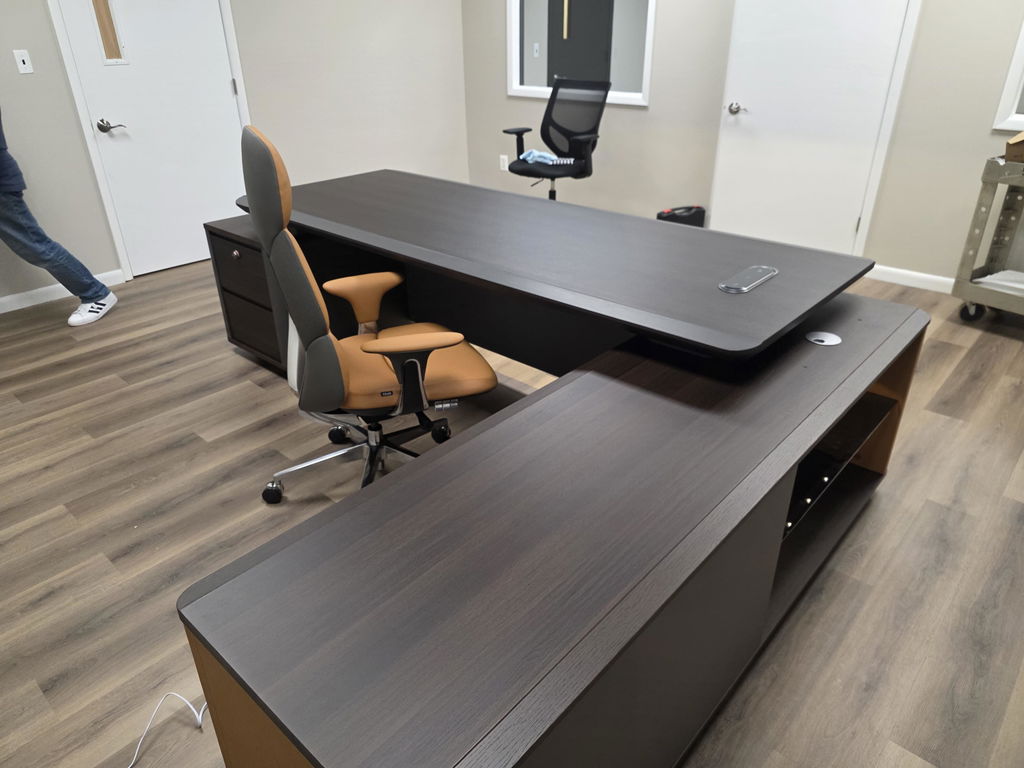
Veneer, Solid Wood & Stone: A Guide to Premium Desk Materials
At the executive level, the material makes the desk. What distinguishes wood veneer, solid wood, and stone, and how to...
Read more →
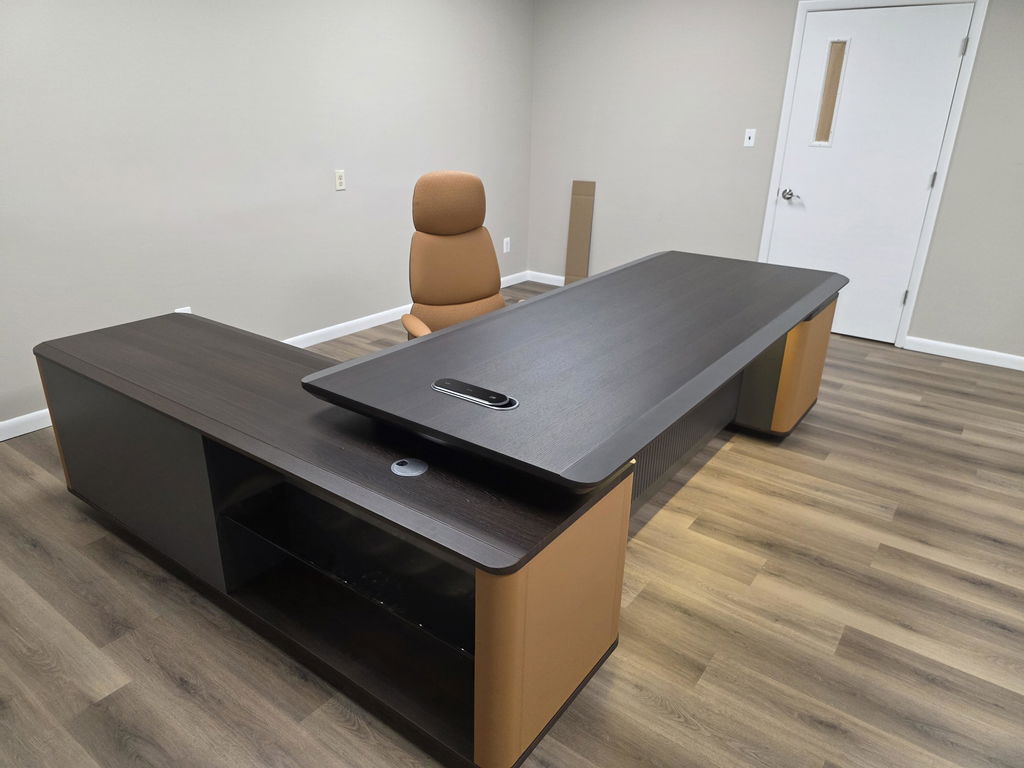
Matching Sets
Executive Desks & Offices
The ultimate guide to office desks: the main desk types and materials compared, how to choose by space, work style, and budget, and where to go deeper on sizing and buying.

Choosing the right office desk starts with three questions: how you work (focused computer work, multitasking, or collaboration), how much space you have, and your material and budget. From there, pick a type (executive, L-shaped, standing, or compact) and a material that fits your office and how hard the desk will work.
Your desk is the foundation of your workspace, and the right one supports both productivity and the impression your office makes. This guide covers the main desk types, the materials to choose from, and how to find the perfect fit, with links to deeper guides where you want the detail.

Desk types at a glance
| Type | Best for |
|---|---|
| Executive | Large offices — presence and ample workspace |
| Computer | Tech-focused work with cable management and accessories |
| Compact / writing | Small spaces and focused tasks |
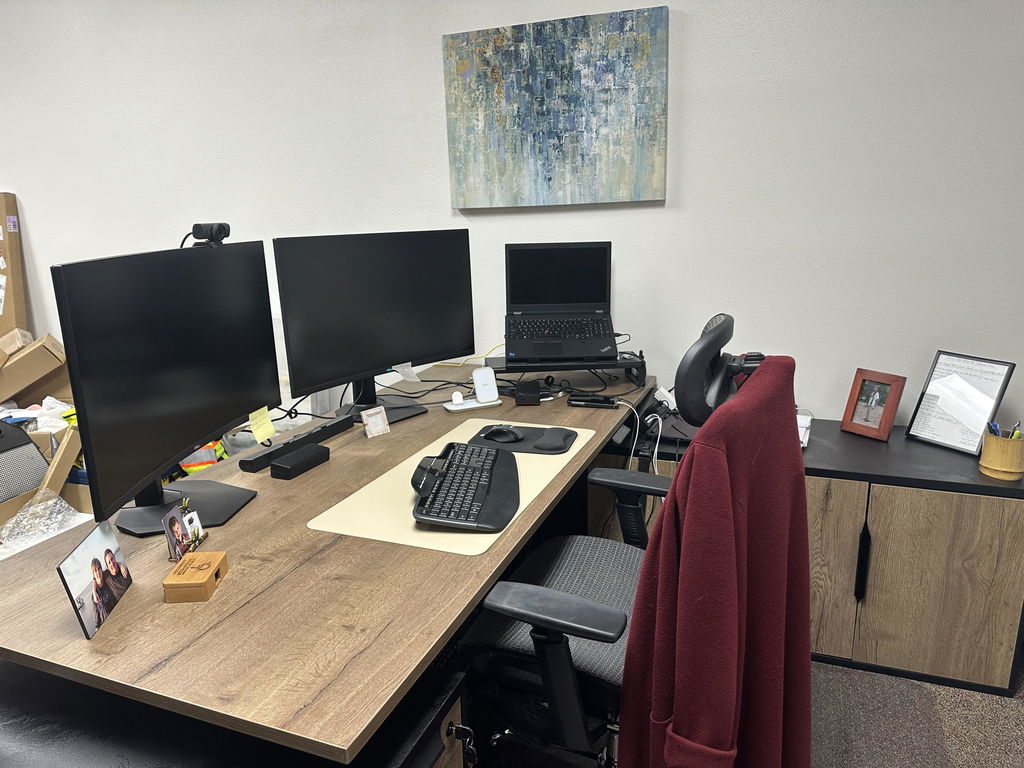
| L-shaped | Corners and multitasking across two surfaces |
| U-shaped | Maximum surface, storage, and privacy |
| Standing / adjustable | Health and sit-stand flexibility |
| Credenza | Extra storage and a secondary surface |
| Workstation / cubicle | Shared, open-plan, high-traffic environments |
Each type is built for a different way of working: an executive desk for sophistication and space, a computer desk for digital work, a compact or writing desk for small rooms, an L-shaped desk to optimize a corner, or a standing desk for movement. For the full breakdown of every option, see our guide to the 37 types of desks.

Desk materials
| Material | Character | Best for |
|---|---|---|
| Laminate | Durable, versatile, scratch-resistant | Corporate and high-use settings |
| Solid wood | Timeless, elegant, long-lasting | Home offices and executive suites |
| Veneer / engineered wood | The look of wood, more affordable and stable | Value-conscious offices |
| Metal | Sleek and functional | Industrial and modern spaces |
| Glass | Contemporary and light | Modern, open workspaces |
Material drives durability, look, and price: solid wood for longevity and warmth, engineered wood for much of the look at lower cost, glass and metal for a modern edge. For a deeper comparison of solid versus engineered wood, grades, and care, see the office desk handbook.

Start with your space and work style. Measure the room and leave at least 3 to 4 feet of clearance behind the chair; standard desks run 48 to 72 inches wide and 28 to 30 inches tall, with executive models reaching 60 to 84 inches. Match the size to your tasks, at least 55 to 60 inches for dual monitors: and prioritize ergonomics, build quality, and a finish that suits your office. For exact dimensions see our desk dimensions guide, and for a step-by-step buying walkthrough, the executive desk buyer’s guide.
Set the desk so forearms rest parallel to the floor with elbows bent 90 to 120 degrees and wrists neutral, place the monitor top at or just below eye level about an arm’s length away, and support your feet flat on the floor.
OSHA — Computer Workstations eTool, neutral posture
Match the shape to the room before the style. Footprints by room size are in best desk shapes and sizes for any home office.
Your workspace reflects how you work and the image you project. Decide what you need (the type, the material, the size) and the right desk follows. Explore the executive desks collection, or have one built to your exact space, material, and finish.
Related articles
Executive Desks & Offices
At the executive level, the material makes the desk. What distinguishes wood veneer, solid wood, and stone, and how to...
Read more →
Executive Desks & Offices
With more than 150 finishes to choose from, the way to a coordinated office is a simple sequence: pick one...
Read more →
Executive Desks & Offices
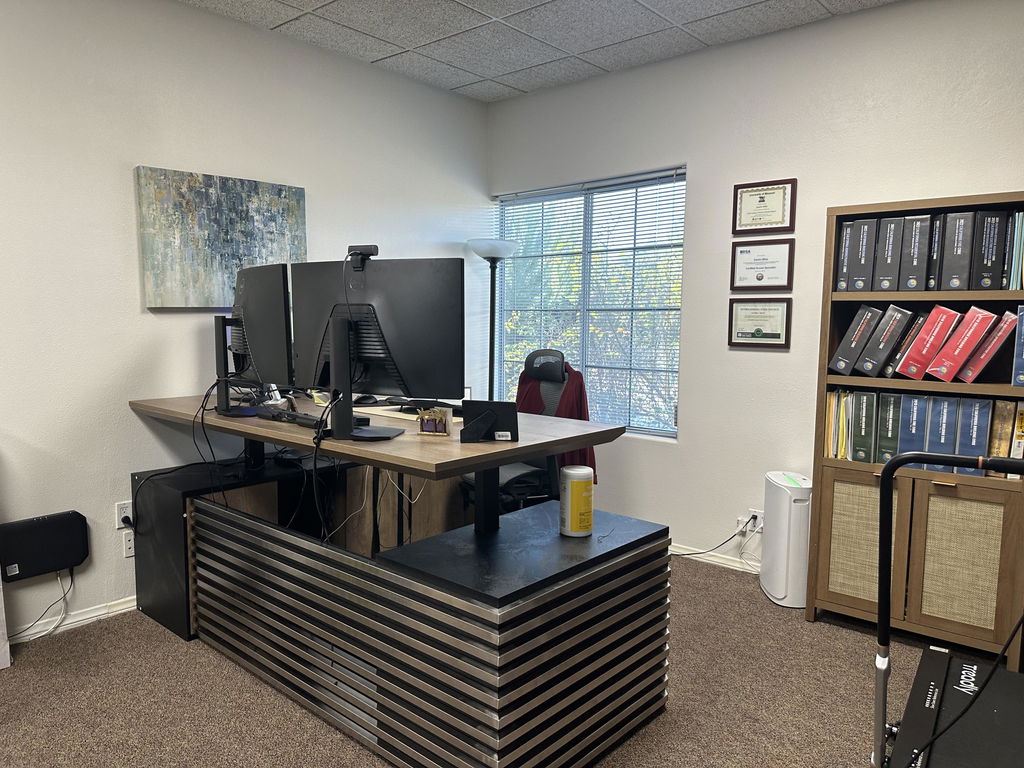
A home executive office should be as considered as the one at headquarters. How to design a serious, presence-carrying space...
Read more →