Executive Desks & Offices
Veneer, Solid Wood & Stone: A Guide to Premium Desk Materials
At the executive level, the material makes the desk. What distinguishes wood veneer, solid wood, and stone, and how to...
Read more →
Matching Sets
Executive Desks & Offices
Modern executive offices use clean lines and pale wood; traditional ones use dark wood and panel detail. Here's how to tell the styles apart and choose the one that fits you.

Modern executive offices lean on clean lines, pale wood, and matte metal; traditional ones on dark wood, panel detail, and warm symmetry. Most offices that get it right land in between, a transitional look that borrows the calm of modern and the gravity of traditional. Here's how to tell the styles apart and choose the one that fits you.
Style isn't decoration here, it's the first thing a visitor reads about you. Before anyone registers the brand of the desk, they've clocked whether the room feels current or established, warm or cool, relaxed or formal. Getting that signal right matters more than any single piece.
Modern vs traditional at a glance
| Modern | Traditional | |
|---|---|---|
| Wood | Pale oak, walnut veneer, high-gloss or matte | Dark mahogany, cherry, rich grain |
| Palette | Grays, whites, muted greens | Browns, deep greens, burgundy, brass |
| Lines | Straight, low, uninterrupted | Detailed edges, panels, moldings |
| Metal | Matte black, brushed nickel | Polished brass, bronze |
| Desk shape | Slim L or U, floating top | Solid pedestal, framed panels |
| Feels | Calm, current, understated | Established, formal, weighty |

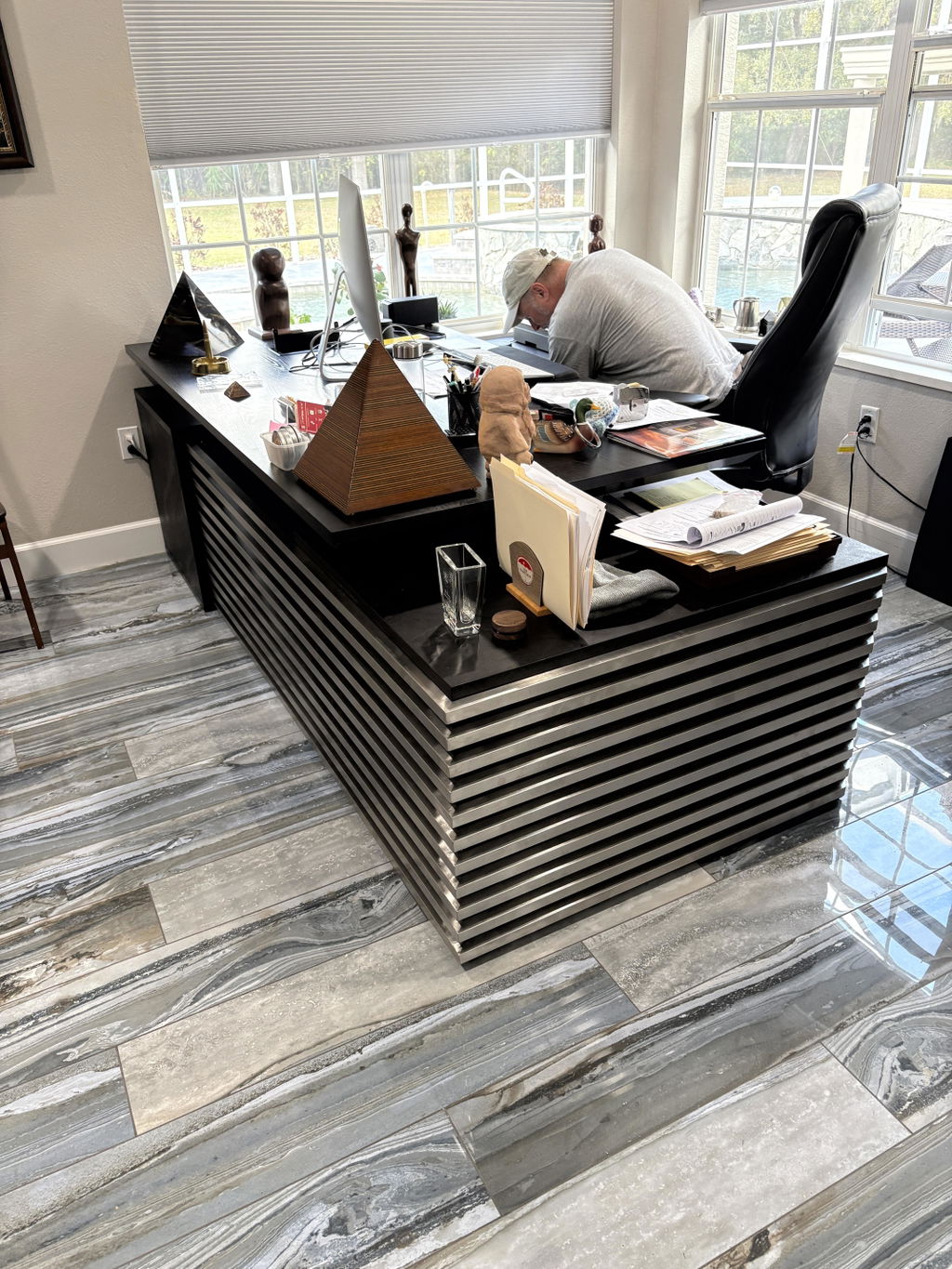
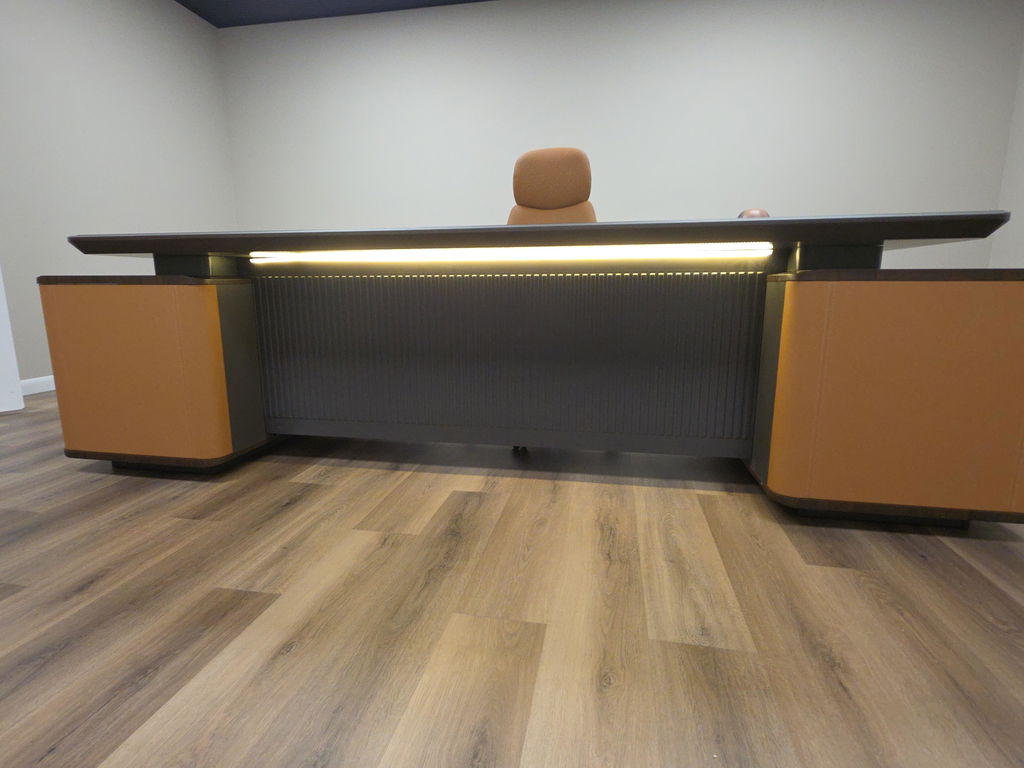
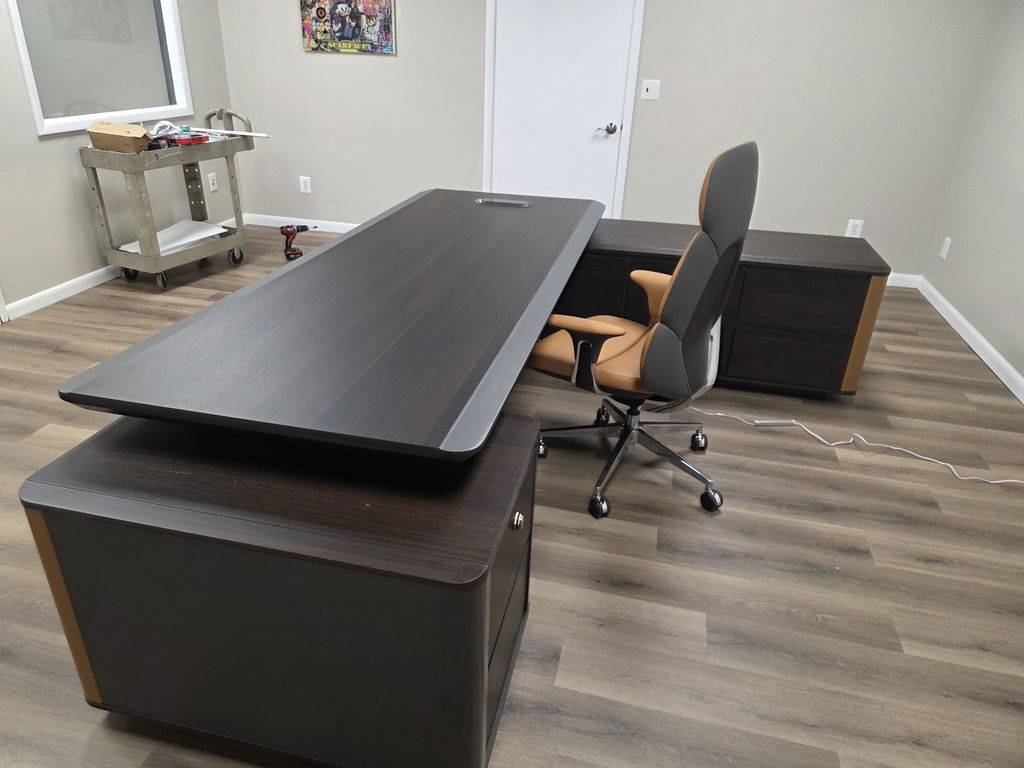
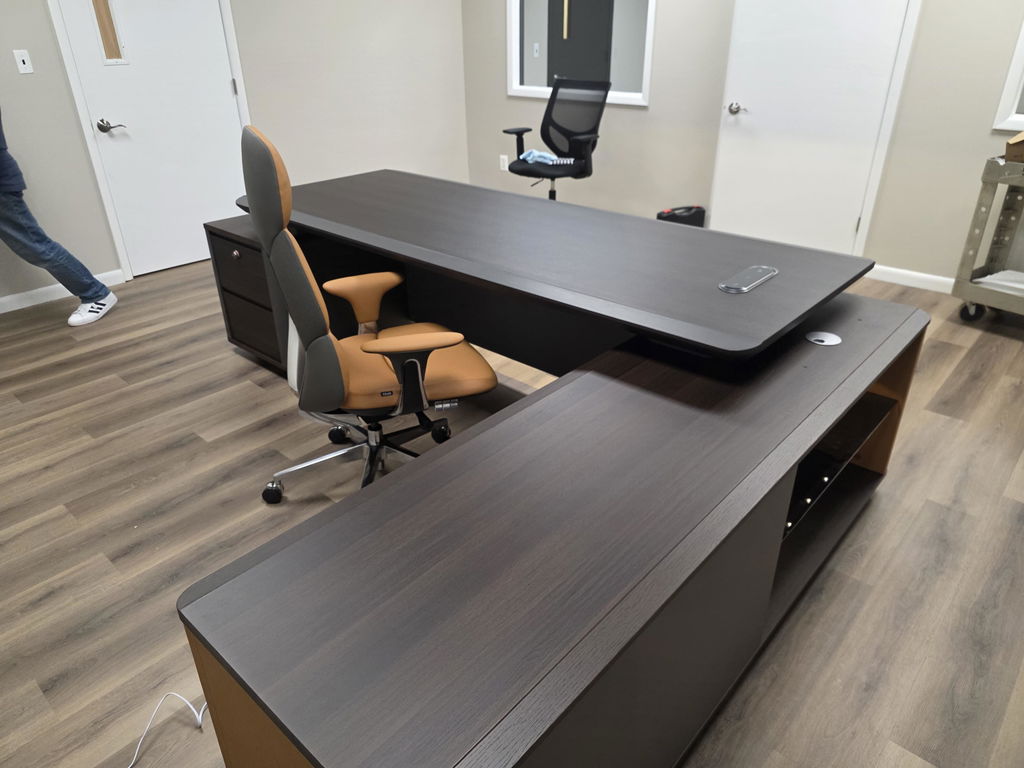
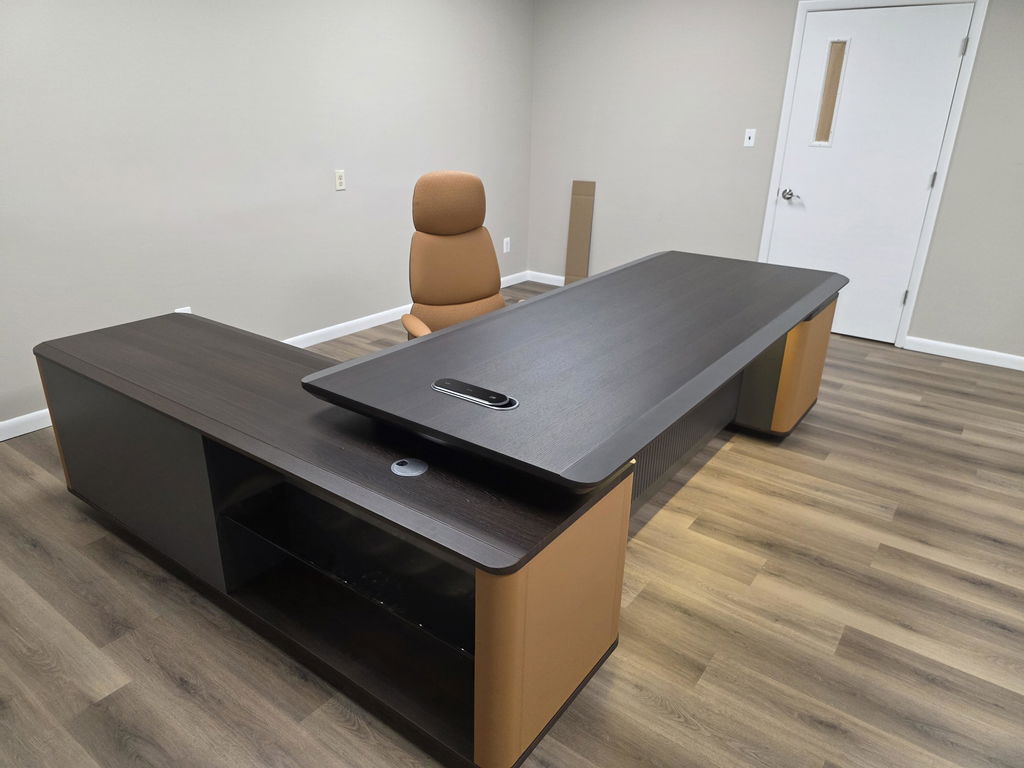
Modern reads as calm and current. A biophilic executive office warms the same palette with planting, daylight, and natural materials. It keeps surfaces uninterrupted, hardware minimal, and the palette cool, pale oak or walnut against gray, white, and the occasional muted green. The desk tends to be a slim L or U with a floating top and a clean edge, and storage hides behind flat fronts rather than paneled doors. It suits tech, creative, and professional-services roles, and it photographs well, which matters when your office appears on calls all day. The risk is looking sparse; a single warm material, wood or a textile chair, keeps it from feeling clinical.

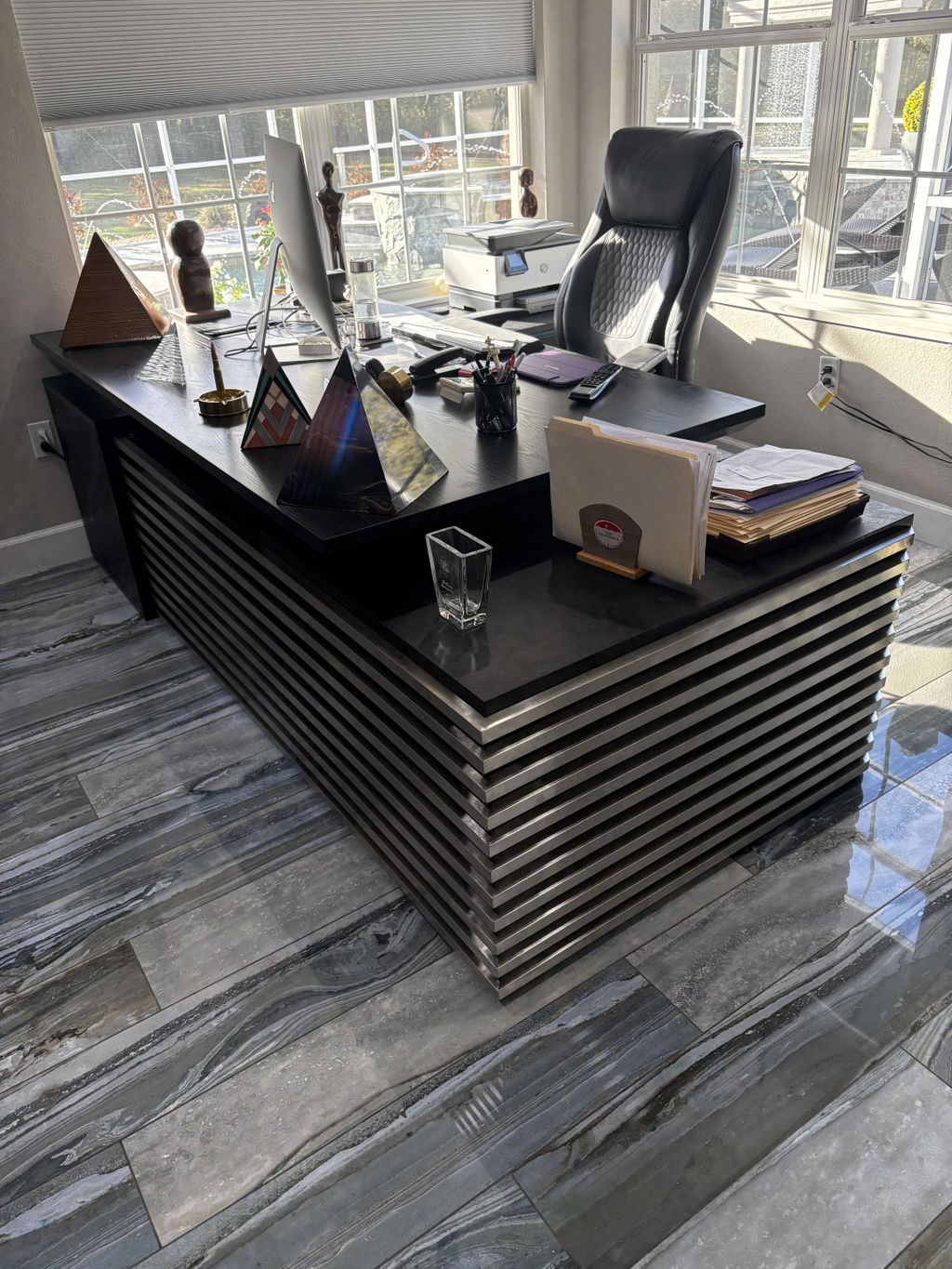
Traditional reads as established and formal. Pushed further into deep tones, it becomes the dark and moody executive office. It leans on dark wood with real grain, mahogany, cherry, walnut, framed panels and molded edges, and warm metals like brass and bronze. The desk is usually a solid pedestal or a substantial framed L, and a floor-to-ceiling bookcase wall does much of the talking. It suits law, finance, and any role where longevity and trust are the message. The risk is heaviness; lift it with a lighter wall color, a patterned rug, or a single contemporary piece so it reads as considered rather than dated.

Most rooms that feel right aren't strictly one or the other. Transitional keeps the clean lines and restraint of modern but warms them with richer wood and a softer palette, so the office feels current without feeling cold, and substantial without feeling stuffy. A walnut L-desk with simple hardware, a low bookcase wall, and one or two textured pieces is the whole recipe. If you're unsure which way to go, this is the safe and lasting choice.
Three questions settle it. What does the building say, a glass tower leans modern, a paneled suite leans traditional? What does your role trade on, currency and speed, or permanence and trust? And how long do you want it to last before it reads dated, which is where transitional wins? Whatever you land on, hold the finishes together: one wood tone and one metal across the desk, storage, and seating is what makes a room look designed rather than assembled.
Style lives in the finish as much as the shape, and in the light that falls on it. Set the three lighting layers before judging a finish. Arc Grove® builds executive desks and storage in a range of woods, tones, and hardware, so a single design can read modern in pale oak or traditional in dark walnut, matched across every piece. Choose your finish, or browse the executive desk collection to see the shapes.
Related articles
Executive Desks & Offices
At the executive level, the material makes the desk. What distinguishes wood veneer, solid wood, and stone, and how to...
Read more →
Executive Desks & Offices
With more than 150 finishes to choose from, the way to a coordinated office is a simple sequence: pick one...
Read more →
Executive Desks & Offices
A home executive office should be as considered as the one at headquarters. How to design a serious, presence-carrying space...
Read more →