Space Planning & Buying
Why Bespoke: The Case for Made-to-Measure Executive Furniture
Made-to-measure executive furniture gives you exact fit, your exact finish, and a coordinated suite. When bespoke earns its place, and...
Read more →
Matching Sets
Space Planning & Buying
Speccing custom executive furniture is five decisions in order: dimensions, configuration, finish, hardware, and sign-off. What to settle at each step.

Speccing custom executive furniture sounds daunting, but it's really just five decisions in order: dimensions, configuration, material and finish, hardware and details, then samples and sign-off. Make them in that sequence and nothing gets missed. Here's what each one involves, and the questions to settle before anything goes into production.
The reason to get the spec right up front is simple: once a piece is being built, changes are expensive and slow. A clear specification is what turns a vague idea into a desk that arrives exactly as you pictured it. A good supplier will walk you through all of this, but knowing the decisions in advance makes you a faster, sharper client.

Measure the room before you fall for a shape. The desk's width, depth, and return height all key off the floor and the clearances around it, so start there and work in. Hold the desk to about a quarter or a third of the floor, leave 42 to 48 inches behind the chair and 48 in front for visitors, and note any columns, radiators, or window walls the piece has to work around. Our guides to executive desk dimensions and how big an office should be have the numbers to bring to the conversation.
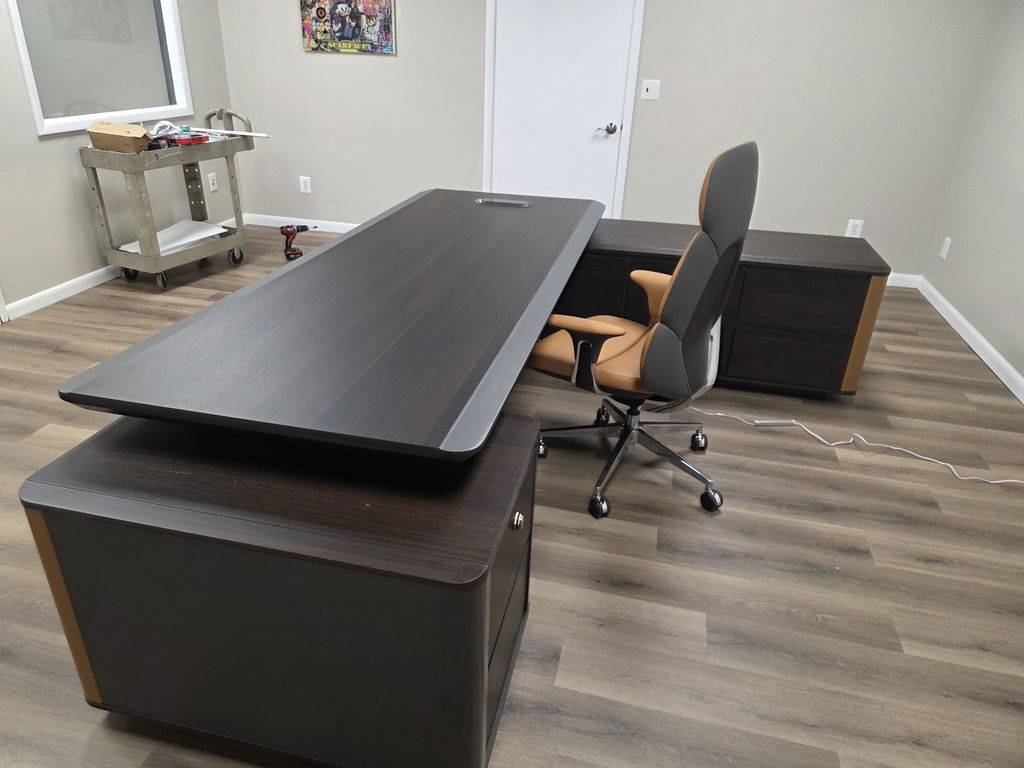
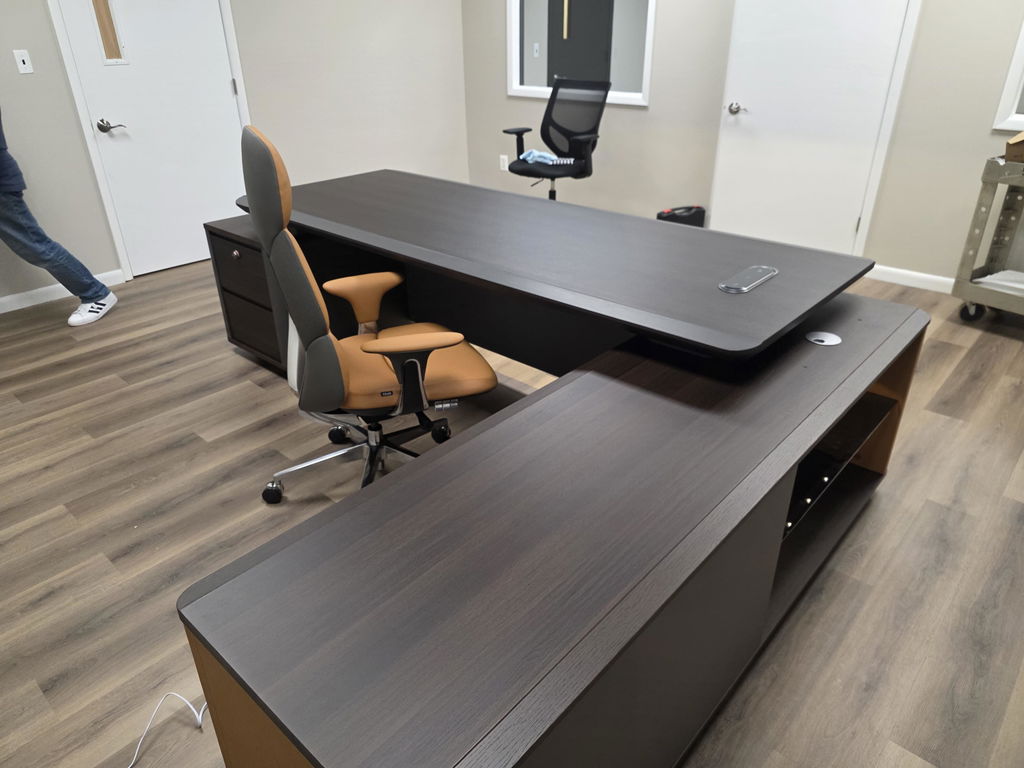
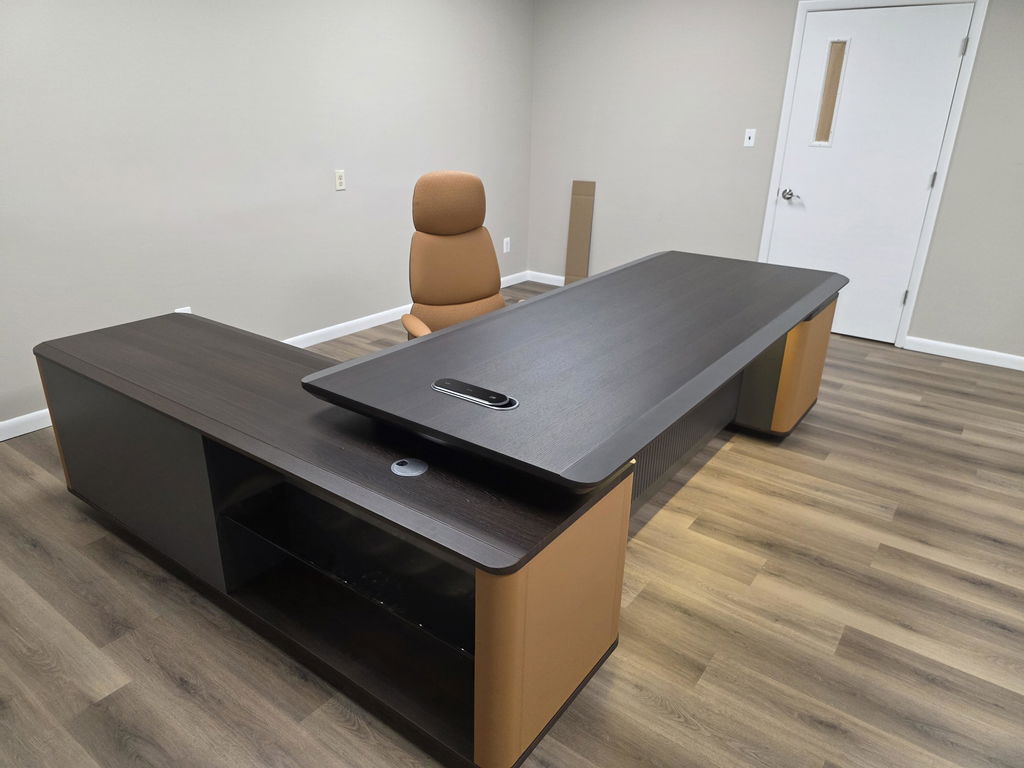
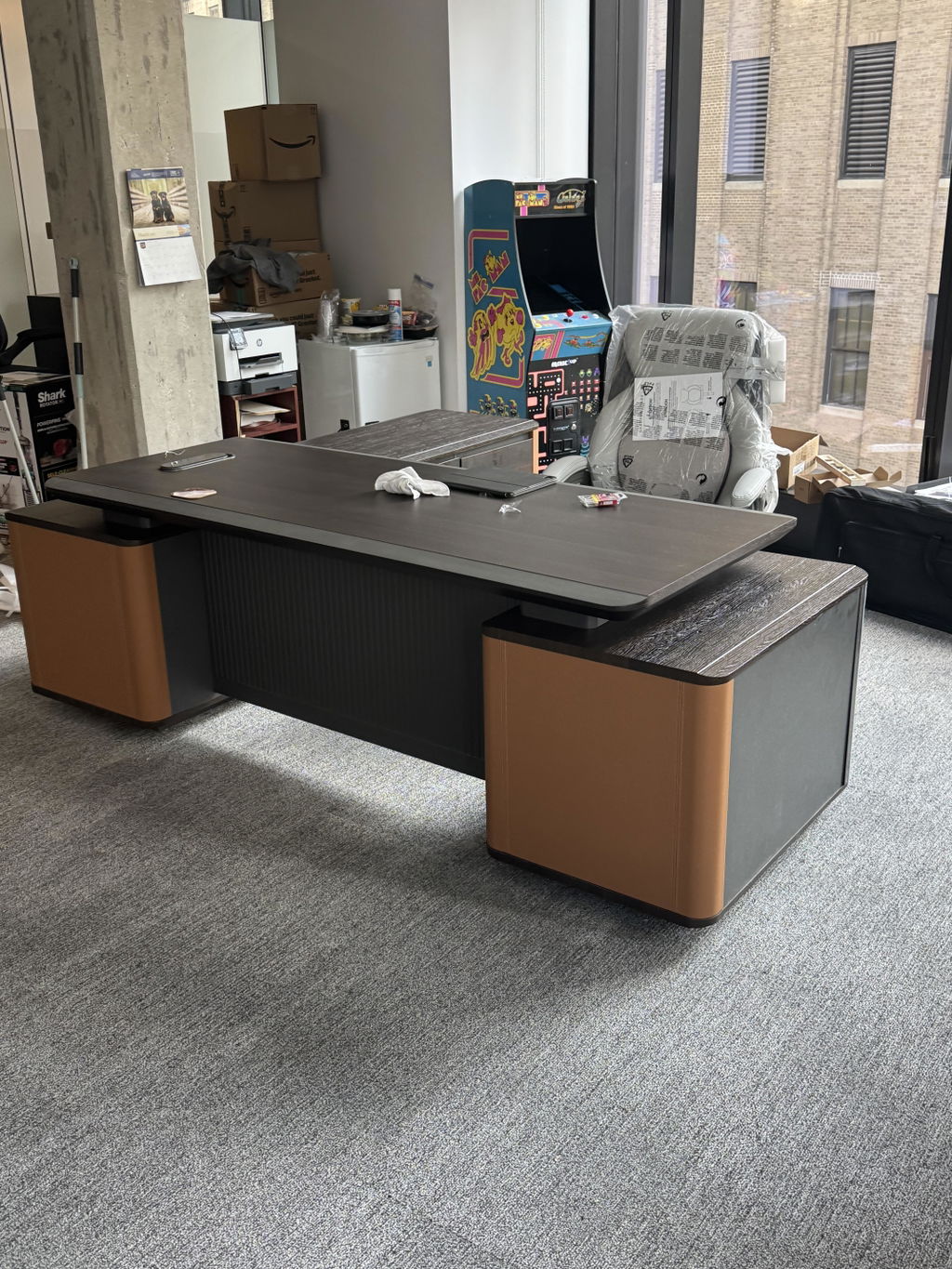
Next, decide the shape and, crucially, which side the return sits on. An L-desk gives you a main surface plus one return; a U adds a second. The detail that trips people up is the hand: get the return on the wrong side and the desk forces you out of the command position. Specify it so you still face the door with a wall behind you. Our guide to L-shaped versus U-shaped desks covers how to choose.

Now the material and finish, which set how the desk looks and how it ages. Decide the surface first, wood veneer, solid components, or a stone or leather accent, then the exact wood tone and sheen. This is also where you lock coordination: specify the same finish across the desk, storage, and shelving so the suite reads as one room. Our guides to premium desk materials and choosing your finishes go deeper.
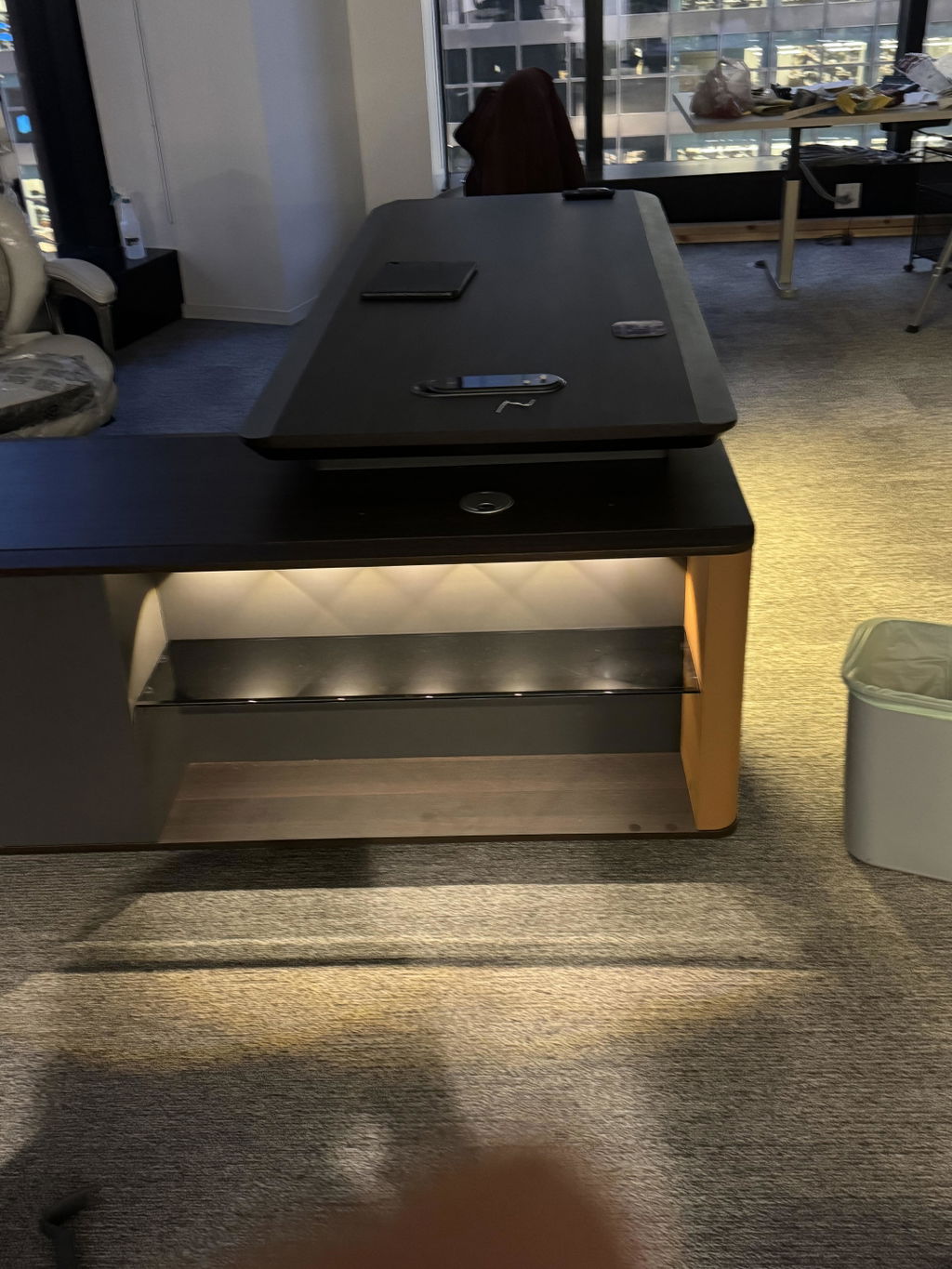
The small decisions matter more than they seem. Pull style and metal tone, edge profile, and, critically, power and cable management: where the outlets and grommets sit, and whether you want integrated power in the desktop. Add the storage you actually need, drawers, a modesty panel, a pedestal or a matching credenza, and any technology the desk has to hide. These are cheap to specify now and impossible to add later without a workaround.
Before anything is built, see the real thing. Approve physical samples of the key finishes and, for seating, sit in it; a finish on a screen never quite matches a finish in your light. Then confirm the full specification, dimensions, configuration, finish, hardware, in writing, and check the drawing against your measurements one last time. That signature is your protection: it's what the piece gets built to.
The spec is easiest when the people advising you also make the furniture, so nothing is lost in translation. Arc Grove® builds executive furniture to your dimensions, configuration, and finish, and helps you settle each decision along the way. Start your specification, or see the bigger case for building to measure in our guide on why bespoke.
Related articles
Space Planning & Buying
Made-to-measure executive furniture gives you exact fit, your exact finish, and a coordinated suite. When bespoke earns its place, and...
Read more →
Space Planning & Buying
A concrete guide to Arc Grove custom office furniture: the design process, real timelines, and what actually drives cost.
Read more →
Space Planning & Buying
Furnish a whole office on time with every room matching. The complete fit-out guide: process, lead times, budgeting, terms, and...
Read more →