Executive Desks & Offices
Veneer, Solid Wood & Stone: A Guide to Premium Desk Materials
At the executive level, the material makes the desk. What distinguishes wood veneer, solid wood, and stone, and how to...
Read more →
Matching Sets
Executive Desks & Offices
An L-shaped desk has one return and fits most offices; a U-shaped desk adds a second return for maximum surface but needs a larger room. How to choose.

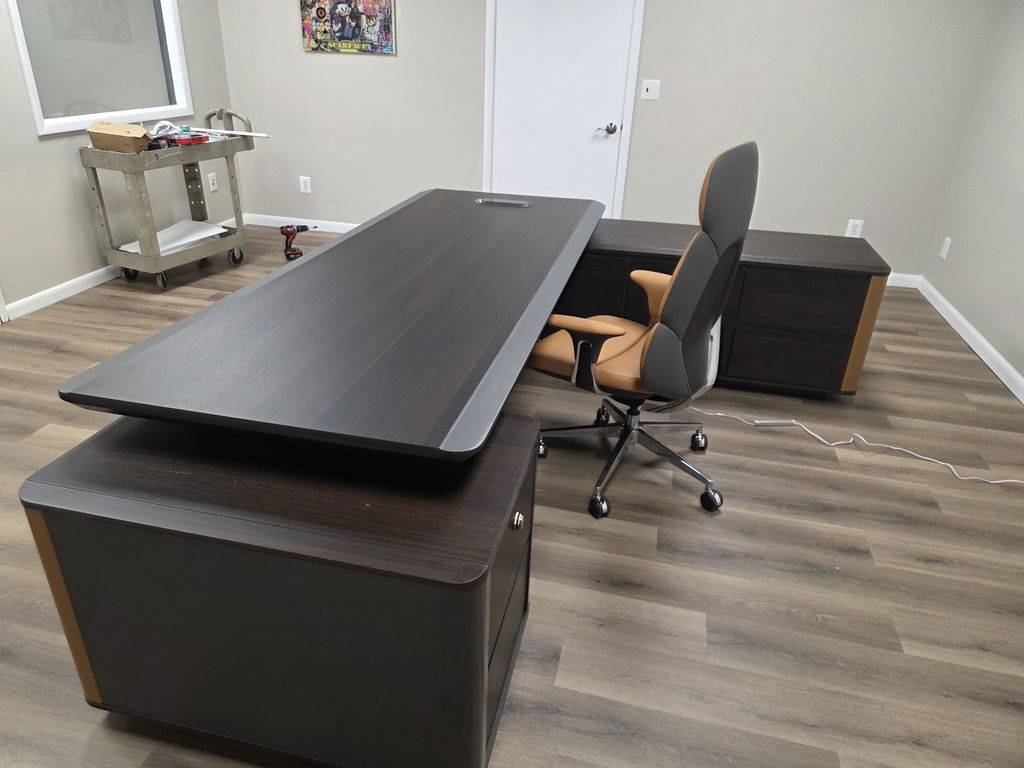
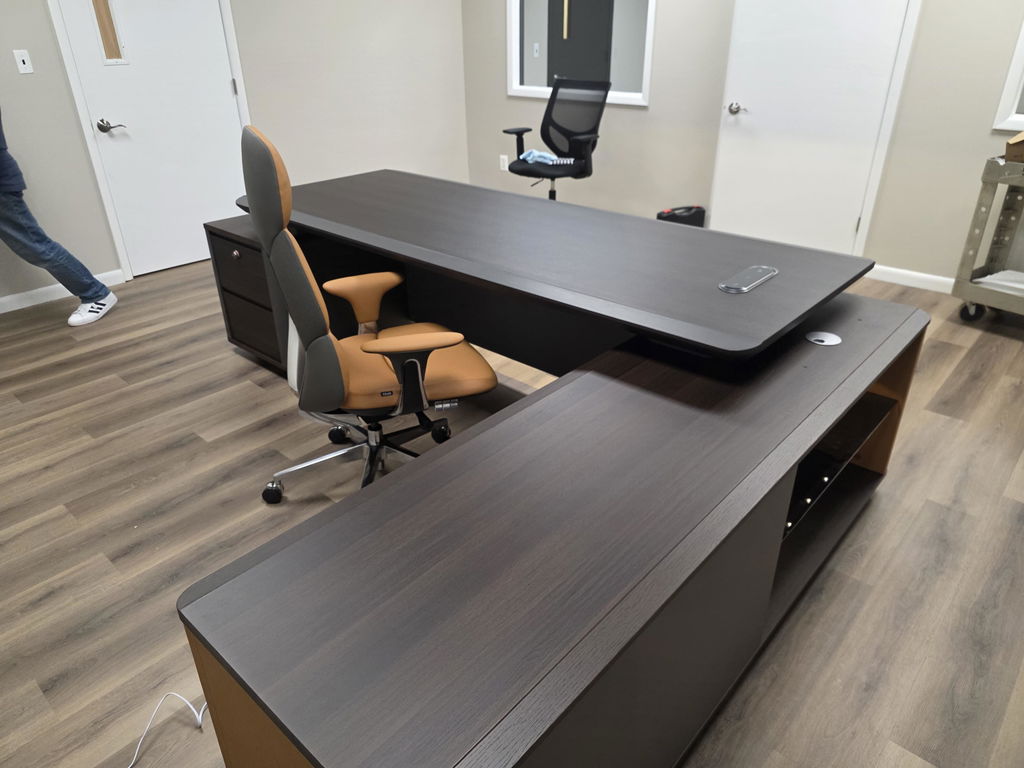
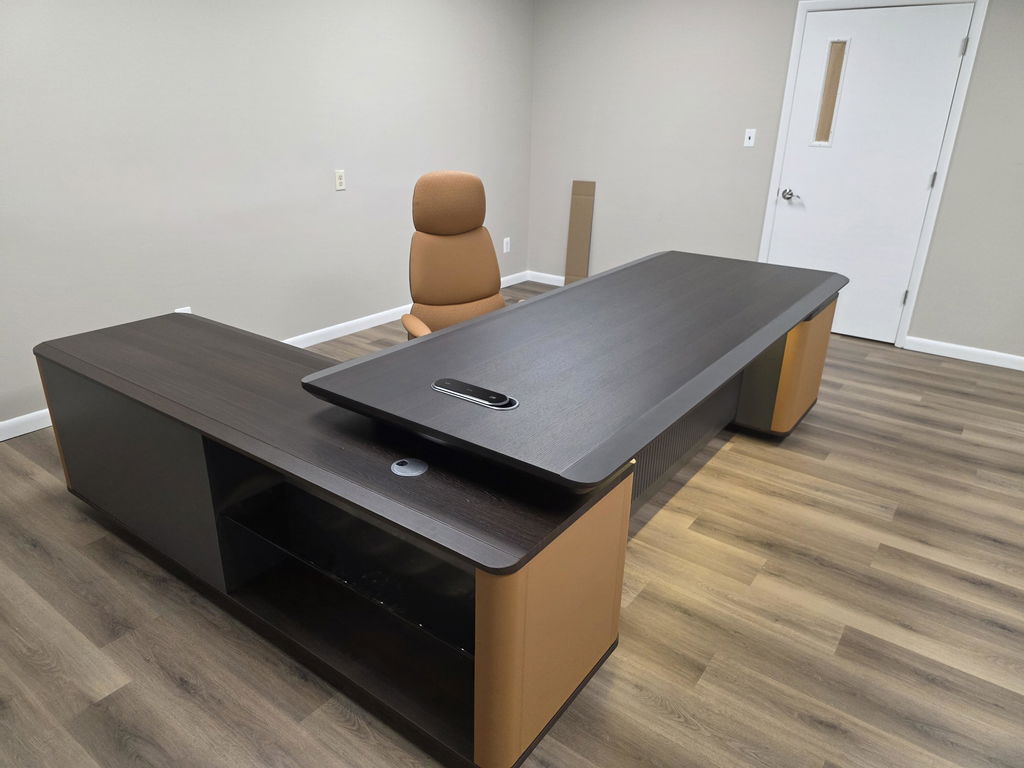
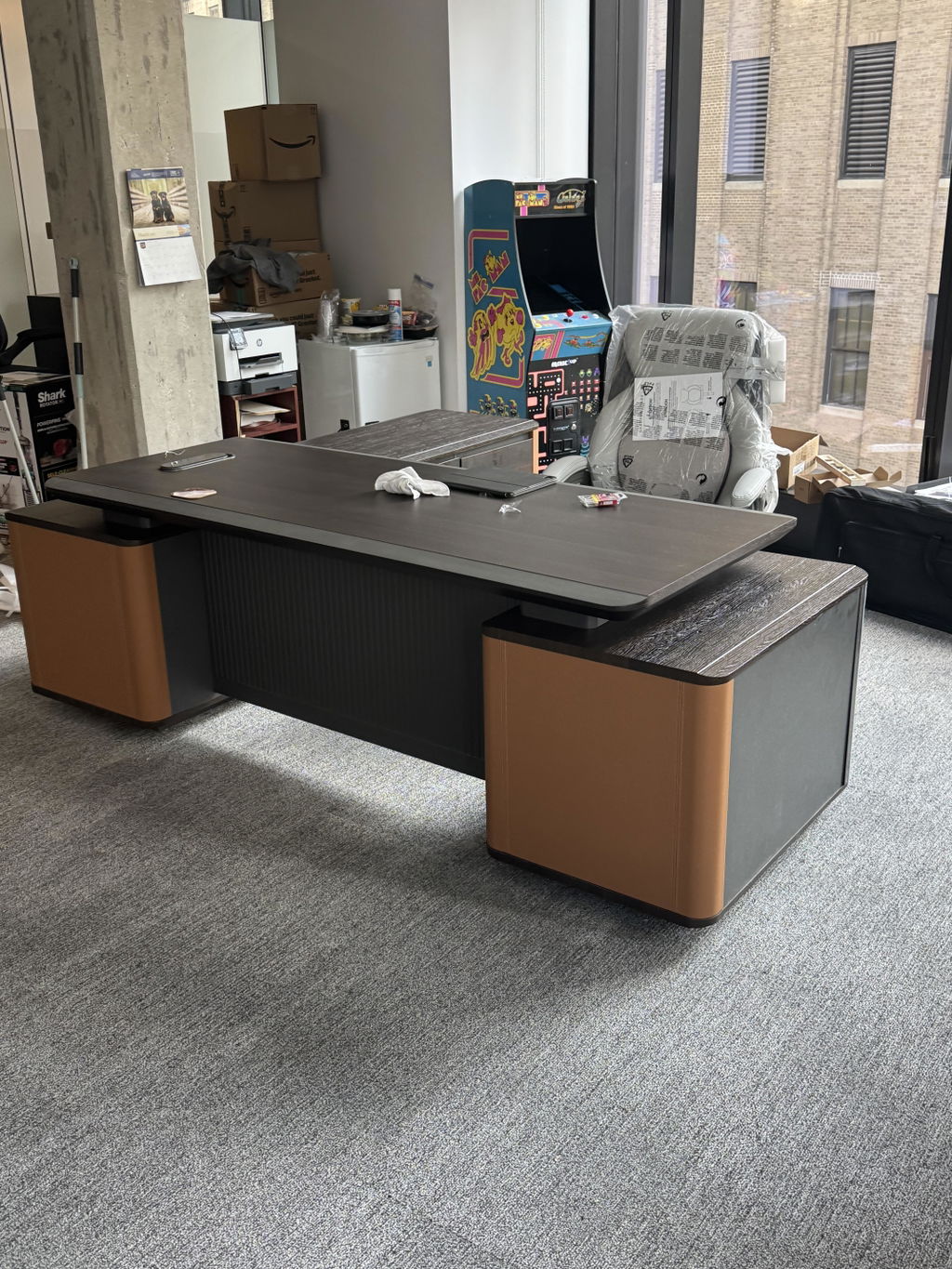
An L-shaped executive desk is a main surface with one return; a U-shaped desk adds a second return so the desk wraps around you on three sides. The L fits almost any office and is the versatile default; the U gives you the most work surface and a full command position, but it needs a larger room. Which one fits comes down to your square footage and how much surface you actually use.
Both are built from the same idea, a primary desk plus perpendicular returns that add surface without adding reach. The only real question is how many returns your room and your workflow call for.


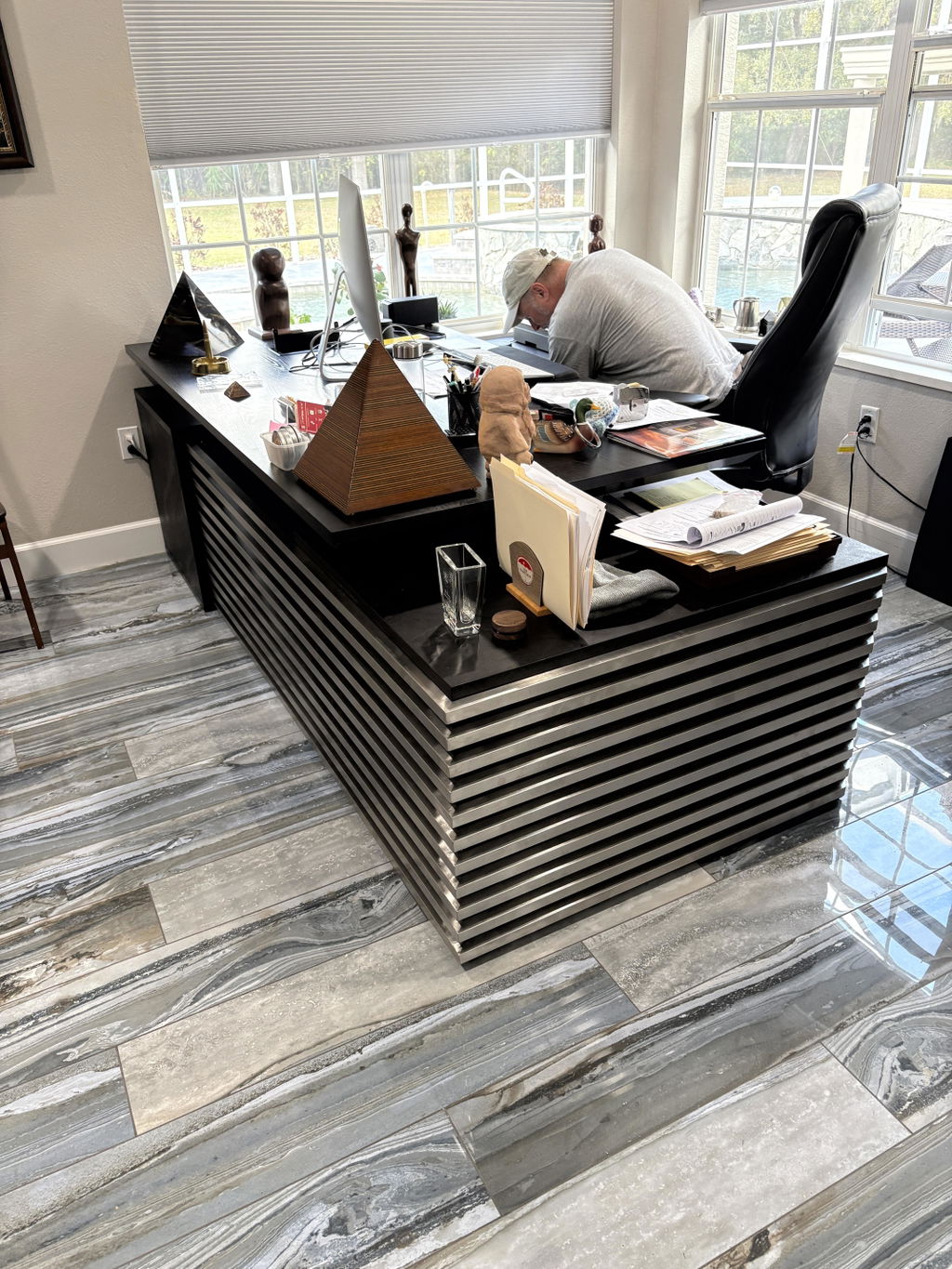
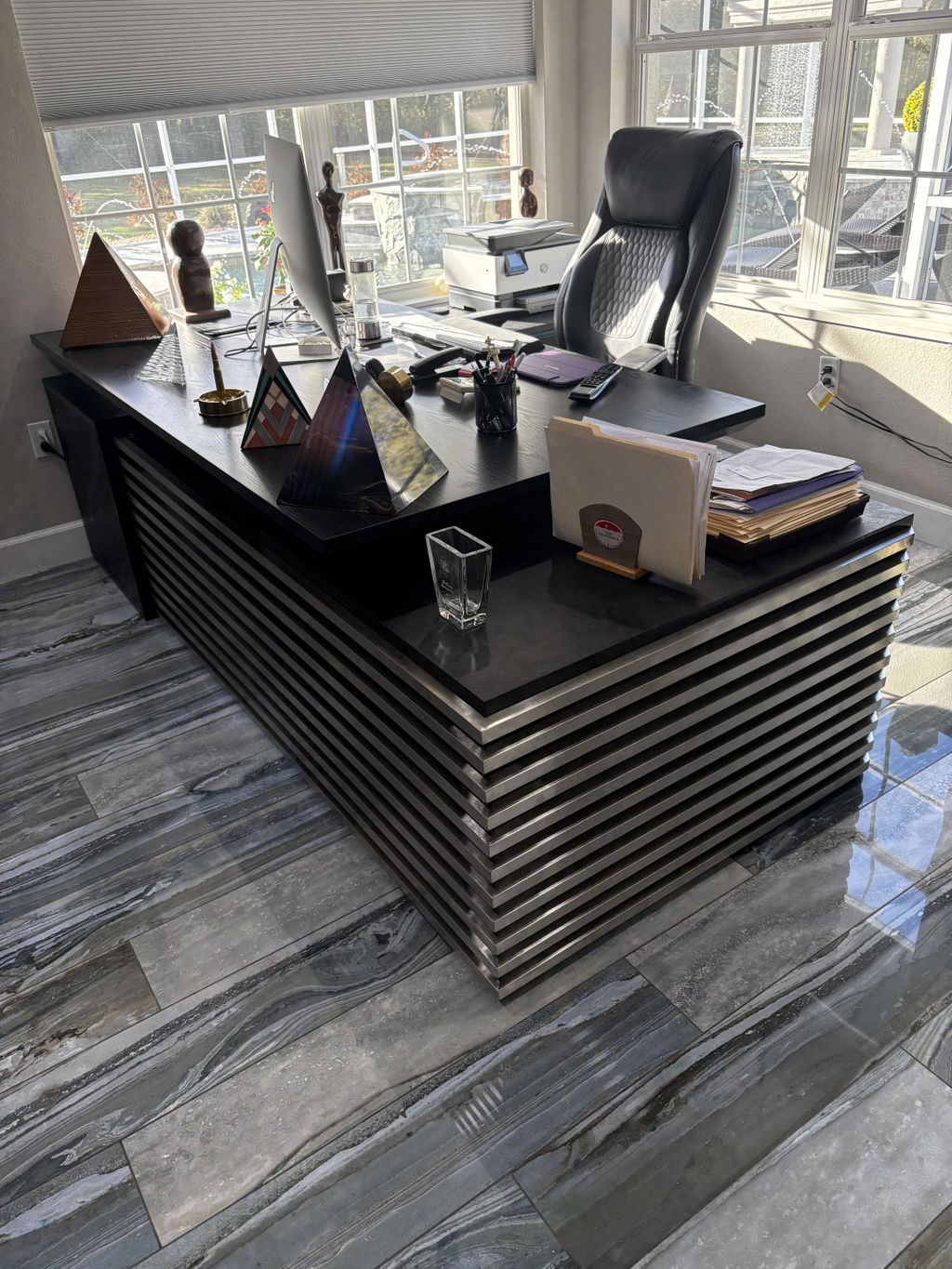
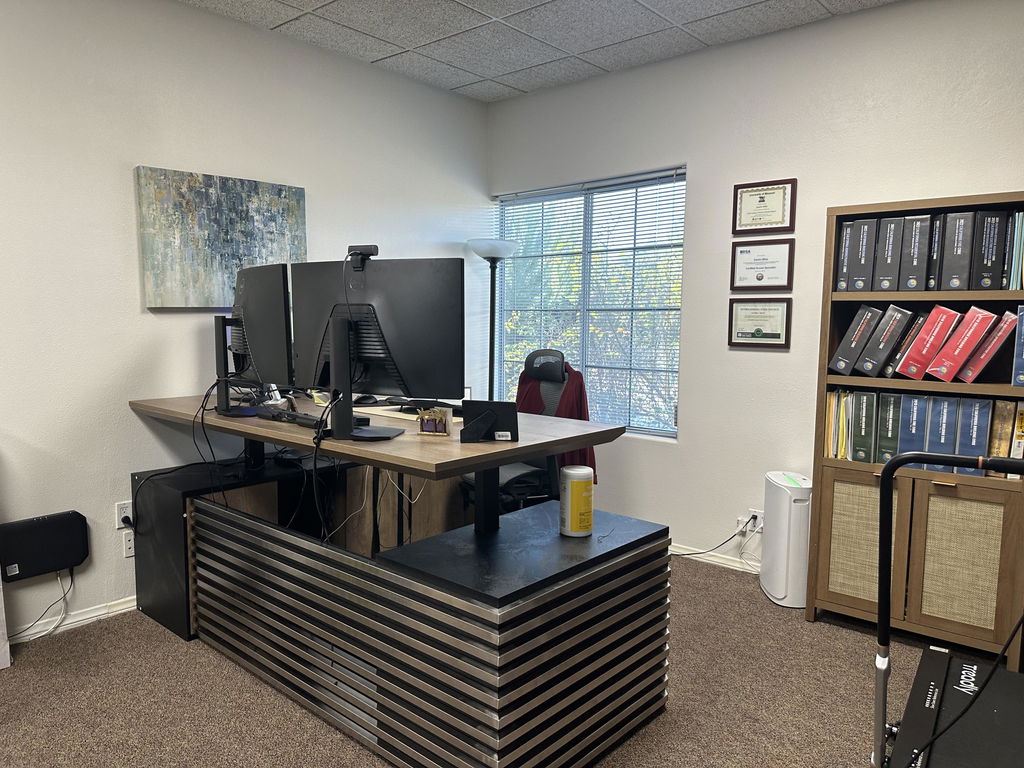
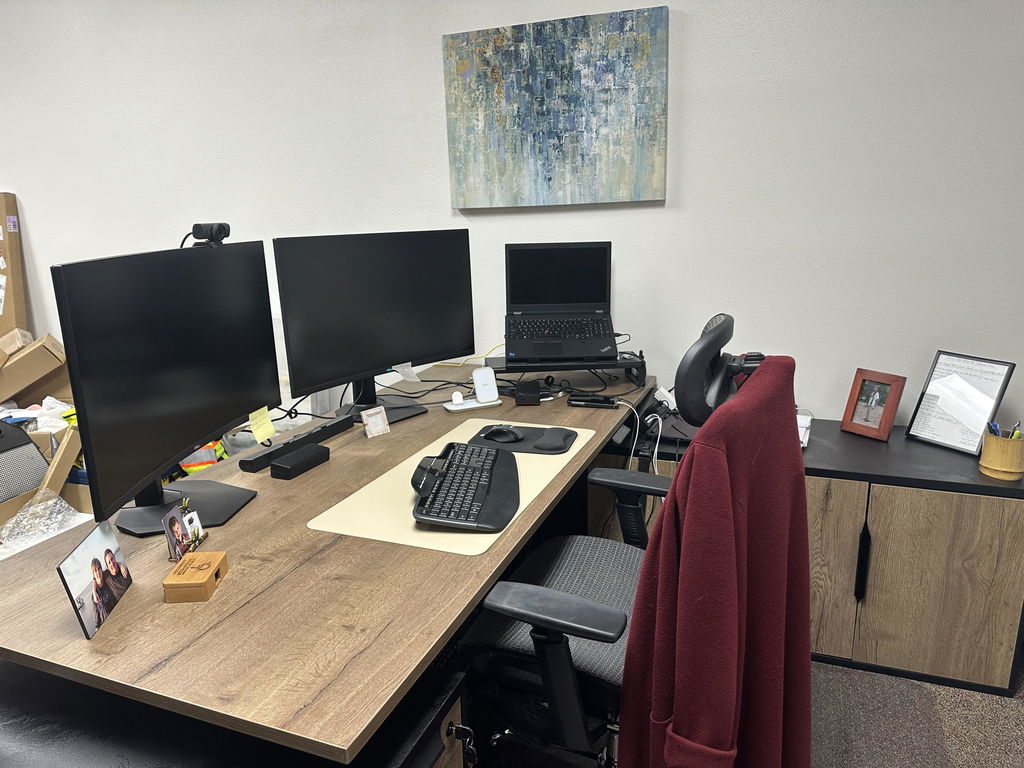
The L-shape is the right answer for most offices. The main surface faces you, the single return sits to one side for a monitor, a signing surface, or a guest-facing edge, and the whole thing tucks neatly against a wall or into a corner. It gives you a genuine executive footprint without demanding a large room, which is why it's the most common configuration and the one we build across the range.

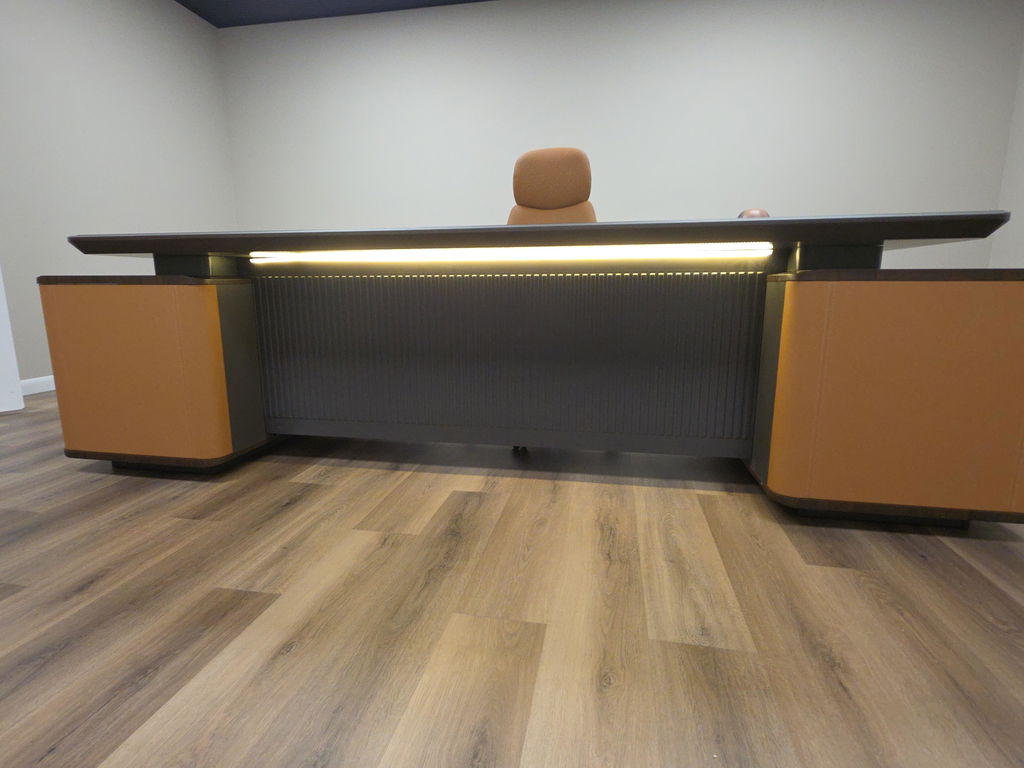
A U-shaped desk is simply an L with a second return added on the other side, wrapping the work surface around the chair on three sides. It gives you the most surface of any configuration and a true wraparound command position, everything within a chair's swivel, which suits people who spread out, run dual setups, or want maximum presence. The cost is space: a U needs a generous room, ideally 200 square feet or more, to leave proper clearance behind and beside the chair. Because a U is an L plus a return, it's a natural made-to-order configuration rather than a stock item.
Start with the floor. In a compact or mid-sized office, the L is almost always right, it delivers the executive look and enough surface without crowding. Step up to a U only when the room is large enough to carry it and your work genuinely fills the extra surface; in a tight room a U reads as blocked and cramped, undoing the point. Our guide to how big an executive office should be has the square-footage numbers.
One detail decides the whole layout: which side the return goes. Hand it so the desk keeps you in the command position, facing the door with a wall behind, rather than forcing the return against the only wall the desk should back onto. It's the single most common configuration mistake, and the easiest to avoid when the desk is built to your room. See our guide to where to put your executive desk for the placement.
L or U, left return or right, the desk should fit the room and the way you work. Arc Grove® builds executive desks to configuration and dimension, so you can specify the shape, the hand of the return, and whether a second return makes it a U. Browse executive desks, or build one to your layout.
Related articles
Executive Desks & Offices
At the executive level, the material makes the desk. What distinguishes wood veneer, solid wood, and stone, and how to...
Read more →
Executive Desks & Offices
With more than 150 finishes to choose from, the way to a coordinated office is a simple sequence: pick one...
Read more →
Executive Desks & Offices
A home executive office should be as considered as the one at headquarters. How to design a serious, presence-carrying space...
Read more →