Executive Desks & Offices
Veneer, Solid Wood & Stone: A Guide to Premium Desk Materials
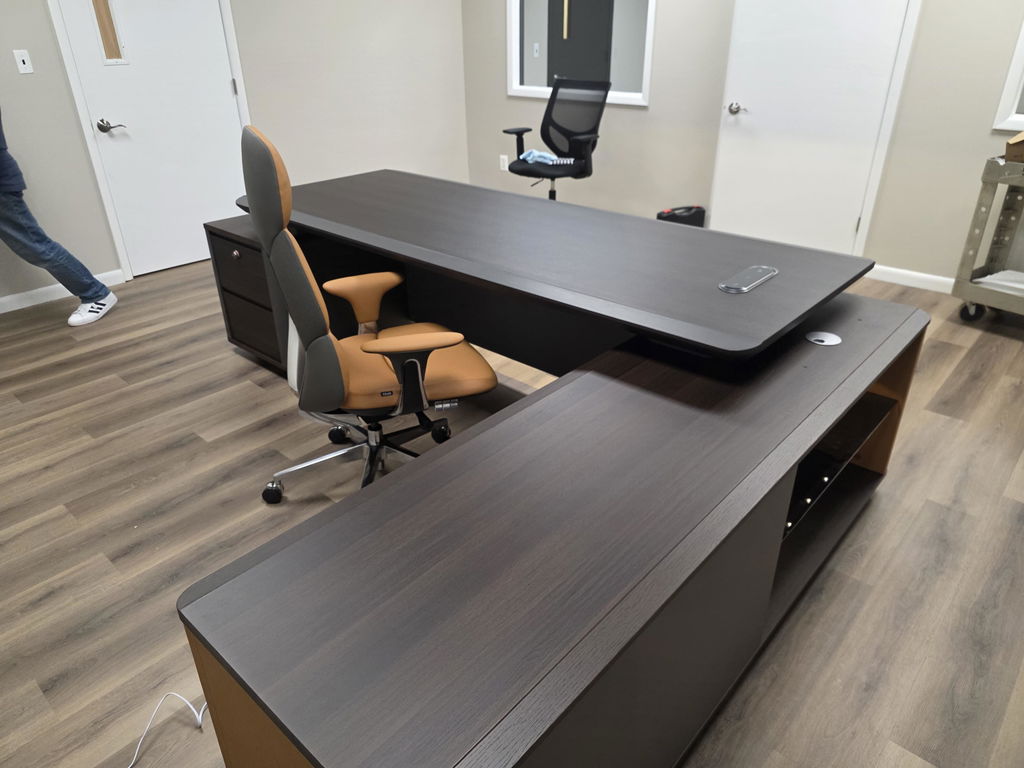
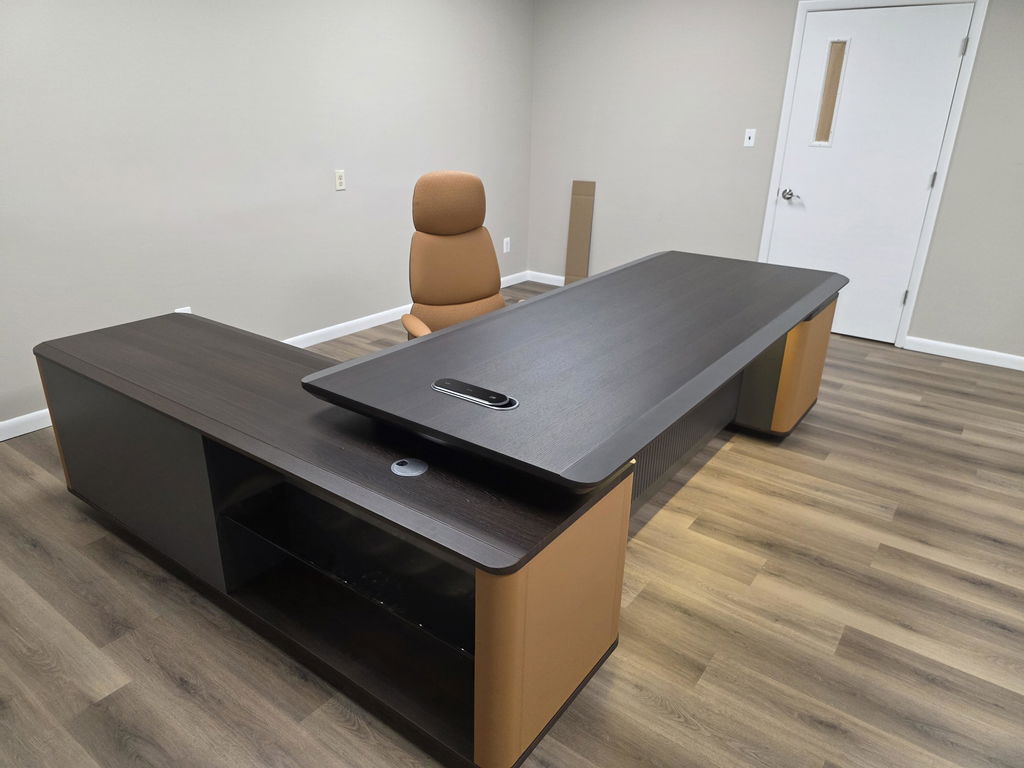
At the executive level, the material makes the desk. What distinguishes wood veneer, solid wood, and stone, and how to...
Read more →
Matching Sets
Executive Desks & Offices
A quiet, private executive office is designed, not lucky: block sound, absorb it with soft surfaces, and cover the rest. How furniture does most of the acoustic work.

A quiet executive office isn't luck, it's design, and it comes down to three moves: block the sound coming through walls and doors, absorb the sound bouncing around the room, and, where needed, cover what's left with low background sound. Furniture does more of this work than most people realize, which means you can make a room noticeably more private without touching the architecture.
Acoustics matter in an executive office for two reasons: confidential conversations shouldn't carry, and a room full of hard reflections is tiring to work and meet in. Both are solvable, and the fixes are mostly things you'd want in the room anyway.
Speech-privacy guidance targets a Sound Transmission Class of around 40 for general privacy and 45 or higher for confidential rooms, paired with enough absorption to control reverberation. Below that, normal conversation is intelligible through the wall, which is the difference between a private office and one that only looks private.
WELL Building Standard — Sound
Every acoustic problem is one of these three. Blocking is the building's job, solid walls that run to the deck, a proper door with seals, and glazing that isn't a single thin pane. Absorbing is where the room's surfaces come in, soft materials that soak up reflections instead of bouncing them. Covering is adding a low, steady background sound, a masking system or even quiet HVAC, so the odd word that gets through isn't intelligible. Most offices over-invest in the first and ignore the other two.

Hard, empty rooms echo; soft, furnished ones don't. A rug on a hard floor, upholstered seating, fabric drapes, and a wall of books all absorb sound and cut the harsh reverberation that makes a room feel loud and a call feel echoey. You don't need acoustic panels if the furniture is doing the work. The single most effective, and most attractive, absorber in an executive office is a full bookcase wall.
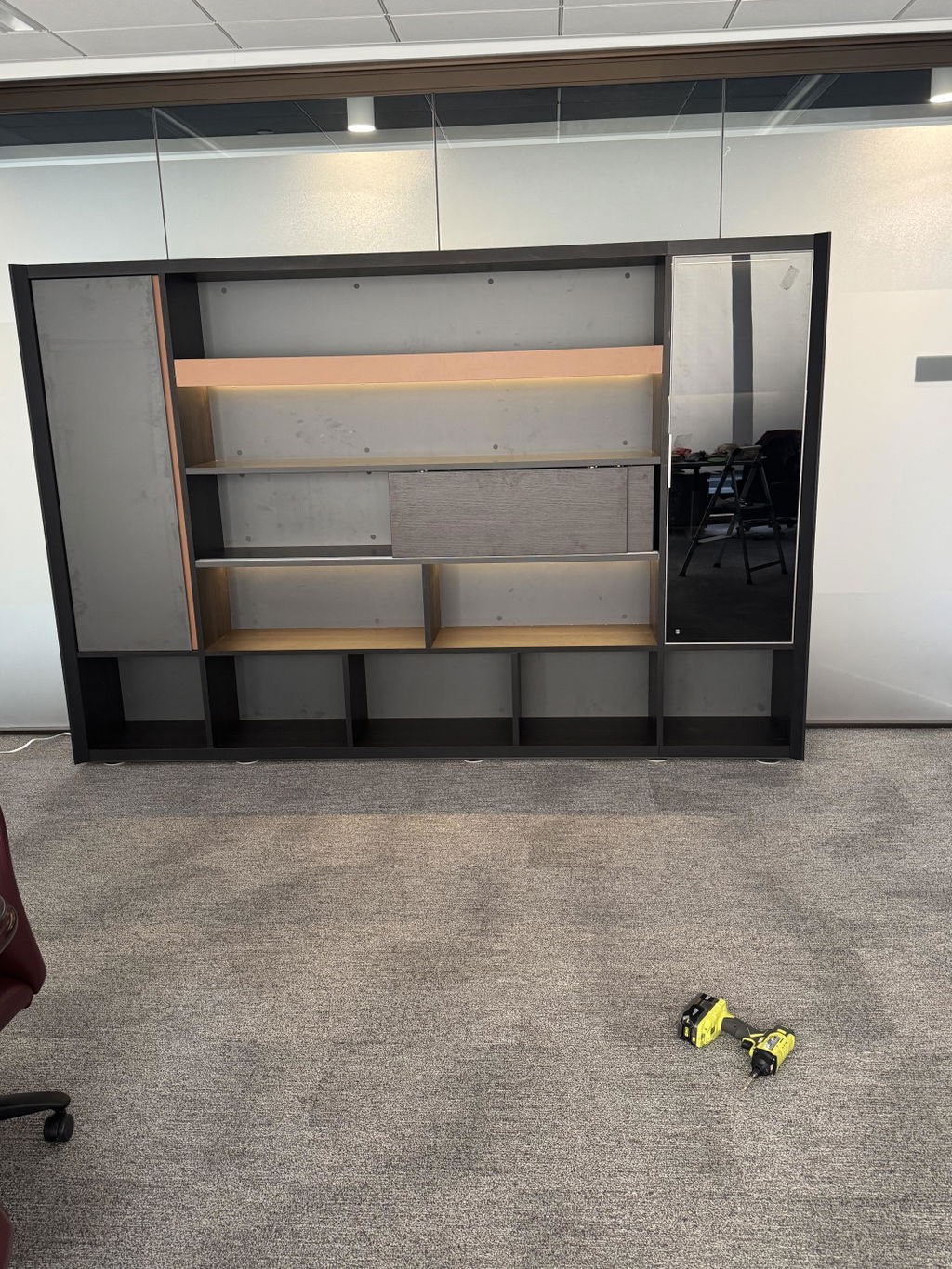
A shelving wall packed with books and objects of varying depth scatters and absorbs sound far better than a flat, hard surface. It's why a library feels hushed. Running a full-height bookcase wall behind or opposite the desk does double duty: it's the room's biggest visual statement and its best sound treatment, with no trade-off between the two.

Sound leaks through the weakest gap, usually the door. A solid-core door with seals and a sweep does more for privacy than thicker walls with a hollow door. Then let the furnishings absorb the rest: a private seating area in upholstered pieces, a rug beneath it, and drapes at the window turn a hard room soft. These are the same choices that make the office comfortable, doing acoustic work as a bonus.
Acoustics improve when the furniture is chosen with sound in mind, storage that absorbs, seating that's upholstered, materials that don't all reflect. Arc Grove® builds executive storage and seating to suit the room, so the pieces that make it look finished also help it stay private. Plan your office, or start with our guide to designing an executive office.
Related articles
Executive Desks & Offices
At the executive level, the material makes the desk. What distinguishes wood veneer, solid wood, and stone, and how to...
Read more →
Executive Desks & Offices
With more than 150 finishes to choose from, the way to a coordinated office is a simple sequence: pick one...
Read more →
Executive Desks & Offices
A home executive office should be as considered as the one at headquarters. How to design a serious, presence-carrying space...
Read more →