Conference & Boardroom
Conference Table Shape and the Psychology of the Meeting
A conference table's shape sends a message: rectangular signals hierarchy, round equality, boat-shaped clear sightlines, square intimacy. How to match...
Read more →
Matching Sets
Conference & Boardroom
A boardroom is designed to signal authority through scale, materials, symmetry, and a clear head of the table. How it differs from a conference room, and how to get it right.

A boardroom isn't just a bigger conference room. It's the room where the most consequential decisions get made and the most important guests are received, and it's designed to say so, through scale, materials, symmetry, and a clear head of the table. Where a conference room is built to work in, a boardroom is built to signal permanence and authority the moment someone walks in.
The distinction matters because it changes every choice. Get it right and the room does quiet work for you before a word is spoken; treat it as a generic meeting space and you squander one of the few rooms whose whole job is to impress.

The three are easy to conflate and worth separating. A meeting room is small and casual, for quick huddles. A conference room is a flexible working space for the everyday. A boardroom is the formal top table, more permanent, more finished, and reserved for the meetings that carry weight. Only the boardroom is designed primarily to signal, which is why it earns the best materials and the most deliberate layout in the building.
Presence starts with size. A boardroom wants a long, substantial table, rectangular or boat-shaped, that fills the room with intent and gives everyone a proper place. Leave generous circulation around it, at least the 36 inches accessibility requires and ideally more, so the table reads as commanding rather than crammed. The goal is a room that feels considered and unhurried, which means not overfilling it.

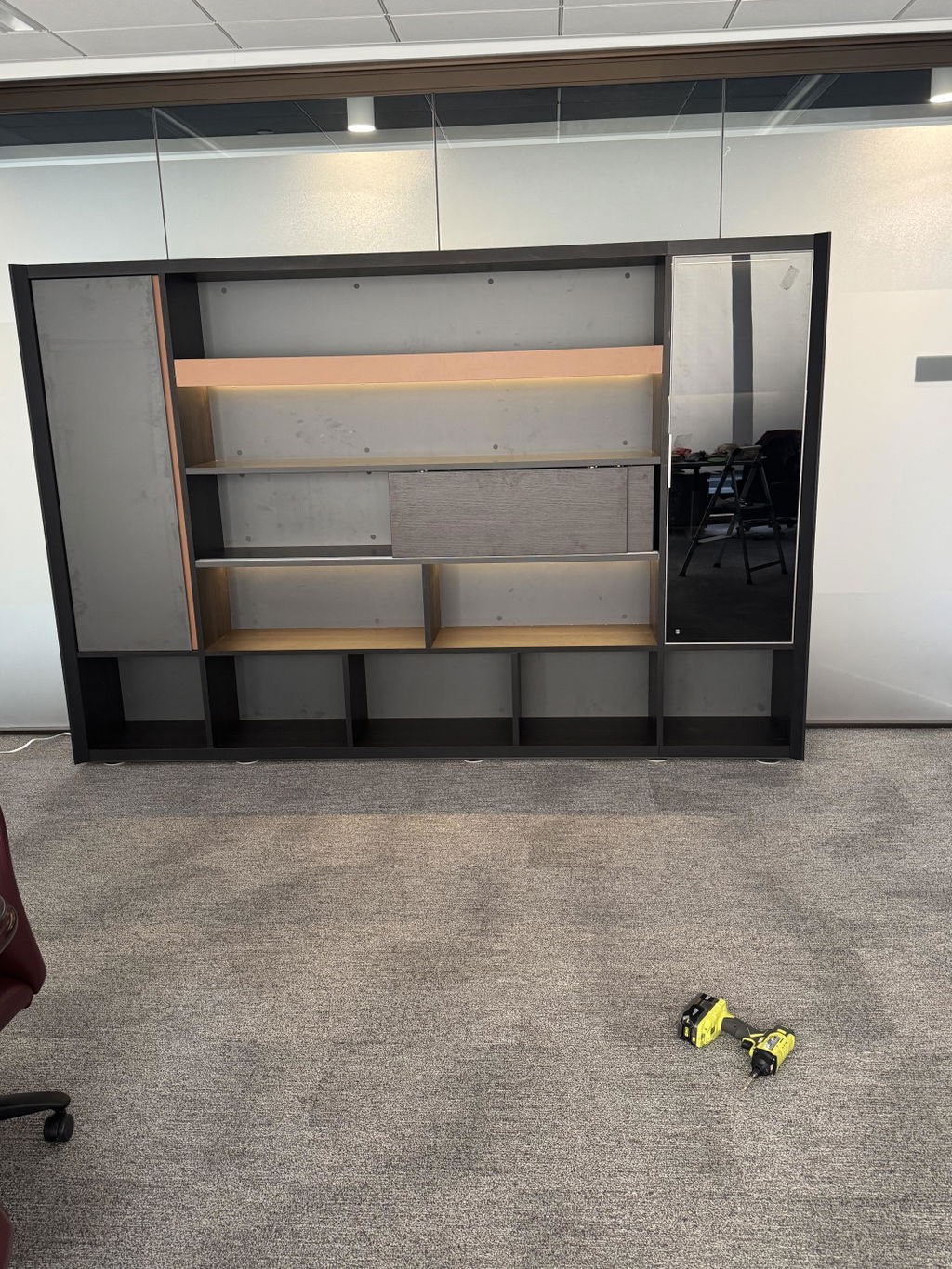
Authority is carried by material. Deep, richly grained wood, stone, leather seating, and warm metals like bronze and brass all read as permanence and investment. Keep the palette disciplined and let the table be the hero. A wall of full-height storage or paneling behind the head of the table anchors the room and gives it a backdrop, the same move that grounds an executive office.
Formality comes from order. Center the table in the room, balance the seating, and give the head of the table a clear position, framed by the wall, the art, or the screen behind it, so leadership has a defined place. Hang art centered, align the lighting, and keep the composition symmetrical. That balance is what the eye reads as control and seriousness.
Nothing undermines a boardroom faster than glare on a screen or a tangle of cables. Layer the lighting so it can dim for presentations and lift for discussion, keep it warm, and integrate the AV and power into the table and walls so the technology serves the room without cluttering it. Our guide to executive office lighting covers the layering.
A boardroom table is worth building to the room and the message. Arc Grove® builds conference and boardroom tables to custom dimensions, shapes, and finishes, with integrated power and cable management, so the centerpiece fits the space and reads as intended. Browse conference tables, or choose the geometry with our conference table shape guide.
Related articles
Conference & Boardroom
A conference table's shape sends a message: rectangular signals hierarchy, round equality, boat-shaped clear sightlines, square intimacy. How to match...
Read more →
Conference & Boardroom
A conference table needs about 24 inches of edge per seated person at a minimum, or 30 inches for comfort...
Read more →
Conference & Boardroom
How big should a conference room be? Exact dimensions, per-person clearances, and table and seating recommendations for small, medium, large,...
Read more →