Executive Desks & Offices
Veneer, Solid Wood & Stone: A Guide to Premium Desk Materials
At the executive level, the material makes the desk. What distinguishes wood veneer, solid wood, and stone, and how to...
Read more →
Matching Sets
Executive Desks & Offices
A sit-stand executive desk lets you alternate sitting and standing with the presence of a proper executive desk. Why it matters, and how to set the height right.

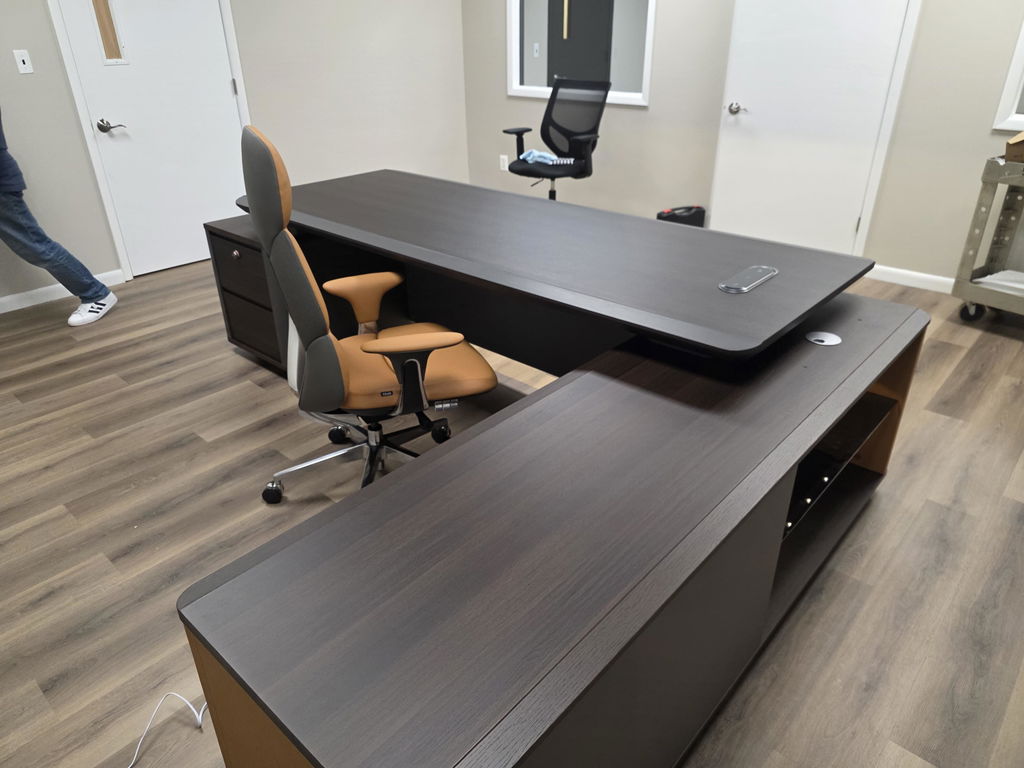
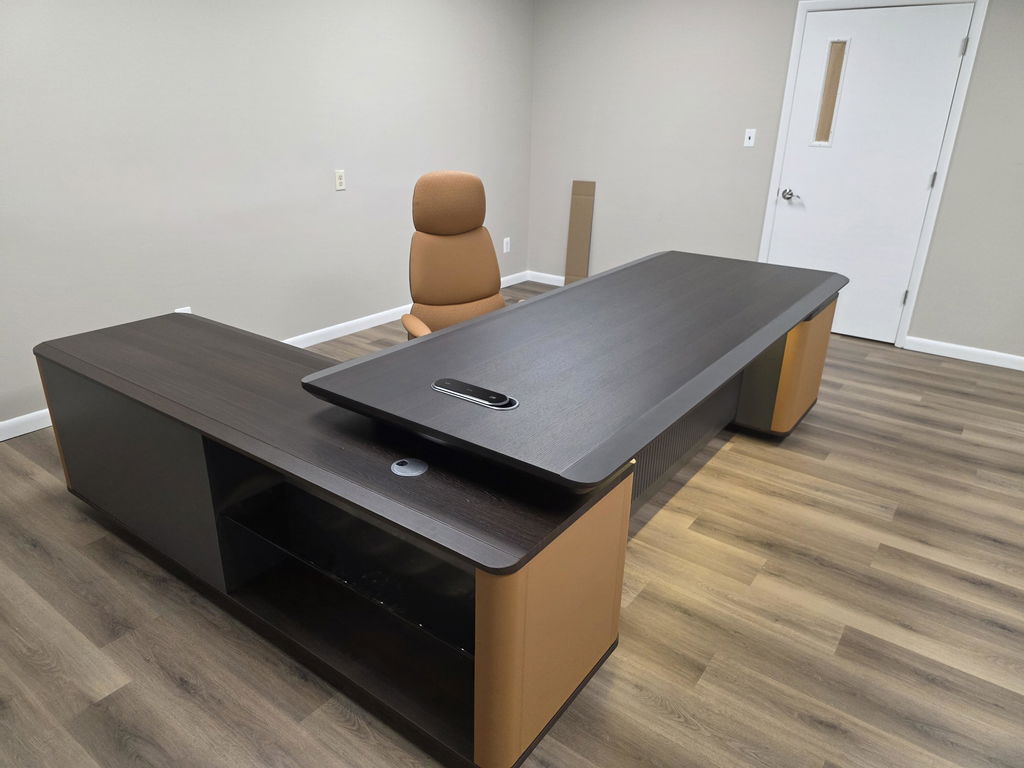
A sit-stand executive desk lets you alternate between sitting and standing through the day, which eases the strain of hours at a desk and helps keep your energy up. The executive version does it without looking like a gym machine: the presence and finish of a proper executive desk, with an electric lift underneath. The one thing that makes or breaks it is setting the height correctly, sitting and standing.
Height-adjustable desks used to be a startup fixture; they've since become standard at every level, for the simple reason that staying in one position all day isn't good for anyone. At the executive tier the question isn't whether to have one, but how to get one that looks the part and is set up right.

The case is comfort and focus, not novelty. Breaking up long sedentary stretches by standing for part of the day reduces the back, neck, and shoulder strain that builds over hours at a desk, and many people find they think more clearly on their feet for calls and reading. You don't stand all day; you switch when you feel like it. That option, more than any single position, is the benefit.
Ergonomics guidance is consistent: the body isn't built to hold one posture for hours, and the fix is movement and a properly fitted workstation, forearms roughly parallel to the floor, the screen at eye level, and regular changes of position. A sit-stand desk simply builds that movement into the day.
OSHA — Computer Workstations eTool

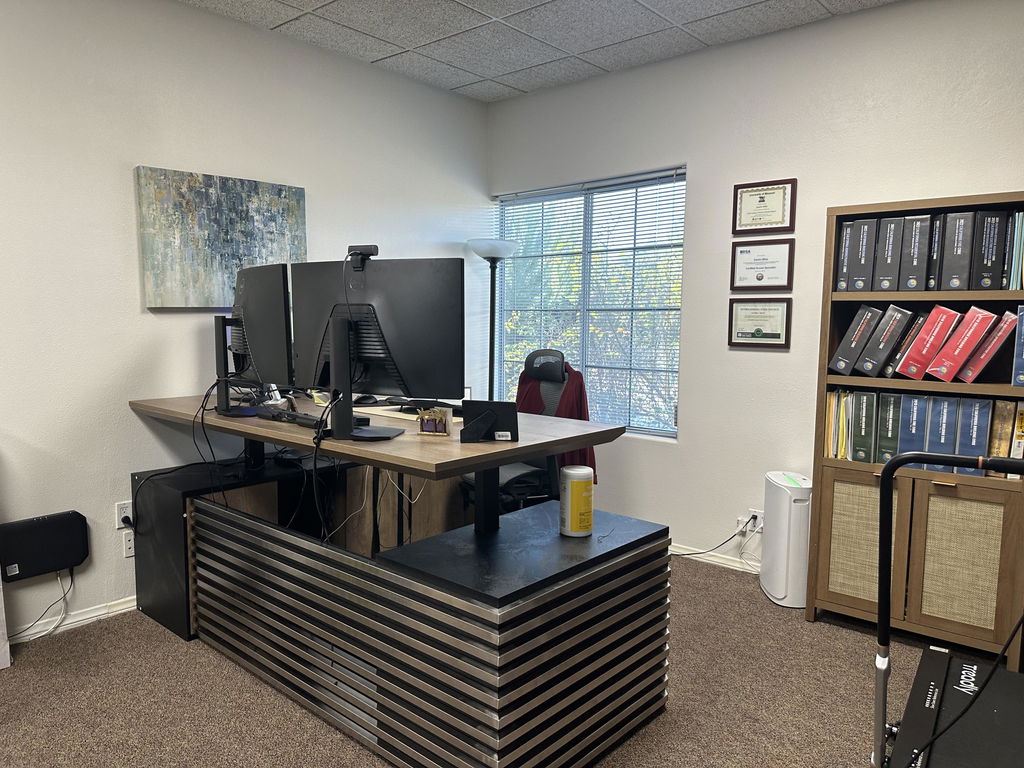
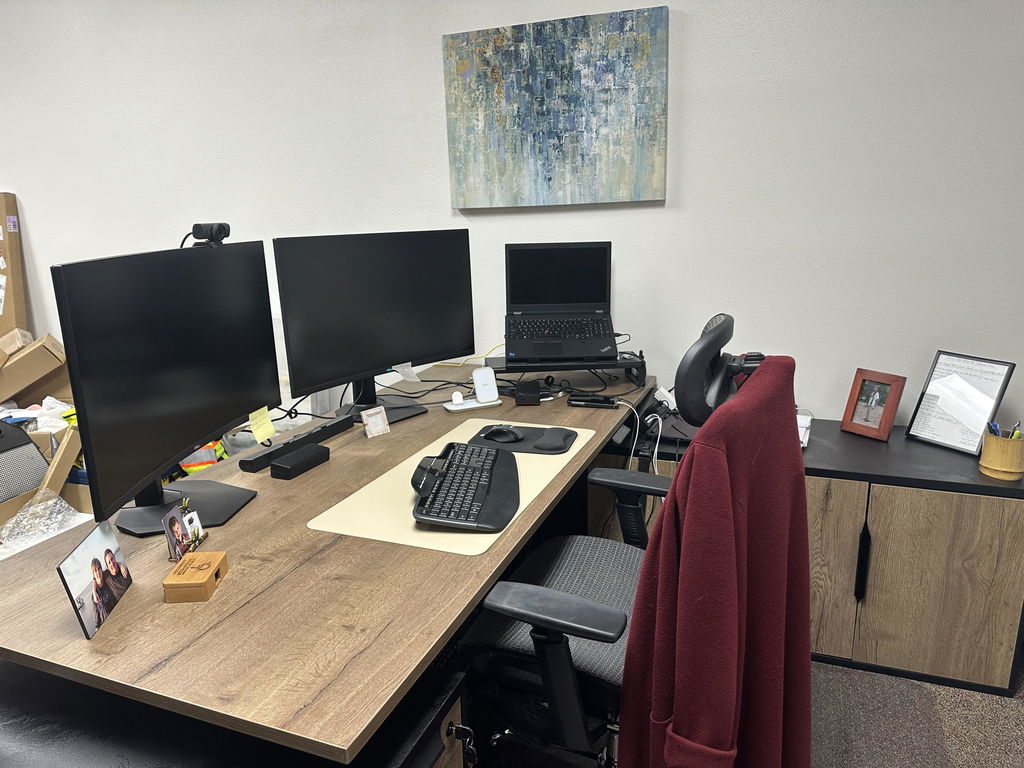
The same two rules hold whether you're sitting or standing: your forearms should rest roughly level with the desktop, elbows near 90 degrees, and the top of your screen should sit at or just below eye level, about 20 to 30 inches from your face. That means a seated surface around 29 to 30 inches and a standing surface anywhere from 42 to 46 inches depending on your height. Set both positions to those rules, use the memory presets, and the desk does the rest.
Sit-stand ergonomic targets
| Setting | Target |
|---|---|
| Seated surface height | 29–30″ (forearms level) |
| Standing surface height | 42–46″ (by your height) |
| Elbow angle | ~90° |
| Top of screen | At or just below eye level |
| Screen distance | 20–30″ |
Beyond the finish, check the mechanism. Look for an electric lift with enough range to reach your standing height, stability at full extension (a large desk shouldn't wobble raised), sufficient weight capacity for monitors and kit, and memory presets so returning to your exact seated and standing heights is one button. An L-shaped adjustable desk gives you the executive footprint and the movement in one piece.
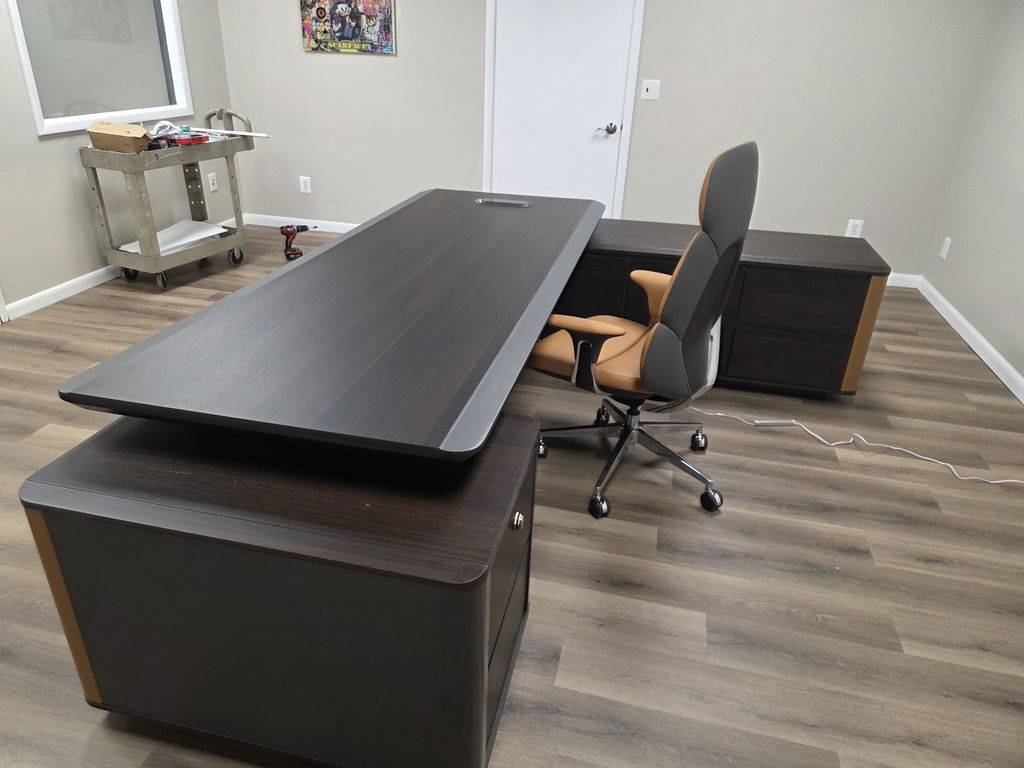
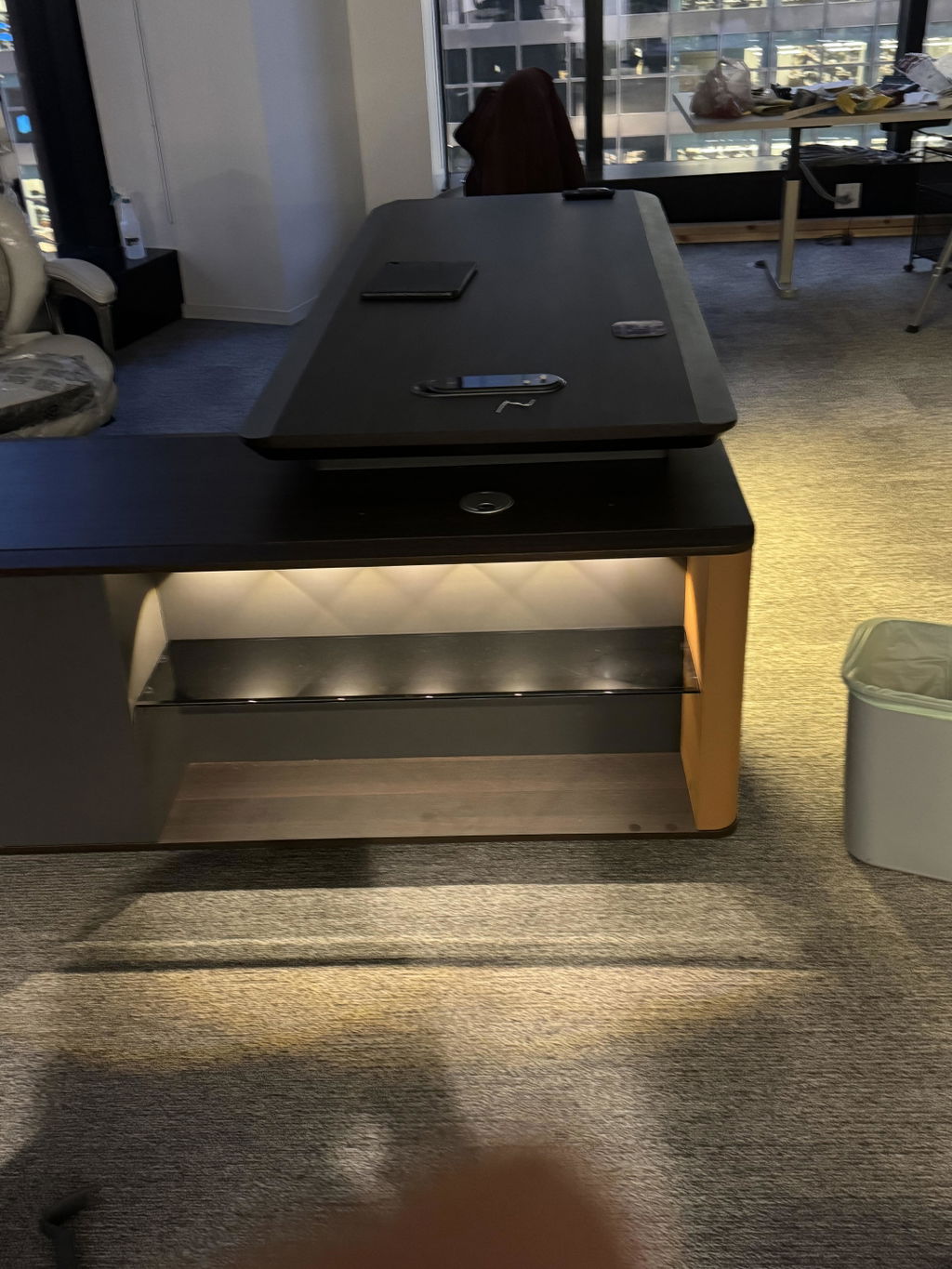
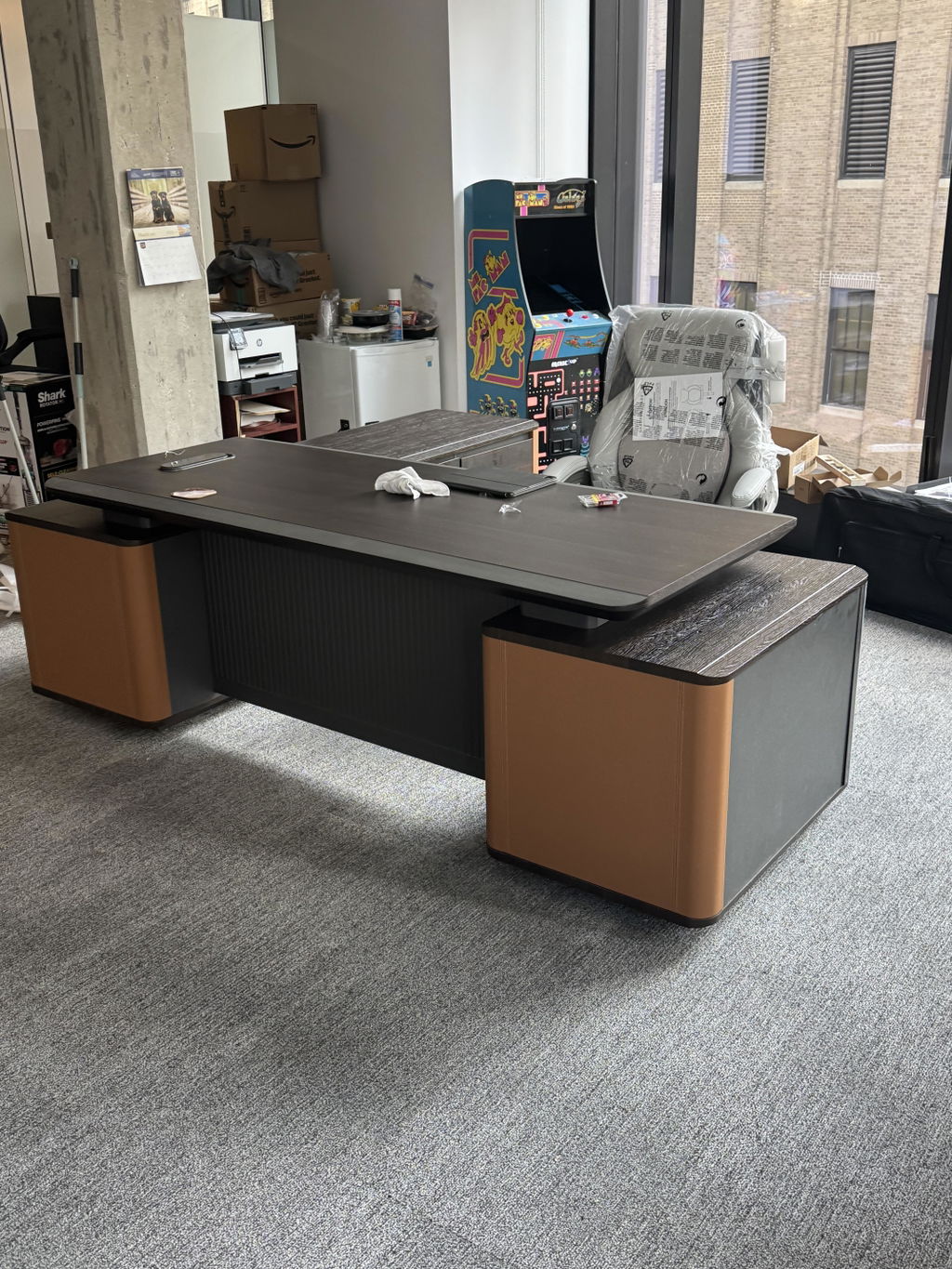
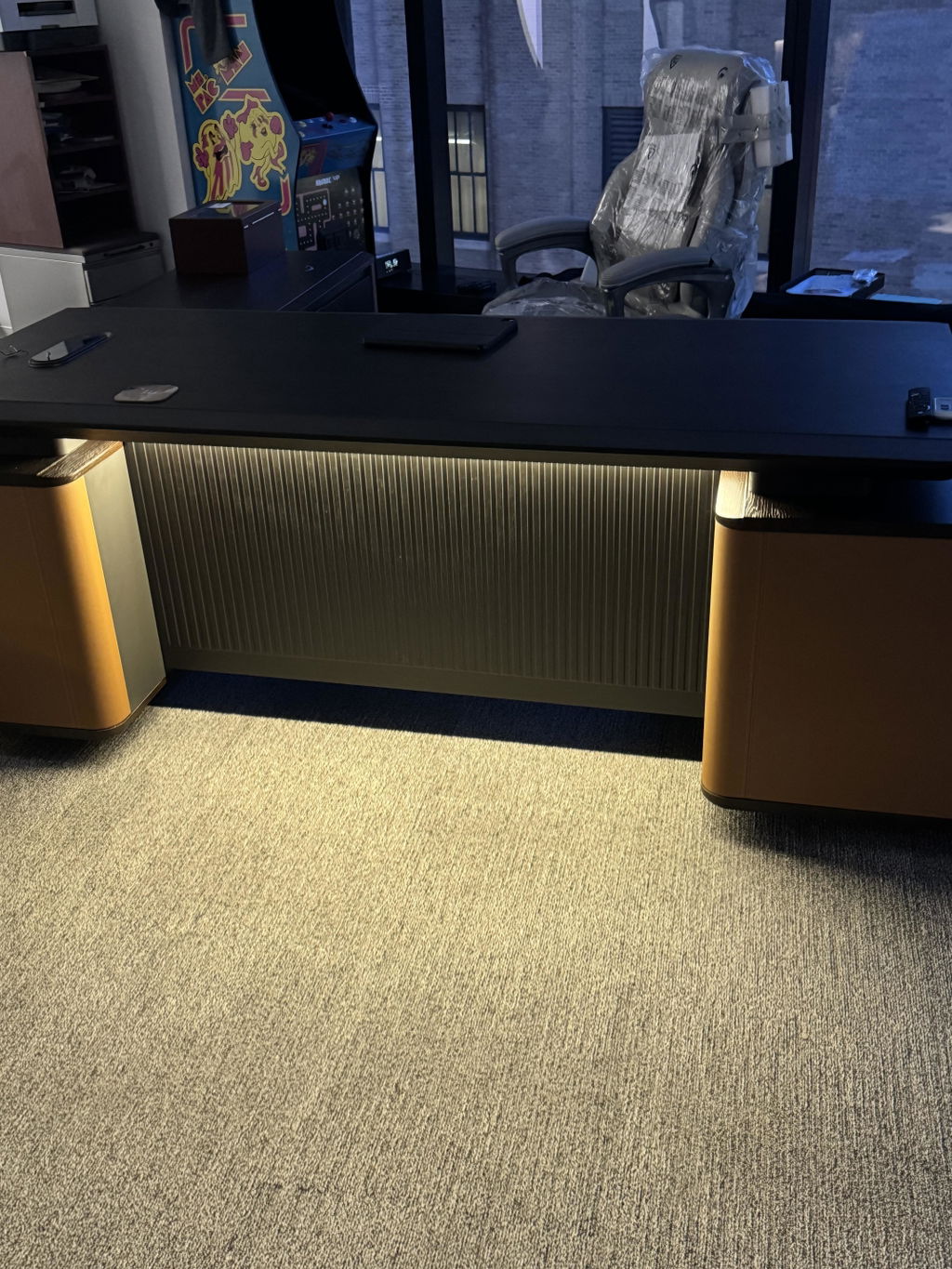
The executive sit-stand should read as a desk, not equipment. Arc Grove® builds height-adjustable executive desks, including L-shapes, in executive finishes with the lift integrated, so you get the ergonomics without sacrificing the presence. Browse executive desks, or check the numbers in our executive desk dimensions guide.
Related articles
Executive Desks & Offices
At the executive level, the material makes the desk. What distinguishes wood veneer, solid wood, and stone, and how to...
Read more →
Executive Desks & Offices
With more than 150 finishes to choose from, the way to a coordinated office is a simple sequence: pick one...
Read more →
Executive Desks & Offices
A home executive office should be as considered as the one at headquarters. How to design a serious, presence-carrying space...
Read more →