Executive Desks & Offices
Veneer, Solid Wood & Stone: A Guide to Premium Desk Materials
At the executive level, the material makes the desk. What distinguishes wood veneer, solid wood, and stone, and how to...
Read more →
Matching Sets
Executive Desks & Offices
The best office desks for executives: standard, standing, L-shaped, compact, and executive types compared, plus materials, storage, cable management, and ergonomic features to look for.

The best office desk fits how you work: a standard rectangular desk (48 to 72 inches) for most rooms, a standing desk for movement, an L-shaped for two work zones, or an executive desk (60 to 72 inches) for presence. From there, choose the material (wood, metal, glass, or laminate) and the storage, cable management, and ergonomics to match.
The right desk is the foundation of a workspace: balancing surface area, storage, and ergonomics with the image you want to project. This guide covers the main types, materials, and features so you can choose the one that fits your work and your office.
Executive desks are the largest of them, running 60 to 72 inches wide. Specific models by budget are in the best executive desks roundup.

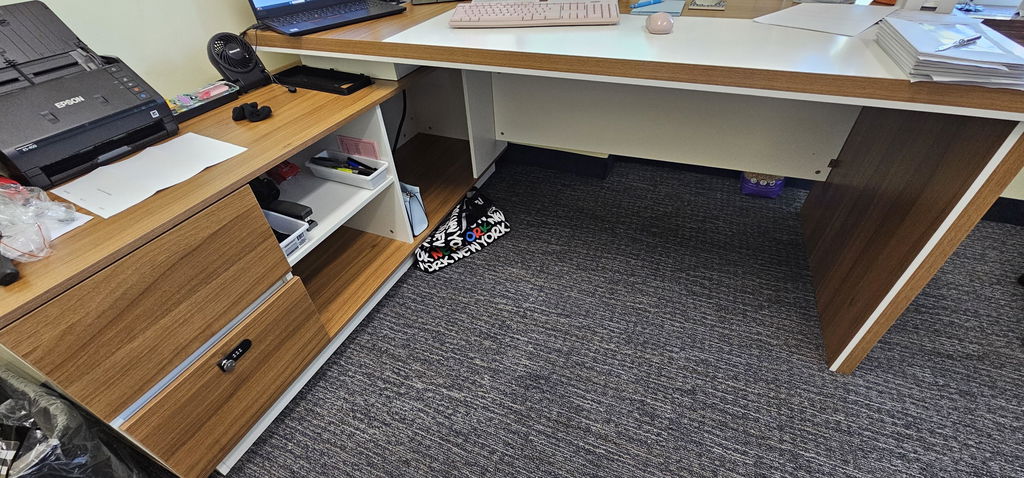
Look for sturdy construction in a standard rectangular desk (48 to 72 inches wide) at an ergonomic 29-to-30-inch height. Quality materials like solid wood or commercial-grade steel ensure longevity, integrated cable management keeps it professional, and enough storage covers the essentials.

A standing desk delivers real health benefits by letting you change position through the day. Electric models add programmable height presets and a clean look while easing back strain and lifting energy: a worthwhile investment in productivity and wellbeing.

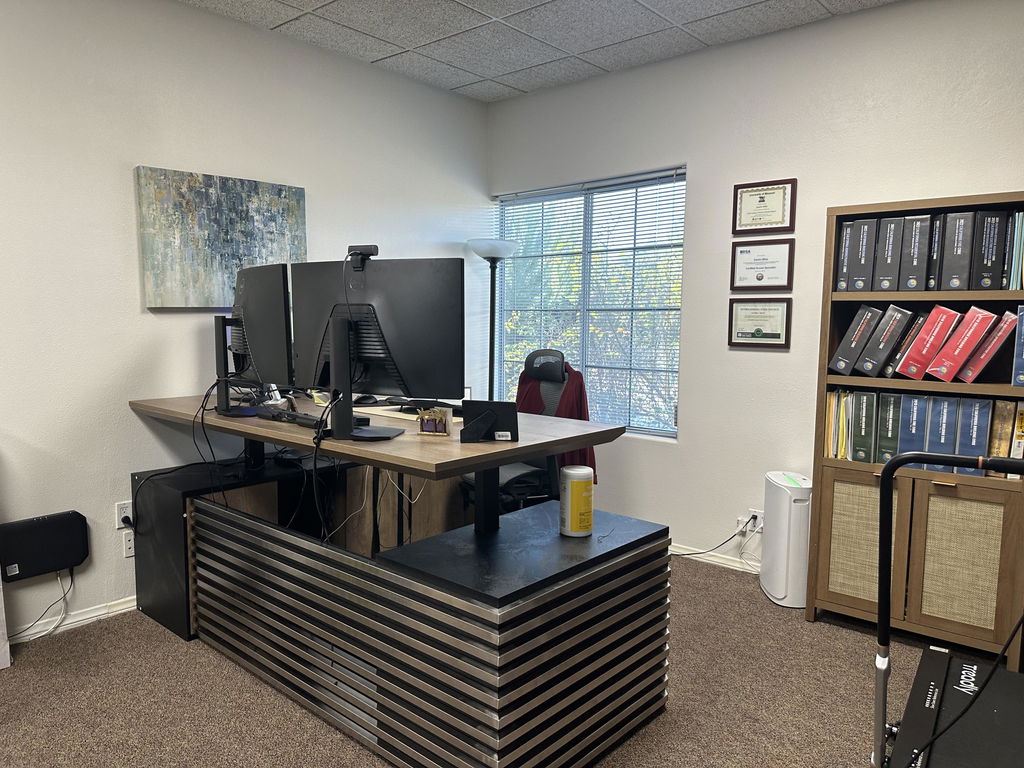
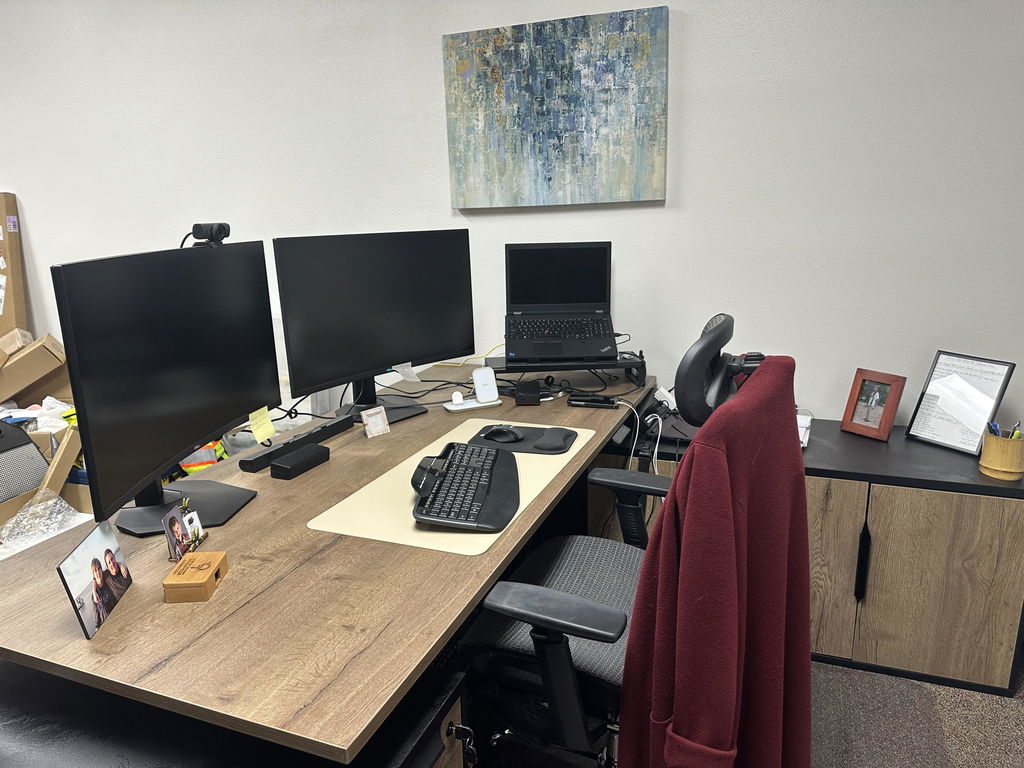
Perfect for corners, L-shaped desks create distinct zones that help compartmentalize tasks. Consider the return direction, material, and storage when choosing one.
Space-efficient options include foldable desks, wall-mounted floating designs, and models with vertical storage: look for hidden compartments, sliding keyboard trays, and built-in charging that keep function without excess footprint.

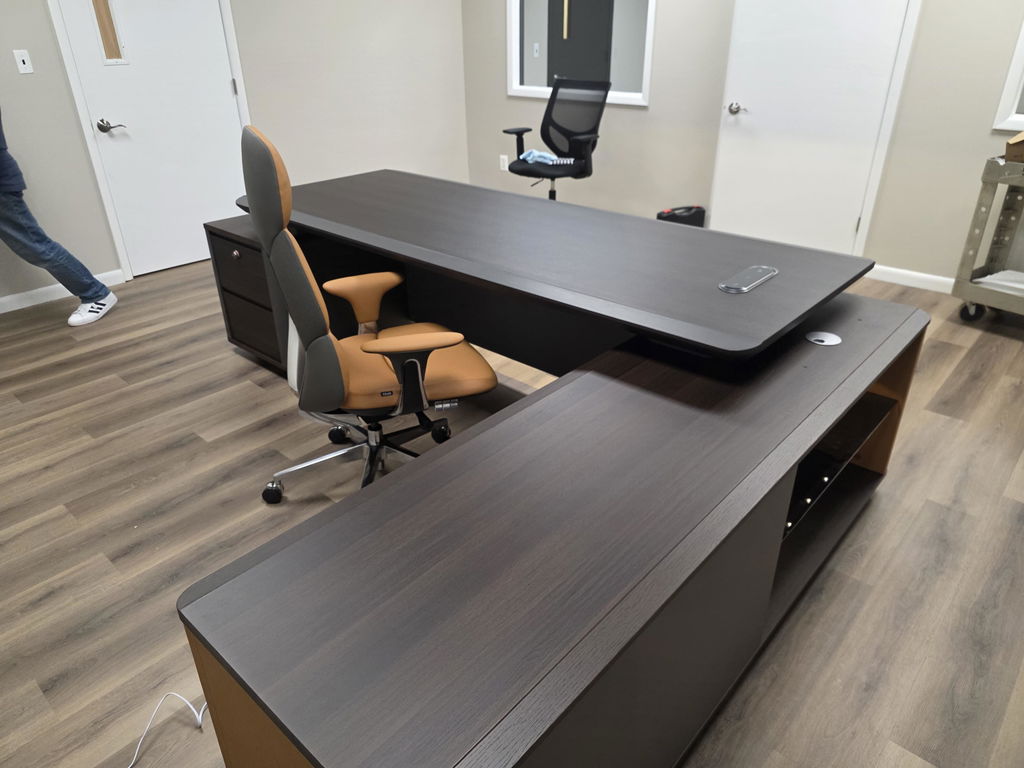
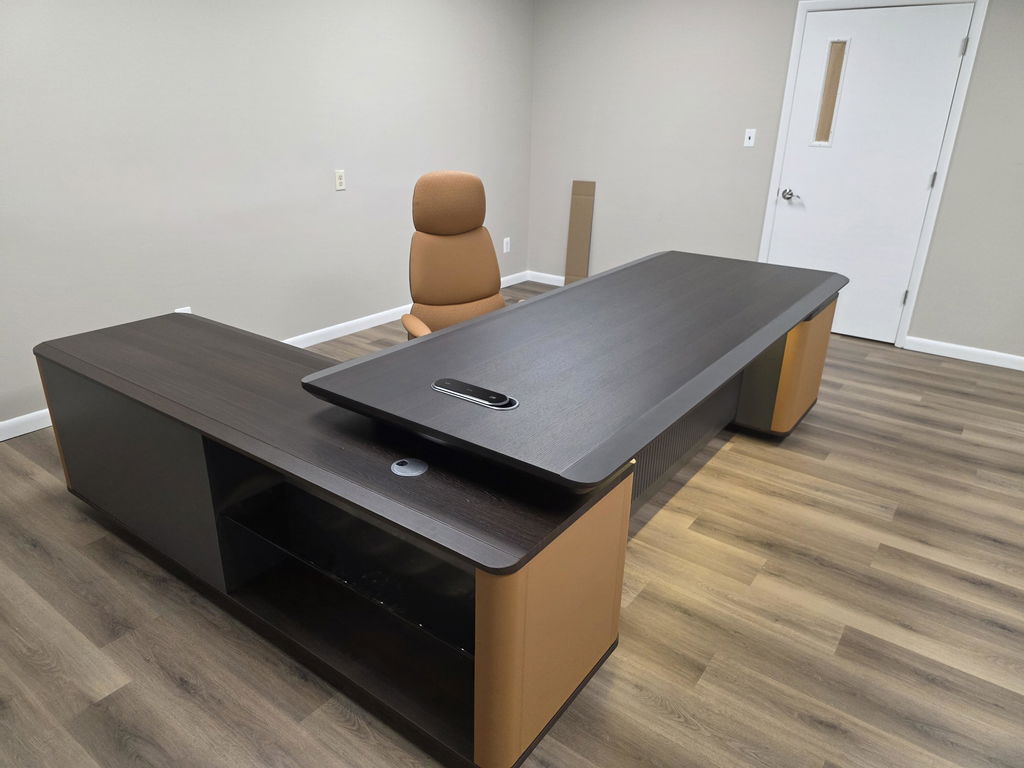
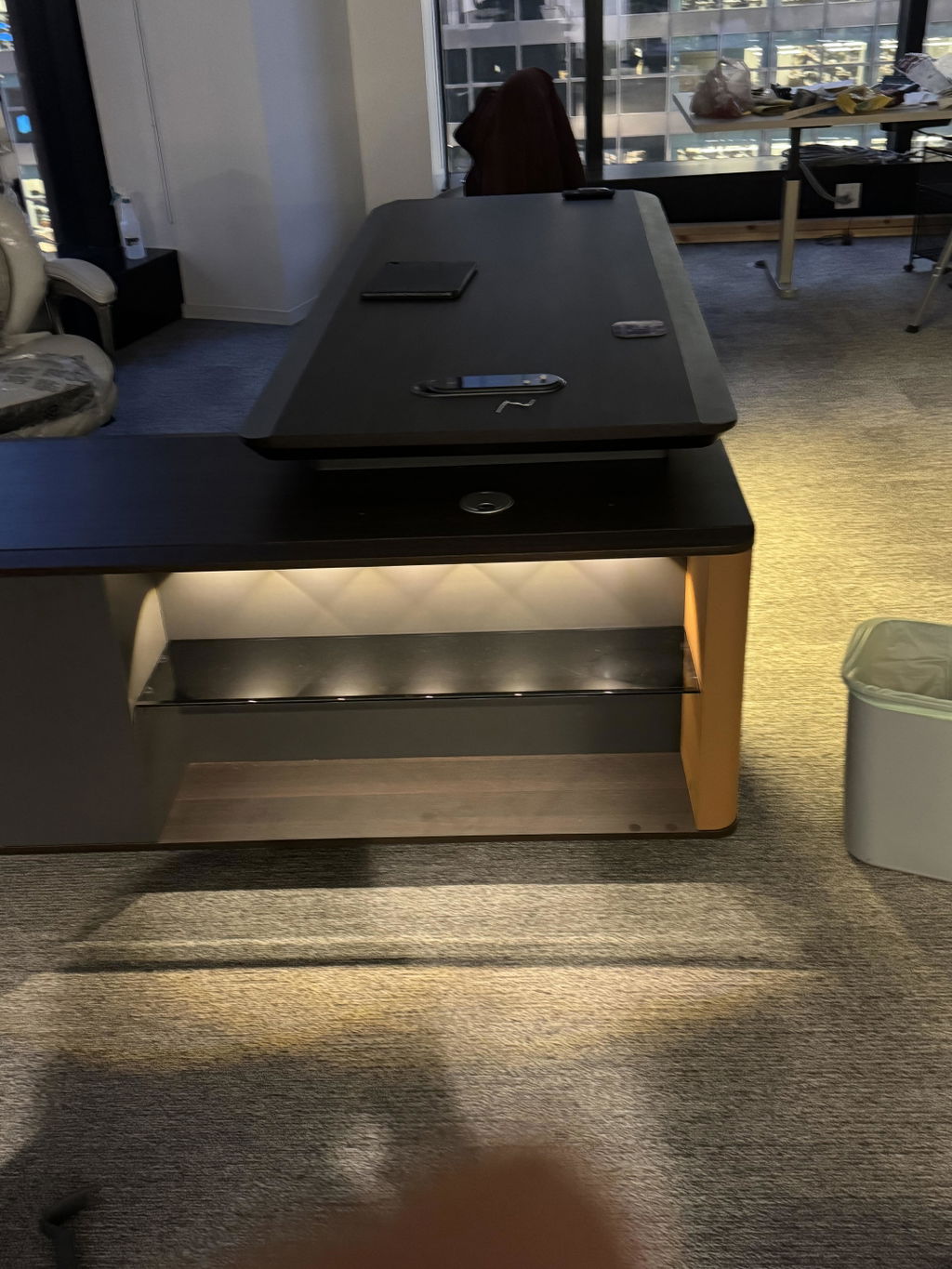
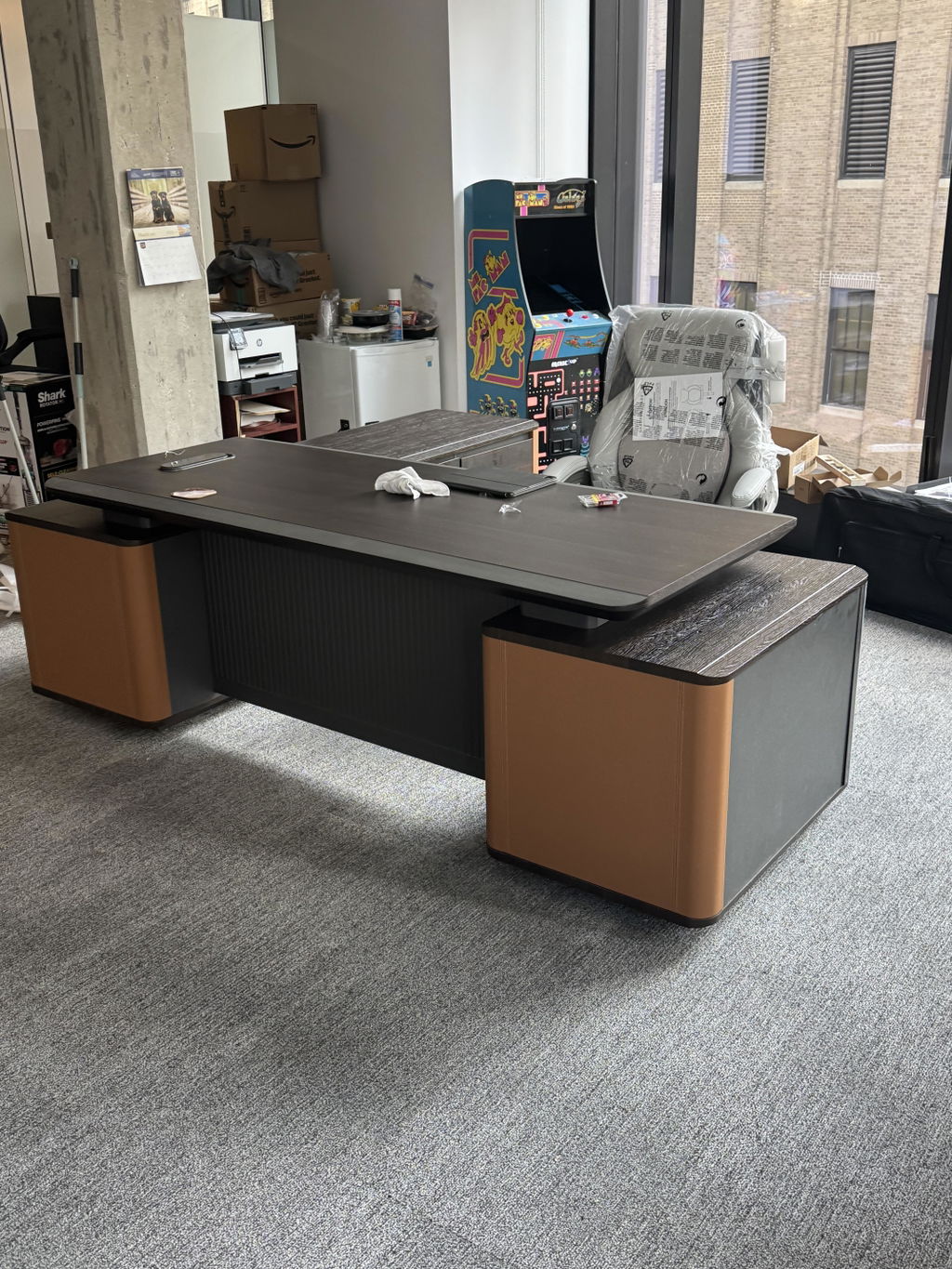
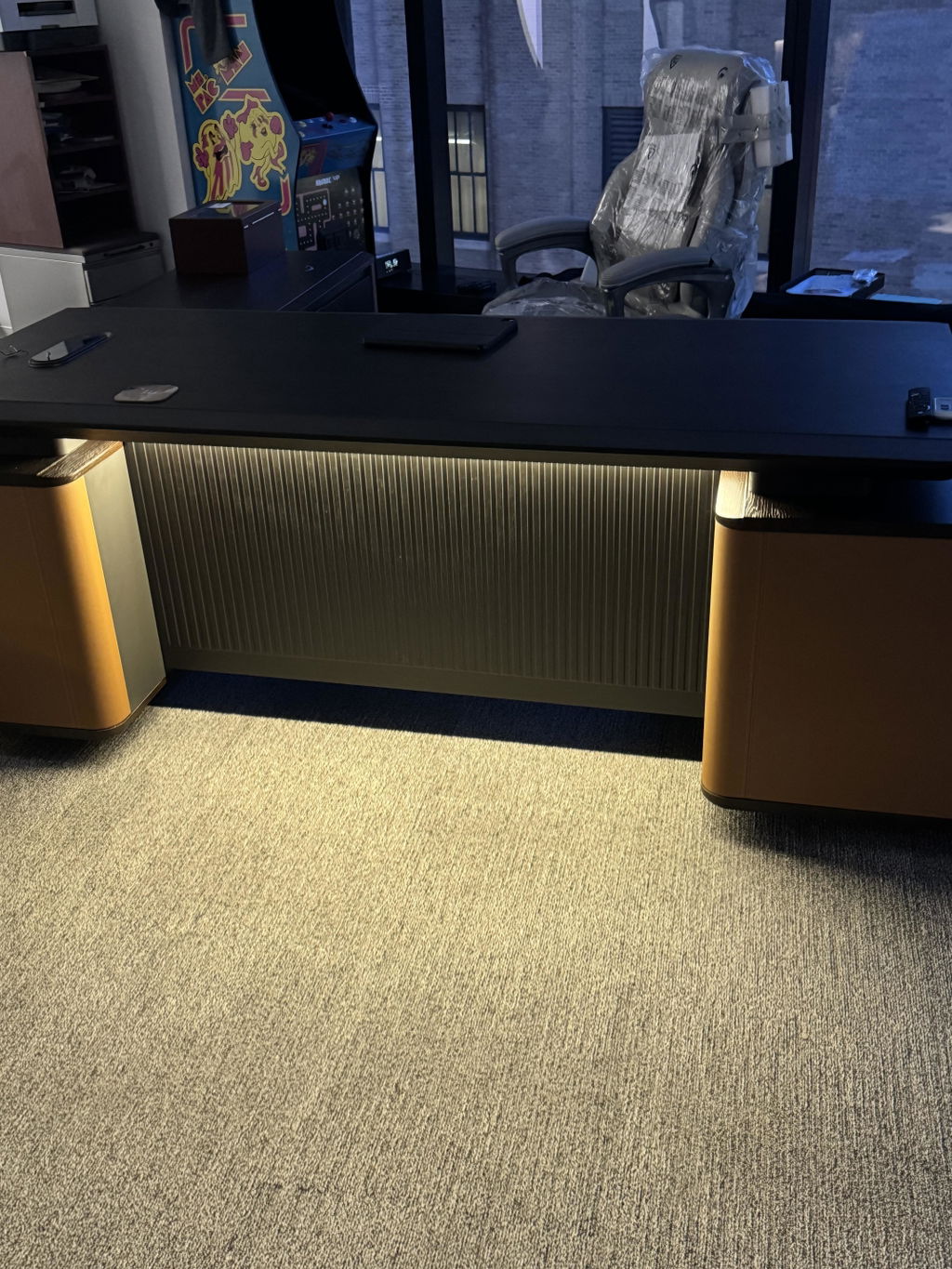
These commanding pieces (60 to 72 inches wide) communicate authority through exceptional materials like mahogany, walnut, or cherry. The grand executive desks add sophisticated details like leather inlays for an investment that serves for decades.

The material defines both the look and longevity of the desk. Here is how the main options compare:
Desk materials compared
| Material | Look | Notes |
|---|---|---|
| Solid wood | Traditional, warm | Mahogany, walnut, or cherry; minimal upkeep, noise-dampening, distinctive grain |
| Metal frame | Modern, industrial | Often with a wood or glass top; durable, high weight capacity, often height-adjustable |
| Glass top | Minimalist, light | Tempered for durability; needs more frequent cleaning, cooler to the touch |
| Laminate / veneer | Budget-friendly | Convincingly mimics wood, resists scratches and stains |
| Eco (bamboo, reclaimed, FSC) | Sustainable | Durable, with character; often zero-VOC finishes |
In an executive office, clutter is the enemy of clear thinking. Look for soft-close drawers, built-in file organizers sized for legal and letter documents, lockable compartments for confidential materials, and shallow top drawers for pens and daily items. Smart compartments with USB ports and wireless charging keep technology out of sight.
Premium desks keep wiring invisible: vertical cable spines that gather wires in a column, horizontal trays under the desktop, power hubs with AC and USB in the surface, and grommet holes placed for monitor cables. Beyond tidiness, this protects equipment and prevents disconnections during presentations, and the cleanest designs build wireless charging right into the top.
Comfort translates directly to sustained performance. Look for waterfall desktop edges that reduce wrist pressure, rounded corners, a monitor platform at eye level, and a keyboard tray that positions your arms correctly.
Set the desk and monitor so the screen top sits at or just below eye level about an arm’s length away, keep elbows bent 90 to 120 degrees with wrists neutral, and support your feet flat on the floor.
OSHA — Computer Workstations eTool, neutral posture
The ability to move between sitting and standing is increasingly standard. Look for a quiet motor that will not disrupt calls and memory presets for your preferred heights, many people report sharper focus and energy when they alternate positions.
Match the dimensions to your workflow and office: L-shaped designs for separate work and meeting areas, U-shaped layouts for maximum surface, oval desks that ease face-to-face discussion, and peninsula additions for collaboration. Aim for 30 to 36 inches of depth and at least 36 inches of clearance between the desk and the nearest obstacle.
Confirm the numbers before ordering. Standard widths, depths, and heights by desk type are in ideal desk dimensions.
Choosing the right executive desk blends practical needs with the image it projects. Measure precisely: allow at least three feet behind the chair, use painter’s tape to visualize placement, and check doorway dimensions for delivery. Match the desk to your office’s aesthetic (rich woods for traditional settings, glass and metal for contemporary ones), and factor in assembly and warranty (look for 5+ years). Explore the executive desks collection, or have one built to your exact space and finish.
Related articles
Executive Desks & Offices
At the executive level, the material makes the desk. What distinguishes wood veneer, solid wood, and stone, and how to...
Read more →
Executive Desks & Offices
With more than 150 finishes to choose from, the way to a coordinated office is a simple sequence: pick one...
Read more →
Executive Desks & Offices
A home executive office should be as considered as the one at headquarters. How to design a serious, presence-carrying space...
Read more →