Space Planning & Buying
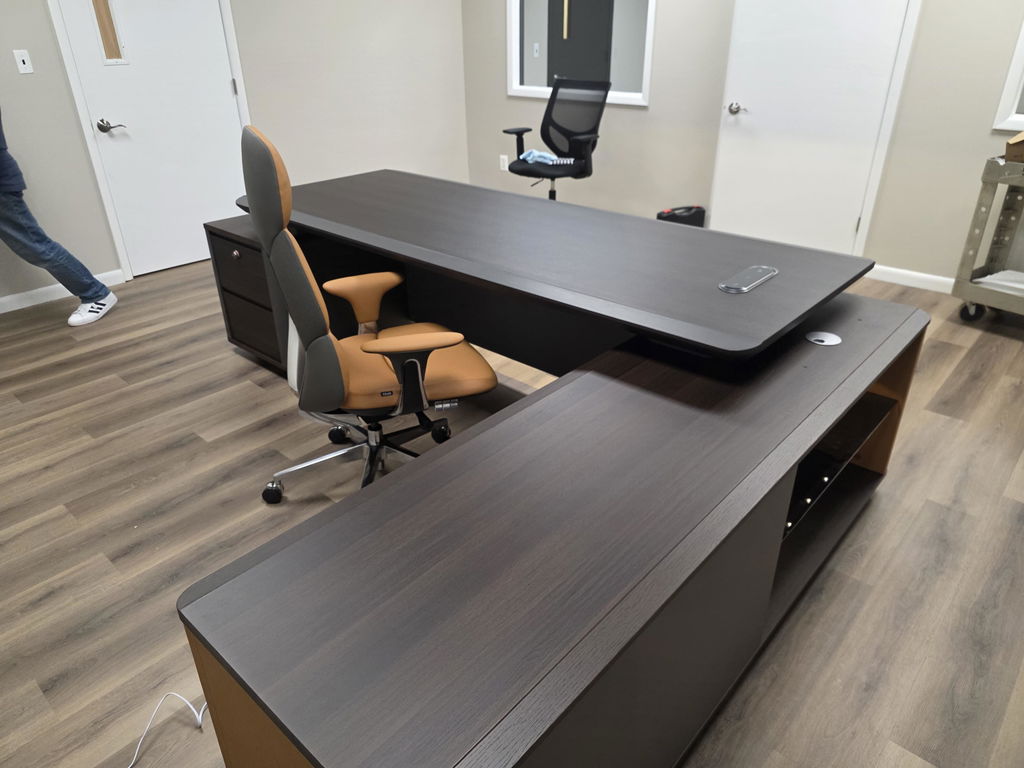
How to Spec Custom Executive Furniture: A Buyer's Guide
Speccing custom executive furniture is five decisions in order: dimensions, configuration, finish, hardware, and sign-off. What to settle at each...
Read more →
Matching Sets
Space Planning & Buying
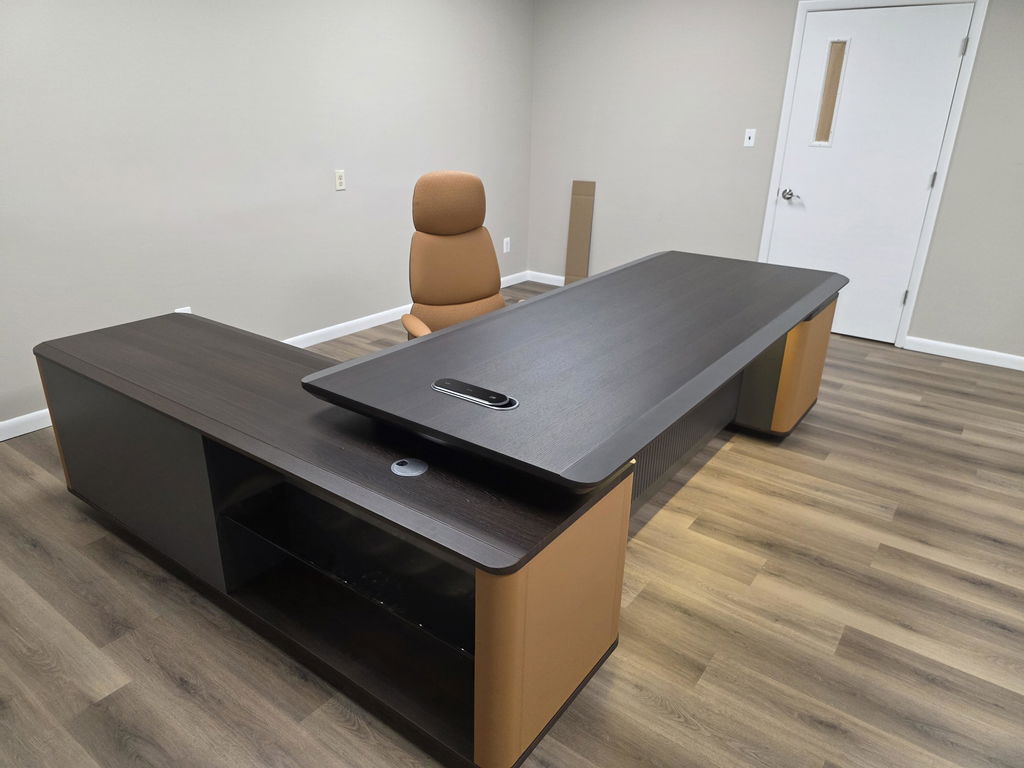
Furnish a whole office on time with every room matching. The complete fit-out guide: process, lead times, budgeting, terms, and supplier choice.

You have a lease date, an empty floor, and a job you have never done before: furnish the whole office before everyone moves in, on time, with every room matching. This guide gives you the plan, the vocabulary, and the timeline to do it once and do it right. Furnishing an office is a project, not a purchase, and the buyers who treat it that way move in on schedule with every space coordinated. The single biggest risk isn't price; it's furniture that doesn't arrive in time or doesn't coordinate across rooms. Get the process and the lead times right, and everything else follows.
Nobody wakes up wanting forty workstations. An office fit-out (the industry term for turning an empty or unfinished commercial space into a working one) is triggered by a business event: expansion, a relocation or consolidation, a lease signing, a renovation, new working practices, or a brand-new company. Whatever the trigger, the clock is now set by your move-in date, and that changes everything about how you should buy corporate office furniture.
Buying a single desk is a transaction. Furnishing an entire office is a coordinated project spanning multiple rooms, multiple product types, several approvers, and a hard deadline. You're not choosing a chair; you're specifying reception, boardrooms, executive offices, open plan office furniture, workstations, and support spaces so they read as one considered environment and land together, on time. Office furniture project management, not a shopping cart, is the real work.

That matters because the space itself does real work. Employees who like their workspace are far more likely to feel proud of where they work, and a strong environment measurably supports productivity and wellbeing.
Employees with a high degree of choice in where and how they work are 2.5 times more likely to say their workplace supports both individual and team productivity, and 90 percent of employees who like their workspace say they are proud to work for their company, compared with just 47 percent among those who feel disconnected. Based on more than 16,000 office workers across 15 countries.
Gensler Global Workplace Survey 2025
First impressions carry weight too, especially for the people you want to hire and the clients you want to impress.
76 percent of adults aged 18 to 34 said office design and aesthetics influences their impression of a company (poll conducted June 14 to 16, 2017, among 2,013 U.S. adults). Among employees aged 55 and over, 39 percent said they care about what their office looks like.
Ipsos poll for National Business Furniture, 2017
Almost every office fit-out is decided by a small buying group of two or three people. Knowing the roles helps you move faster:
On a larger fit-out the buying group widens, and each function owns a different sign-off. A simple responsibility map (often called a RACI: who is Responsible, Accountable, Consulted, and Informed) keeps everyone clear so the champion can line up each approval before its phase rather than discovering a blocker mid-project. The exact split varies by company, but a common pattern looks like this:
The takeaway for the champion: get finance to agree the budget and terms early, get IT into the space-planning conversation before the layout is fixed, and keep HR informed on headcount. Each function's sign-off unblocks the next phase, so sequence them deliberately.
Here's the full path from empty floor to occupied office, in the order a real project runs. You don't have to memorise it; you have to follow it. A good commercial office furniture supplier will drive most of these steps for you, which is the entire point of choosing one well.
The office fit-out furniture procurement process, phase by phase
| Phase | What happens | What you're guarding against |
|---|---|---|
| 1. Brief & needs assessment | Audit headcount, list every room type (offices, meeting rooms, open-plan, reception, breakout), inventory reusable furniture, and document functional gaps. | Missing a room type or getting quantities wrong. |
| 2. Budget & business case | Define total budget including product, delivery, installation, tax and a 5 to 10 percent contingency. Set the move-in date, which constrains achievable lead times. | Hidden costs and the furniture line being raided to cover construction overruns. |
| 3. Test-fit (pre-lease) | A schematic layout confirms your headcount and workstation count actually fit the floor plate. Often landlord-funded and turned around quickly. | Committing to a space that turns out too small. |
| 4. Space planning | A detailed plan sets furniture placement, circulation, accessibility (ADA) clearances, power and data locations, and the balance of private versus collaborative space. | A layout that looks good on paper but fails in use. |
| 5. Product selection & specification | Lock every line item: manufacturer, exact model, finish and fabric codes, power configuration, and quantities. Specify contract-grade product for high-traffic areas. | Renders misrepresenting real quality; spec errors becoming change orders. |
| 6. RFQ & supplier selection | Issue a request for quotation against the fixed spec, then review line by line and confirm lead time on every single item. | One long-lead item silently gating the whole install. |
| 7. Samples & approval | Review physical samples of key finishes and seating before committing at scale. | Fabric or finish looking wrong once installed across the floor. |
| 8. Order & acknowledgement | Issue purchase orders, collect manufacturer acknowledgements confirming ship dates, and pay deposits. Orders enter production. | An unnoticed spec error being manufactured in. |
| 9. Project management & site prep | Track orders against the construction schedule; ensure the site is construction-ready, flooring down, power and data live, and dock and freight-elevator access arranged. | Finished furniture accruing storage charges because the site isn't ready. |
| 10. Delivery & installation | Furniture is delivered (often phased) and installed to the approved plan, including assembly, levelling, adjustment, and debris removal. | Wrong configuration installed at scale. |
| 11. Snagging / punch list & sign-off | Walk every space, list damaged, missing or incorrect items, agree a rectification timeline, then sign the acceptance form (which triggers final payment). | Signing acceptance before defects are fixed and losing leverage. |
| 12. Handover & aftercare | Receive warranty and care documentation. Around 30 to 60 days after move-in, gather occupant feedback and log any warranty claims. Aftercare covers reconfiguration and spares. | Losing warranty paperwork; no route for later reconfiguration. |

Where a stock piece will not fit, the made-to-order route is set out in custom office furniture: process, timeline and cost.
You don't need furniture vocabulary to start, but a handful of terms will make every conversation faster:
Most buyers issue an informal RFQ to two to four suppliers and compare on warranty, lead time, and reputation, not price alone. That instinct is correct and it's backed by decades of procurement research.
Delivery has ranked among the top three supplier-selection criteria in procurement research for over five decades. Dickson's foundational 1966 survey of purchasing managers ranked delivery second only to quality, and later reviews (Weber, Current & Benton, 1991; Ho, Xu & Dey, 2010) confirm quality, delivery, and price or cost as the three dominant criteria.
Dickson, Journal of Purchasing, 1966
When you send your RFQ, make it easy to compare apples to apples. Ask every supplier for the same things:
Weigh total cost of ownership, not the sticker. Total cost of ownership is the whole-life cost across procurement, use, and end-of-life: for furniture that means delivery, installation, warranty length, and the cost and ease of reconfiguring as you grow, not just the purchase price.
To turn "compare beyond price" into something usable, score each shortlisted supplier against weighted criteria rather than eyeballing the quotes. Set your own weights based on what your project can't afford to get wrong (on a deadline-driven fit-out, delivery reliability usually deserves the heaviest weighting). The example weightings below are a starting point, not a rule.
Supplier scorecard: what to weight when comparing two to four suppliers
| Criterion | Example weight | What to look for |
|---|---|---|
| Quality & contract-grade compliance | 25 percent | ANSI/BIFMA-tested product for high-traffic pieces; consistent build quality across the range; finishes that match your samples. |
| Delivery reliability & lead time | 25 percent | A written lead-time commitment per line item, a credible track record of hitting dates, and honesty about the longest-lead item. |
| Coordination (single supplier, one point of contact) | 20 percent | One named project manager owning the whole floor, coordinating every manufacturer, and delivering as one package. |
| Warranty & aftercare | 15 percent | Clear warranty terms by category, a route for spares and reconfiguration, and responsiveness on claims. |
| Total cost of ownership (not just price) | 15 percent | Durability, warranty length, ease of reconfiguration, and delivery and install priced explicitly, not the lowest opening quote. |
Multiply each supplier's score by its weight, total the columns, and the winner is rarely the cheapest line on the spreadsheet. It's the one most likely to land your whole office on time and coordinated.
There's more than one way to acquire a full office of furniture, and the right structure depends on how much coordination you can carry, your cashflow, and the flexibility you need as you grow. The table below lays out the common choices on the axes that decide the outcome.
Ways to buy a whole office, compared
| Approach | Control | Coordination burden | Cashflow | Flexibility |
|---|---|---|---|---|
| Single supplier (whole office) | High: one spec, one accountable partner | Low: the supplier owns the schedule and every manufacturer | Typically deposit plus balance on delivery or acceptance | Reconfiguration handled by one aftercare relationship |
| Multi-vendor (piece it together) | Granular, but you own every gap | High: you track every lead time and chase every finish match | Multiple deposits and invoices to manage | Maximum choice per item, minimum coordination |
| Dealer / direct | Access to contract-grade lines, spec support, and installation | Low to medium: dealer coordinates delivery and install | Standard purchase or milestone terms | Strong for large, coordinated projects |
| Online / self-serve | Fast for simple, small orders | You handle logistics and any snags | Usually pay in full up front | Limited for a coordinated multi-room fit-out |
| Buy vs lease / furniture-as-a-service | Ownership vs a managed subscription | Provider-managed under a service model | Capital outlay vs a predictable operating expense | Leasing can suit fast-scaling or uncertain headcount |
For a coordinated, deadline-driven fit-out, a single supplier or a capable dealer usually wins on the two axes that matter most under pressure: coordination burden and schedule certainty. Leasing or furniture-as-a-service can make sense when cashflow or fast-changing headcount is the dominant constraint.
Before anything goes into production, the champion and the approver should lock the commercial terms in writing. This is where the CFO's certainty comes from, and where a well-run project protects itself against a price that moves after you commit or a supplier with no incentive to hit the date. Terms vary by manufacturer, supplier, and market, so treat the ranges below as typical rather than fixed, and get whatever you agree in the contract.
None of this is exotic. It's the ordinary machinery of a B2B purchase, and asking for it early signals that you run a tight project, which tends to earn a supplier's best attention.
Beyond price and lead time, a short list of certifications, plus one legal requirement, tells you a piece of furniture will hold up, won't degrade your indoor air, was responsibly made, and that your space itself is compliant. These are the standards and rules a serious specification references:
These certifications also do procurement work for you: contract-grade, certified furniture can contribute to LEED and WELL building credits, which matters if your landlord or company values a healthy, sustainable workplace.
Your move-in date is fixed, so plan backwards from it. Lead times vary enormously by product type, and any single long-lead item gates the whole installation. This is why lead time must be confirmed per line item at proposal stage, never assumed.
Indicative commercial furniture lead times (from firm order to ready-to-ship)
| Product category | Typical lead time |
|---|---|
| Quick-ship / stock programs | 2 to 4 weeks |
| Commodity commercial seating and storage | 6 to 8 weeks |
| Mainstream contract-grade office furniture | 6 to 14 weeks |
| Height-adjustable desks and high-spec ergonomic seating | 10 to 14 weeks |
| Custom / made-to-order product | 16+ weeks |
These ranges are indicative only and vary by manufacturer, product, and market conditions; always confirm the actual lead time in writing for your specific items. Zooming out, the furniture workstream itself (review, procurement, installation) often runs around twelve weeks end to end for a typical project as a rough estimate, varying with how much is customised. That sits inside the wider fit-out, where construction alone often runs several months for larger floors. One durable point on imported product: import tariffs, exchange rates, and global supply-chain conditions can affect its price and lead time, which is a reason to confirm lead times in writing and to weigh domestically made or contract-grade options where schedule certainty matters most.
The practical takeaway: if you move in October, you're ordering in summer and confirming your longest-lead item first. Speed and certainty usually beat a marginally lower price, because a chair that is 10 percent cheaper is worth nothing if it arrives two weeks after your team does.
This is the approver's first question, and the honest answer is that it depends on scope, quality tier, and how much is made to measure. Rather than quote a furniture number that would mislead you, it helps to see furniture in the context of the whole fit-out, where a reliable benchmark exists.
The regional average for a medium-quality corporate office fit-out in the U.S. and Canada is 295 US dollars per square foot, with a typical range of 230 to 375 dollars per square foot (Q1 2026 pricing across 50 markets).
JLL U.S. and Canada Office Fit-Out Costs Guide
Read that figure correctly: it's the whole fit-out (construction, services, finishes, and furniture combined), not furniture alone. Furniture (FF&E) is one workstream within it, and its share depends on how much construction your space needs and the quality of product you specify.
Because the JLL figure covers the entire fit-out, buyers often want a furniture-line anchor to sit alongside it. There's no single right number here; furniture cost per workstation is market-dependent and moves with product choice, finishes, and how much is made to measure. Treat the tiers below as indicative framing only, not a quote, and expect real numbers to vary by manufacturer and market:
Whichever tier you choose, the cost drivers are the same four: the product itself, delivery, installation, and a contingency (commonly 5 to 10 percent) for the changes that always surface. Build all four into the budget from the start, and insist that delivery and installation are priced explicitly so nothing hides inside a bundled total.
When you're sourcing office fit out furniture in bulk, buying for a whole floor at once, you have leverage a piecemeal buyer doesn't: volume, a single delivery window, and one relationship worth a supplier's best terms. A genuine new office furniture package uses that leverage, pricing the whole floor as one coordinated order: not a discounted grab-bag, but one plan, one schedule, and one accountable partner.

You can furnish an office by stitching together a dozen orders from a dozen vendors, tracking each lead time yourself, and hoping the finishes match. Or you can hand the entire floor to one partner who plans it, specifies it, coordinates every manufacturer, and delivers it as one package to your move-in date. For a champion doing this alongside a full-time job, the second route removes almost every failure mode in the process table above.
Arc Grove® works this way by design: complete office furniture solutions where reception, boardrooms, executive suites, open-plan workstations, and support spaces are planned together and delivered as a single coordinated order, every room matching. That's what a genuine office furniture package should mean: not a discounted bundle, but one accountable supplier owning the plan, the schedule, and the result.
It's tempting to trim ergonomic seating when the budget tightens. The Gensler data above argues otherwise: a workspace people like is tied to pride in the company and to a workplace that supports productivity. Comfortable, adjustable, contract-grade seating is where that starts, because it's the one piece of furniture your team touches for eight hours a day, and it's the most direct furniture lever you have on the wellbeing outcomes the research points to.
If you expect to grow or to furnish more than one location, decide your standard once and repeat it. Standardising on a single spec (the same workstation, task chair, and finish palette) makes every future order faster to place, easier to match, and simpler to support. It also lets you run a phased rollout against a proven plan and reserve stock or hold a specification with your supplier, so growth doesn't send you back to the drawing board. A single-supplier relationship makes this straightforward: one spec, one point of contact, and consistency across every site.

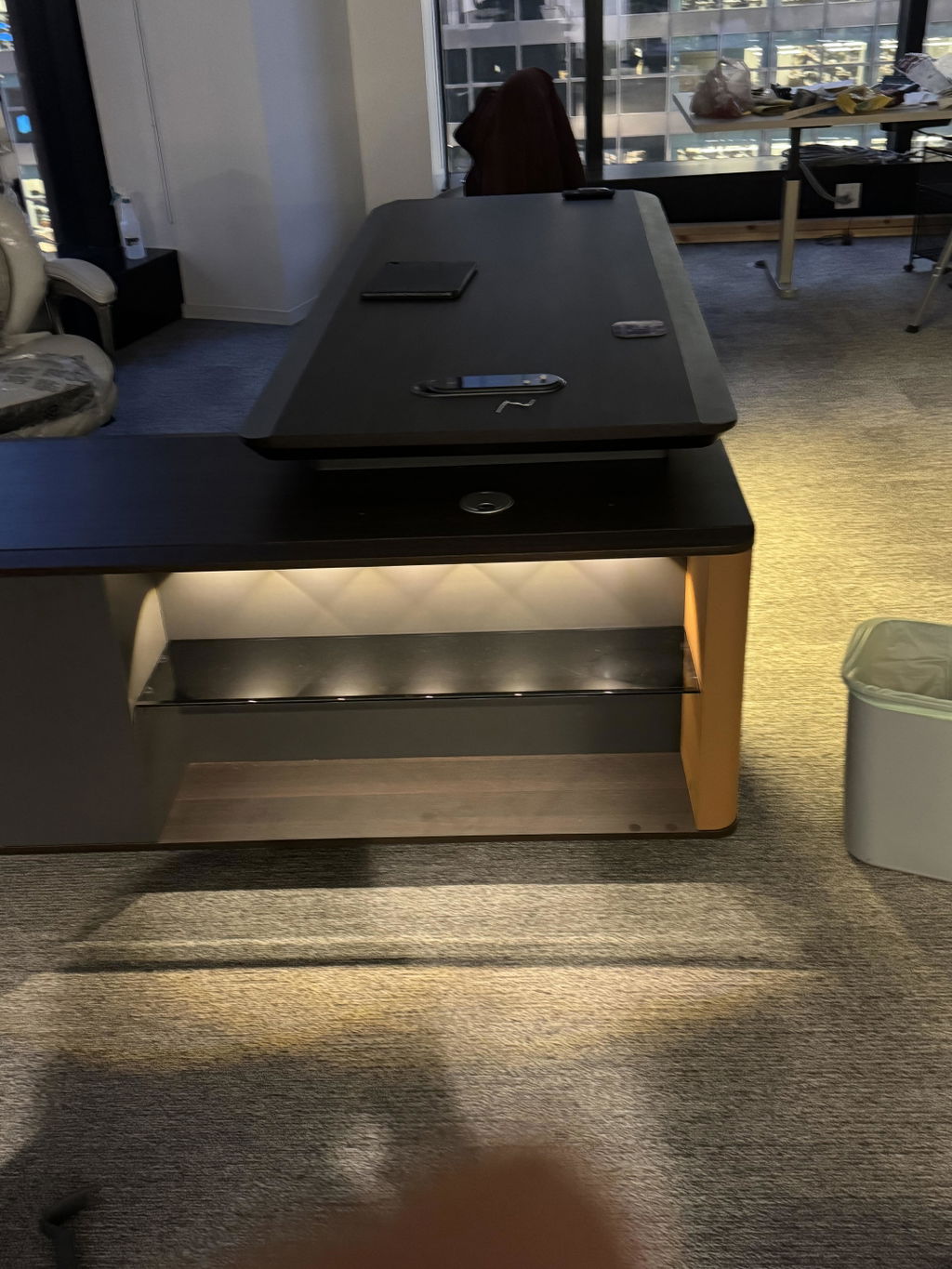
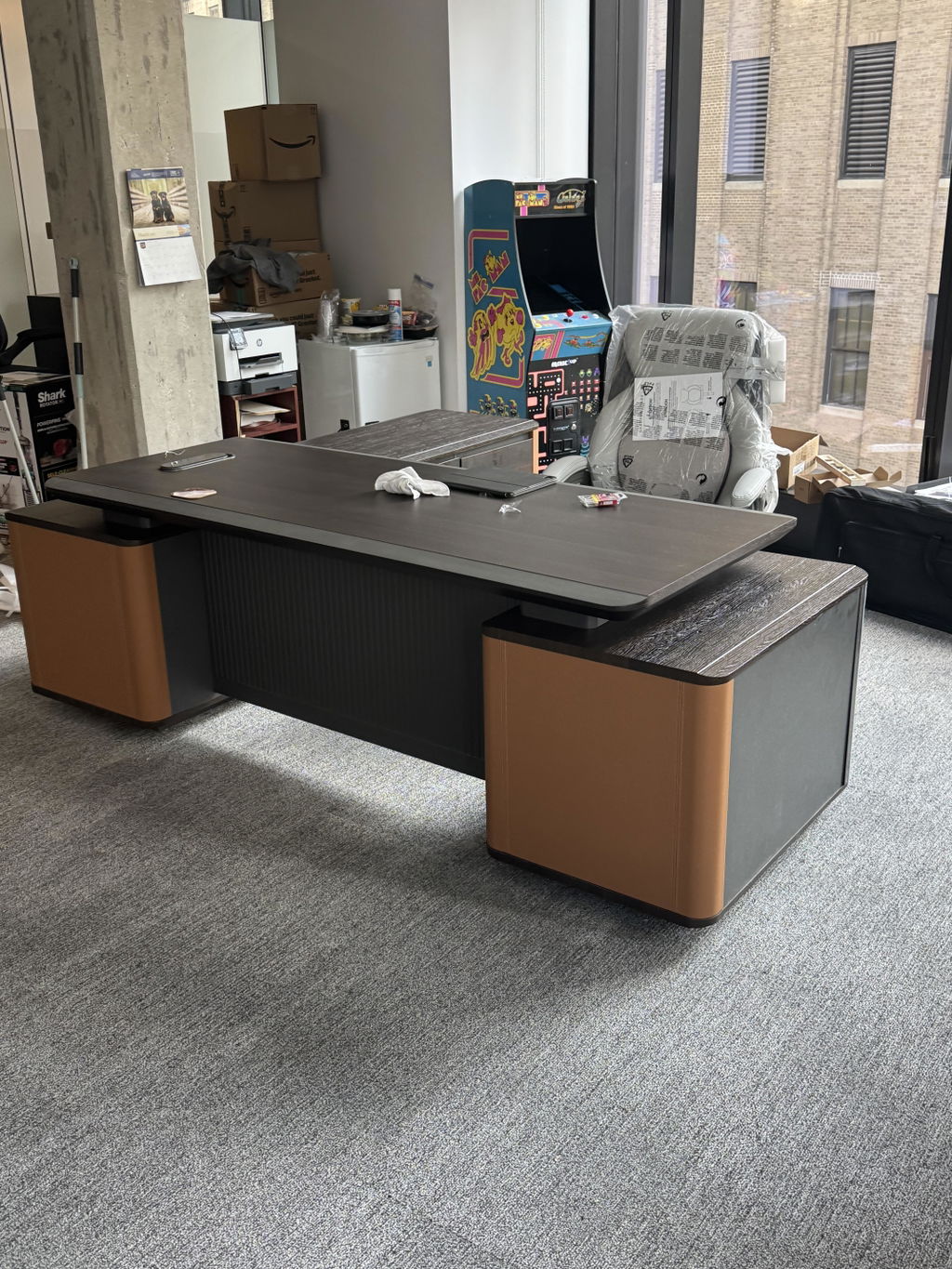
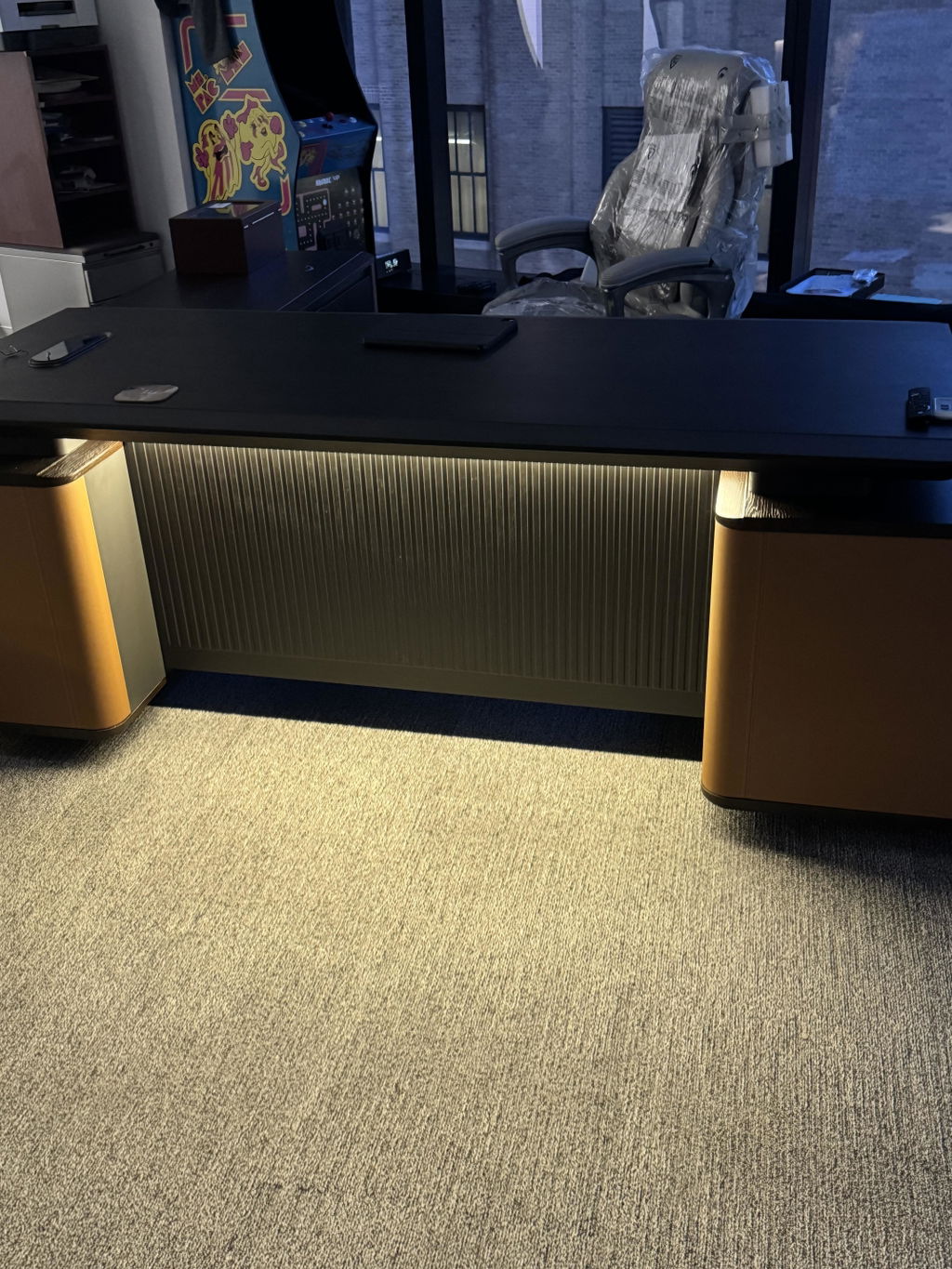
A recent Arc Grove project shows what furnishing an entire office as one package looks like in practice. The space was a single floor of roughly 36 metres by 15 metres (about 5,800 square feet), furnished as one coordinated order rather than piecemeal. Within that footprint we planned, supplied, and installed:

Every room was specified to coordinate, ordered as one package, and delivered to the client's occupation date. That's the difference between buying furniture and commissioning an office: one plan, one point of accountability, one delivery that lands together. To see how the individual spaces come together, browse our executive desks, reception desks, and conference tables, and our guide to conference room sizes covers the meeting rooms.
Most furniture disasters aren't spec failures; they're logistics failures. The furniture was fine, but the site wasn't ready, the installer couldn't get in, or the building wouldn't let the crew work. Handle these before delivery week:
Print this, work it top to bottom, and you'll not be caught out. It doubles as an office relocation checklist and an office move planning tool:
If you would rather not carry all fifteen steps yourself, that's precisely the job a single-supplier partner takes off your desk. Explore complete office furniture solutions or start with made-to-measure space planning.
Related articles
Space Planning & Buying
Speccing custom executive furniture is five decisions in order: dimensions, configuration, finish, hardware, and sign-off. What to settle at each...
Read more →
Space Planning & Buying
Made-to-measure executive furniture gives you exact fit, your exact finish, and a coordinated suite. When bespoke earns its place, and...
Read more →
Space Planning & Buying
A concrete guide to Arc Grove custom office furniture: the design process, real timelines, and what actually drives cost.
Read more →