Executive Desks & Offices
Veneer, Solid Wood & Stone: A Guide to Premium Desk Materials
At the executive level, the material makes the desk. What distinguishes wood veneer, solid wood, and stone, and how to...
Read more →
Matching Sets
Executive Desks & Offices
A minimalist executive office is built on deliberate reduction: clear surfaces, concealed storage, a restrained palette, and negative space as the feature. How to do it with discipline.

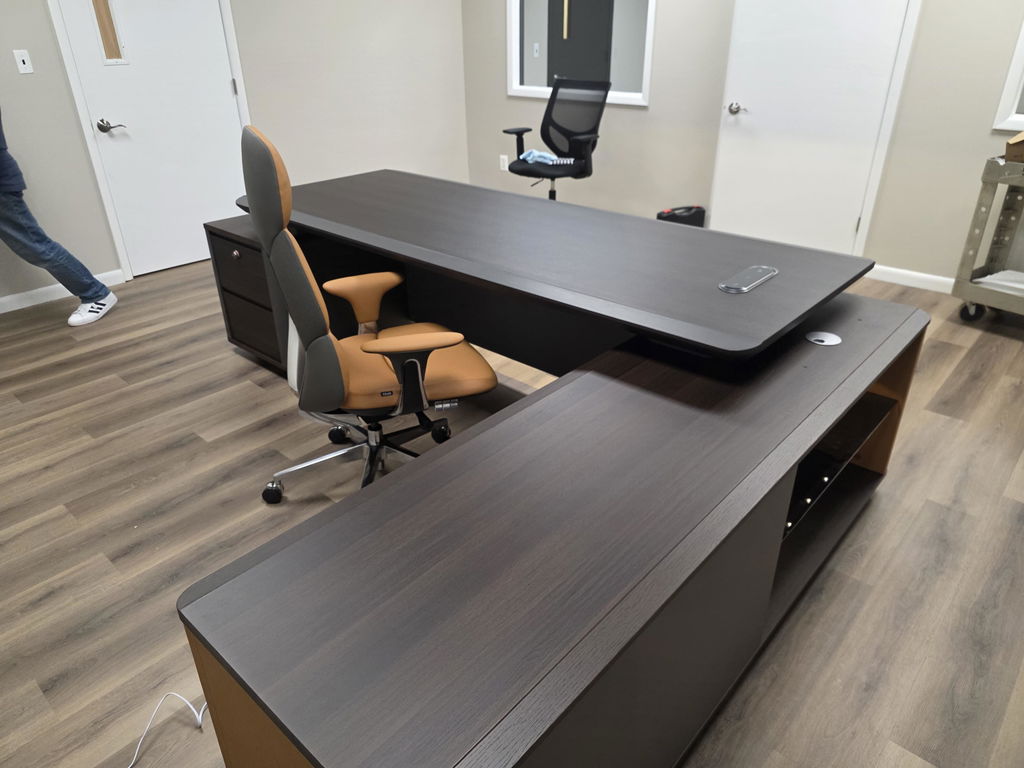
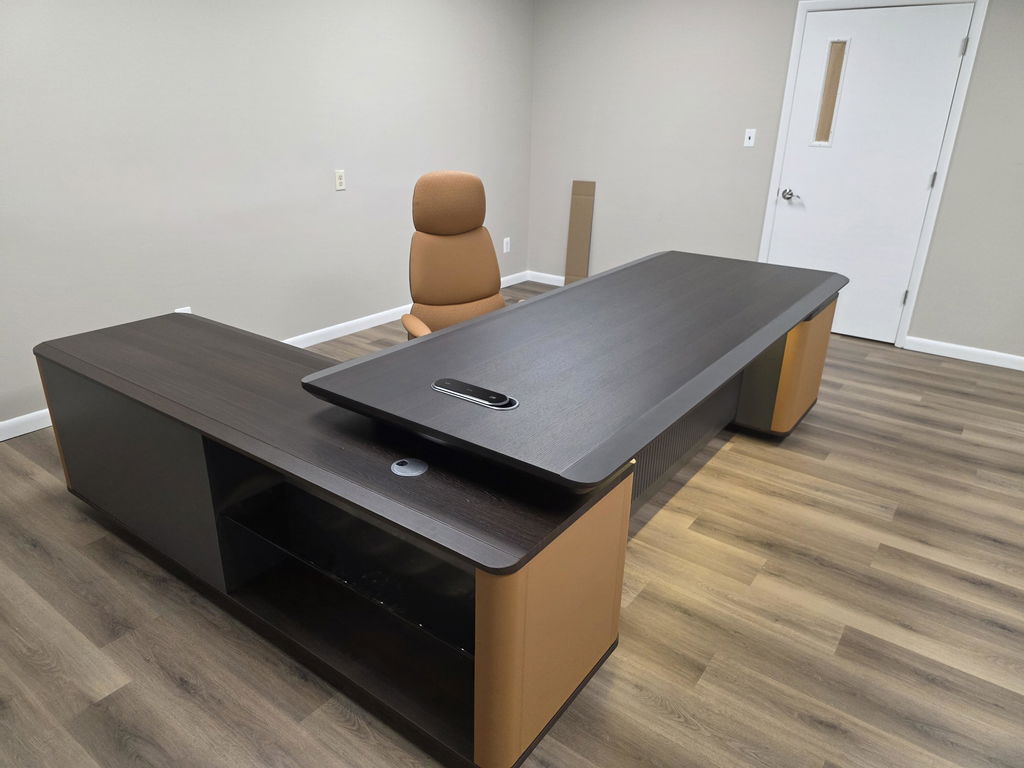
A minimalist executive office is built on deliberate reduction: every object earns its place, surfaces stay clear, and empty space becomes the feature rather than a gap to fill. Done with discipline it reads as clarity and control, the room of someone who has decided what matters. Done lazily it just looks unfinished. The difference is whether the emptiness is intentional.
Minimalism is often mistaken for owning less. It's really about editing, keeping only what works or genuinely earns its keep, and giving those few things room to breathe. In an office where focus is the point, that visual quiet is a tool, not just a look.

The guiding principle is that every element has to justify itself. One excellent desk, one considered chair, one piece of art, chosen well, do more than a room full of adequate things. Because there's so little in the space, quality shows: the proportion of the desk, the cleanness of an edge, the way a drawer sits flush. Buy fewer pieces and make each one count, since nothing has anywhere to hide.
In a minimalist room, the empty space isn't wasted, it's the composition. Resist the urge to fill a bare wall or a clear surface; the openness is what gives the few objects their weight and the room its calm. Leave the desk largely clear, let a wall stay blank behind a single artwork, and treat the floor as part of the design. This restraint is the hardest part, and the most important.

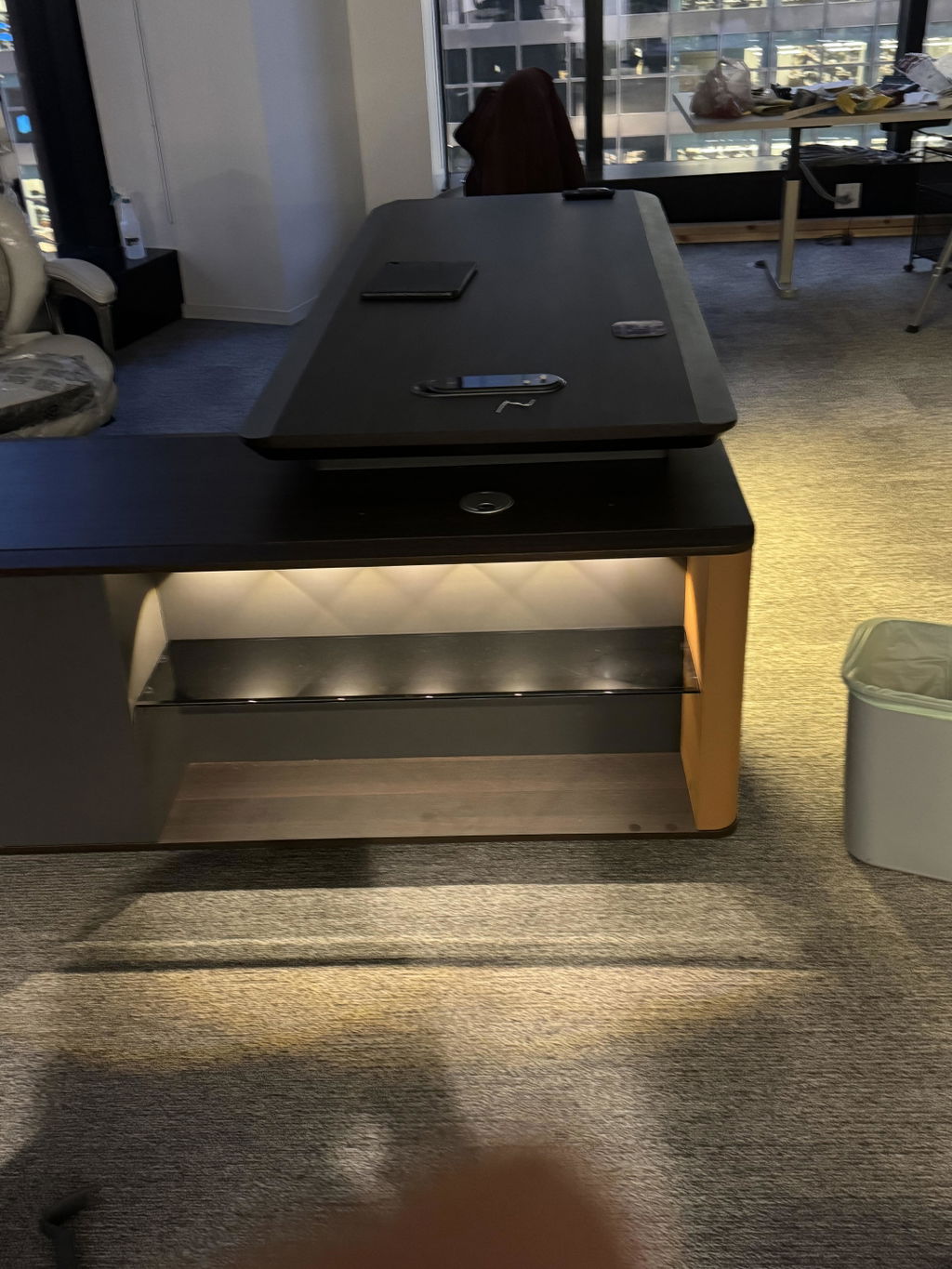
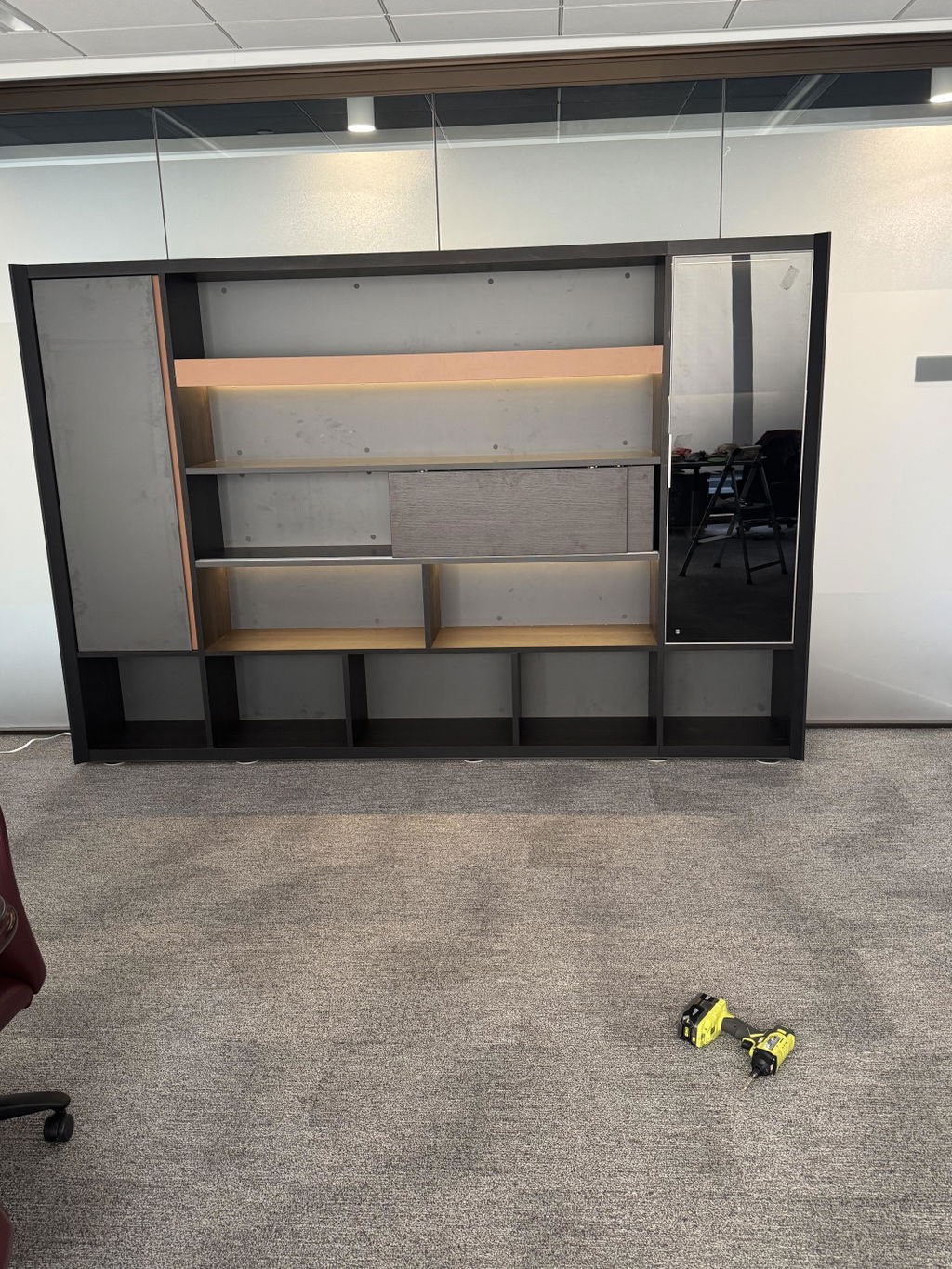
A clear surface depends on somewhere to put things. Minimalism lives or dies on concealed storage: closed cabinets and drawers that swallow the paperwork, the cables, and the clutter so the visible room stays serene. Plan cable management into the desk, choose storage with flat, handleless fronts, and give everything a home behind a door. What you don't see is what makes what you do see work.
Keep the color story tight, a narrow range of neutrals with, at most, a single accent, so nothing competes. Then allow one focal point: a striking desk, a bold artwork, a single sculptural chair. In a spare room, that one deliberate note carries real impact precisely because it isn't fighting for attention. Everything else should recede and support it.
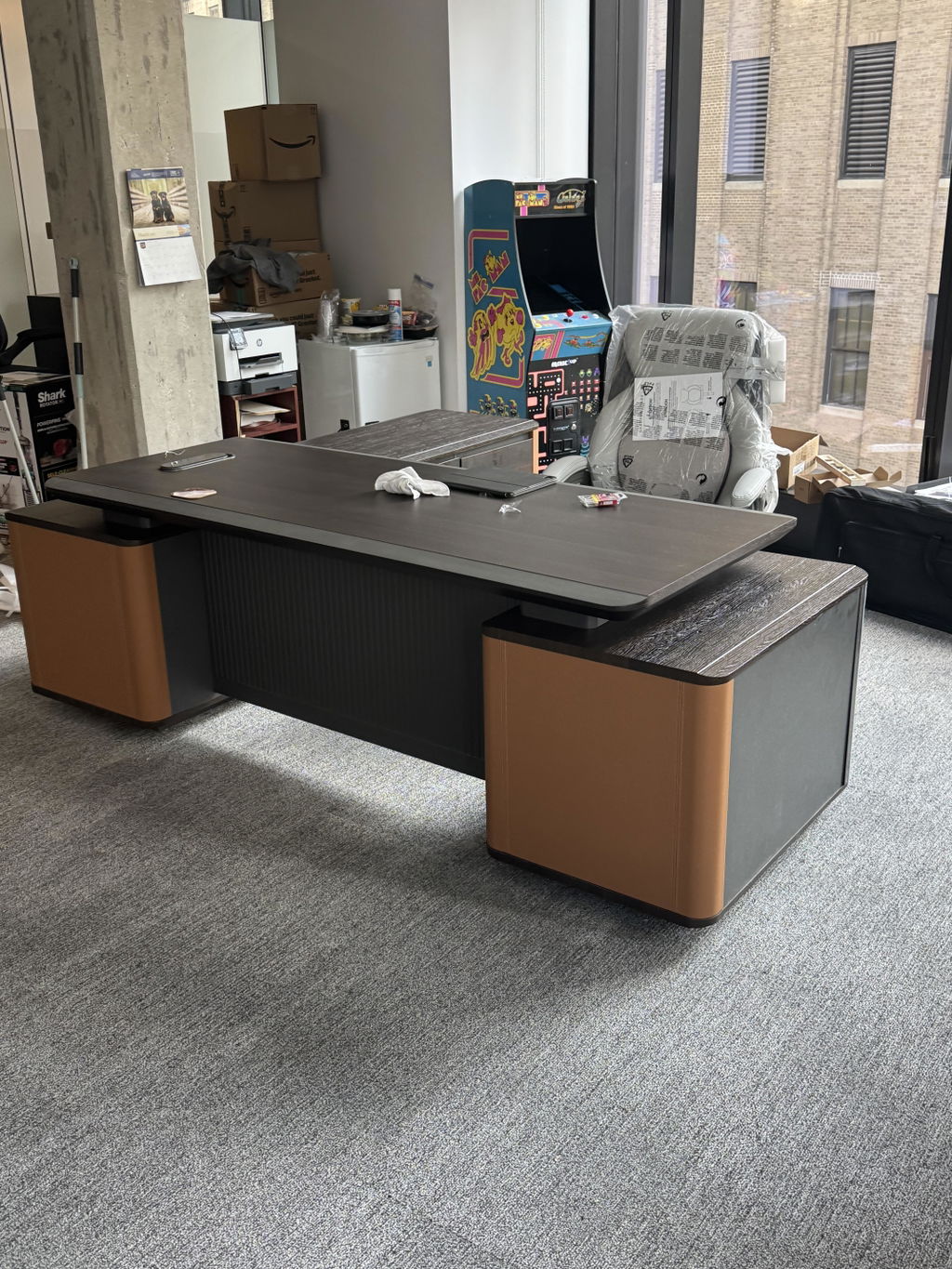
Minimalism asks a lot of the furniture: clean lines, flush fronts, integrated storage, and no visual noise. Arc Grove® builds executive desks and storage with concealed storage and handleless options in a coordinated finish, so the room stays as quiet as the concept demands. Design a clean-lined setup, or browse the executive desk collection.
Related articles
Executive Desks & Offices
At the executive level, the material makes the desk. What distinguishes wood veneer, solid wood, and stone, and how to...
Read more →
Executive Desks & Offices
With more than 150 finishes to choose from, the way to a coordinated office is a simple sequence: pick one...
Read more →
Executive Desks & Offices
A home executive office should be as considered as the one at headquarters. How to design a serious, presence-carrying space...
Read more →