Executive Desks & Offices
The Minimalist Executive Office: Less, But Better
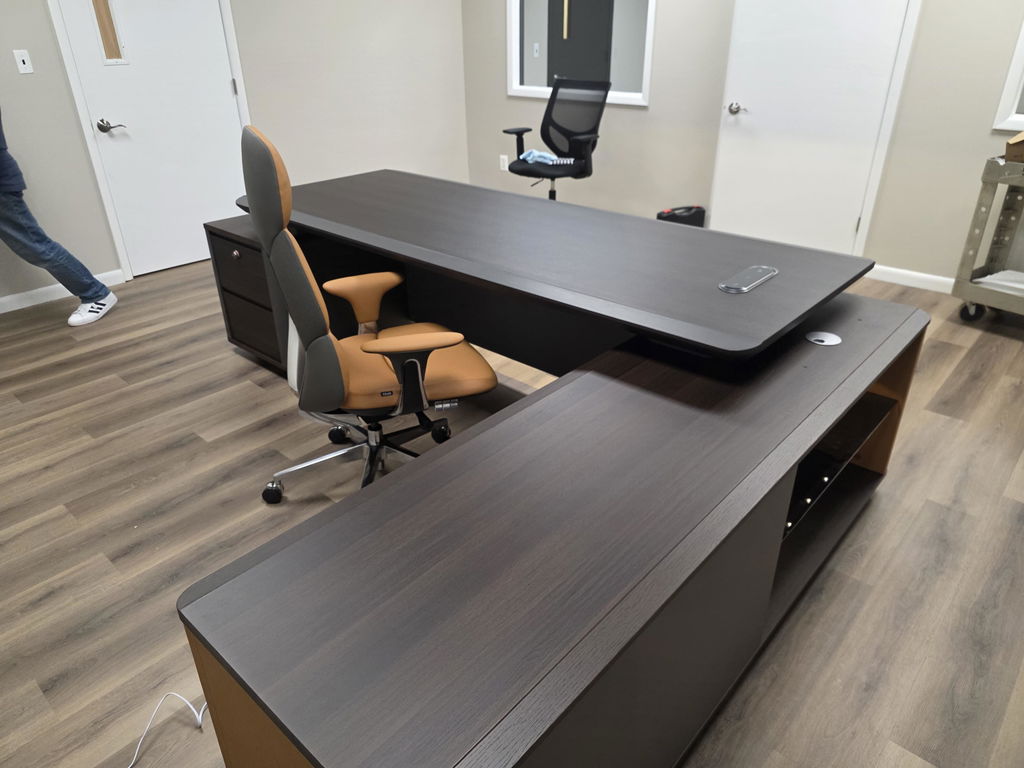
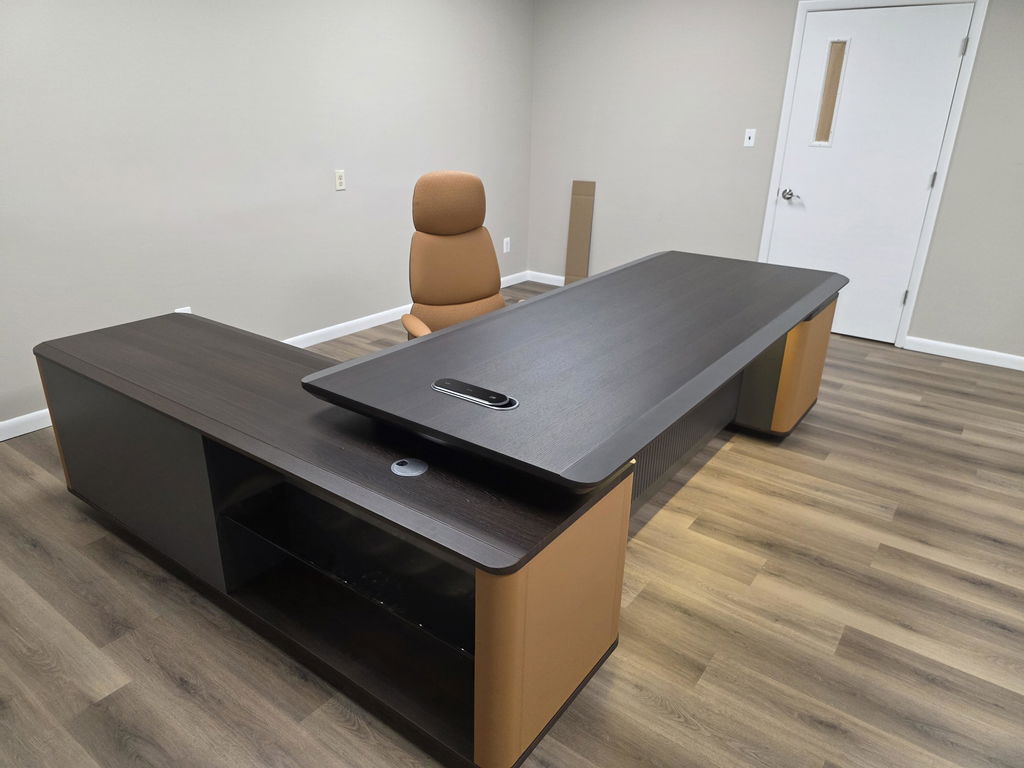
A minimalist executive office is built on deliberate reduction: clear surfaces, concealed storage, a restrained palette, and negative space as...
Read more →
Executive Desks & Offices
Modern home office design that inspires productivity: color schemes, must-have furniture, layout, lighting, technology, and the biophilic and ergonomic details that make a workspace work.

A modern home office blends clean aesthetics with function: neutral colors with one or two accents, plenty of natural light, ergonomic furniture, and smart storage that keeps clutter down. Position the desk perpendicular to a window, keep daily tools within arm’s reach, and add greenery: the result looks considered and helps you focus.
Modern home office design merges style and function into a workspace that inspires productivity. Clean lines, minimal clutter, and thoughtful layouts support focus, while the essentials (good lighting, ergonomic seating, and smart storage) keep it comfortable. Here is how to build one.

Modern home offices emphasize simplicity, technology integration, and comfort. The hallmarks: clean, organized aesthetics (neutral whites, grays, and blacks with a few bright accents), natural light from large windows, sleek furniture with smart storage like floating shelves and built-in cabinets, integrated technology with hidden cable management, and durable materials like glass, metal, and engineered wood. Beyond looks, a well-designed office boosts focus, supports your health through ergonomics, sharpens the line between work and home, and adds appeal to the house itself.
Color shapes how you feel and work. Limit yourself to one or two accents, and follow the 60-30-10 rule: a main color for 60% of the space, a secondary for 30%, and an accent for 10%. Test choices in both daylight and office light, since lighting shifts how colors read.
Best colors for a home office
| Color | Effect | Notes |
|---|---|---|
| Cool blues | Calm and concentration | Light blue creates a serene, focused atmosphere |
| Soft greens | Connection to nature, less eye strain | Good for long work hours |
| Neutral tones | Clean, professional backdrop | White, beige, and gray are versatile |
| Warm tones | Energy and creativity | Muted yellow is best for all-day use |
| Accent colors | Vibrancy without overwhelm | Use red sparingly as an accent |
For a room that already exists rather than a blank one, start from home office upgrades.

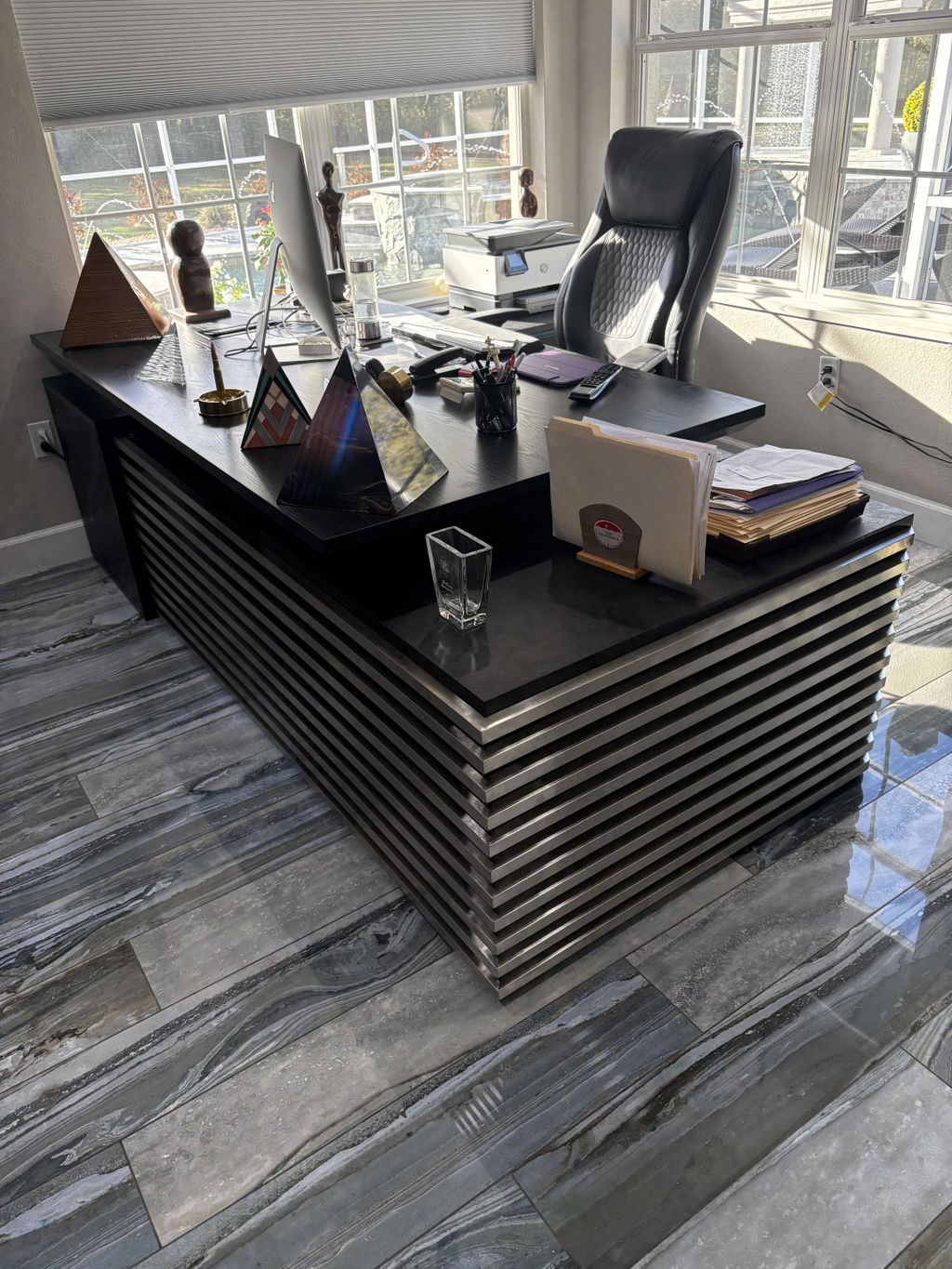
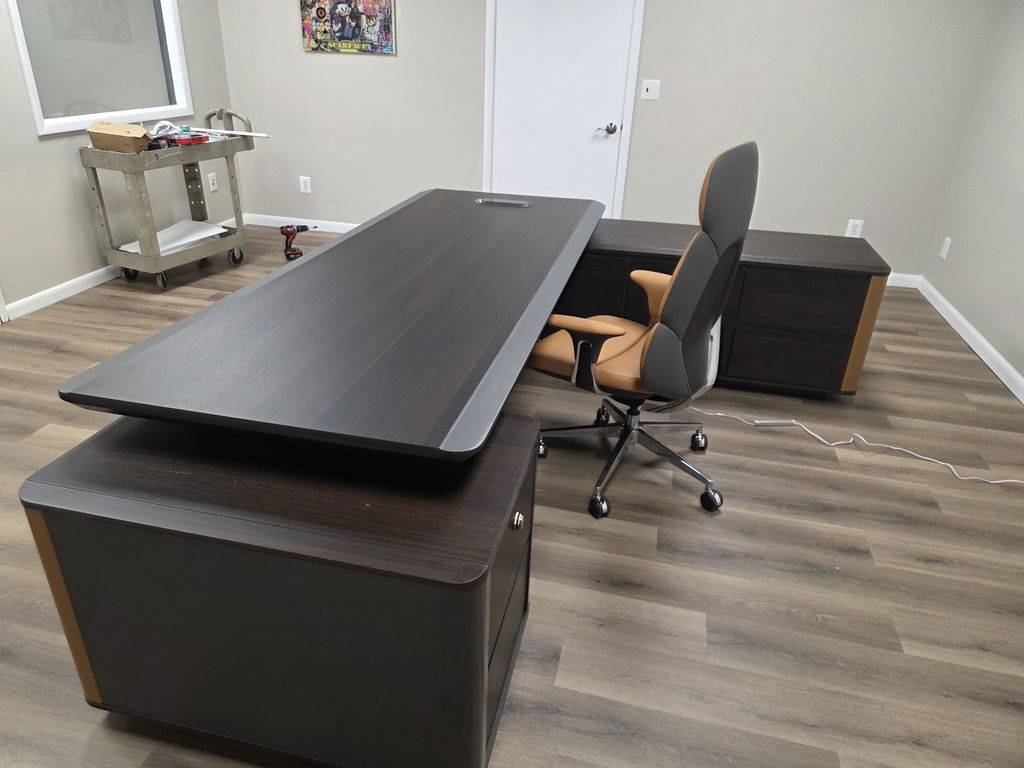
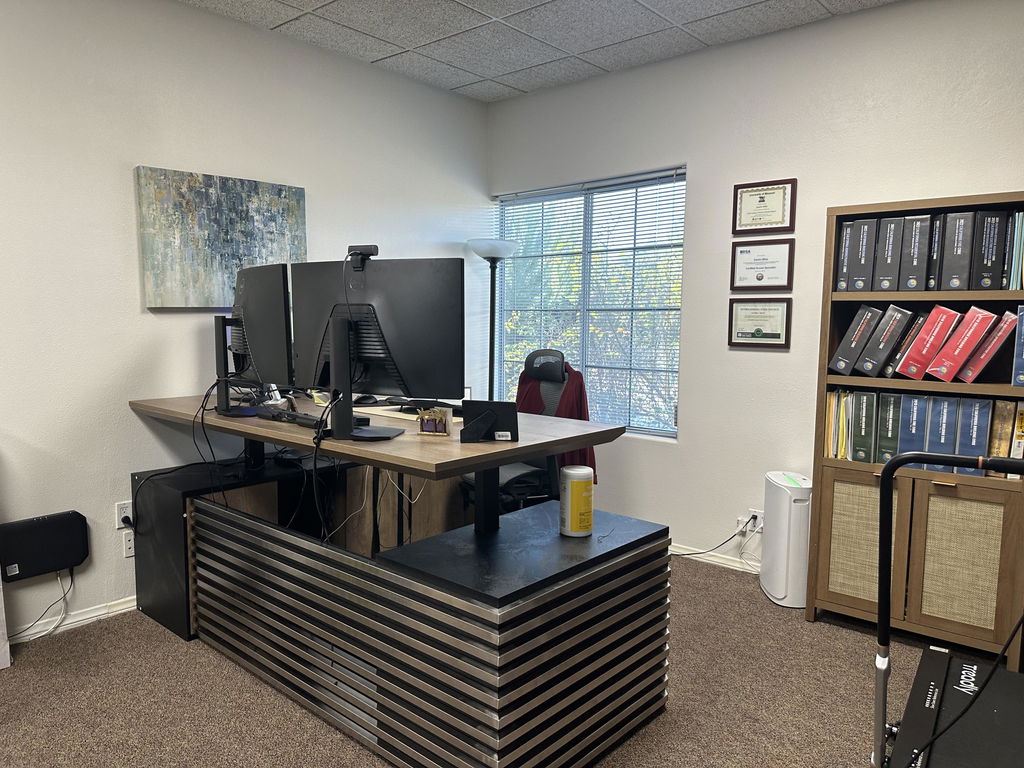
The desk is your command center: standing, L-shaped corner, or minimalist writing, sized to fit without crowding the room (a wall-mounted fold-away desk suits small spaces). Glass tops look sleek but show fingerprints; wood adds warmth; metal frames add durability. Pair it with a supportive chair: adjustable height, armrests, lumbar support, swivel, and breathable materials. In small rooms, multi-use pieces earn their place: storage ottomans, adjustable bookcases, nesting tables, and modular shelving that grows with your needs.
The desk is the first thing to place. Choosing one is covered in how to choose the ideal desk for your home office.

Place the desk where it gets good natural light, facing a window but not into the sun. Keep your most-used tools within arm’s reach (computer, phone, notebook, references) using the “work triangle” idea so you rarely have to get up. Use vertical space with wall shelves above the desk, and leave at least 3 feet of clearance for the chair and walking paths. For occasional collaboration, set up a clean video-call background and, if space allows, a small round table or a comfortable seating area.
Position the desk near a window for natural light, and control glare with adjustable blinds or sheer curtains. Where windows are limited, bounce light with a mirror opposite the window and lighter wall colors. Then layer artificial light: ambient for the room, and task lighting (an adjustable desk lamp, clip-on, or swing-arm) where you read. Mind color temperature (cooler light (4000 to 5000K) for daytime alertness, warmer (2700 to 3000K) for evening) and consider smart bulbs that shift through the day.
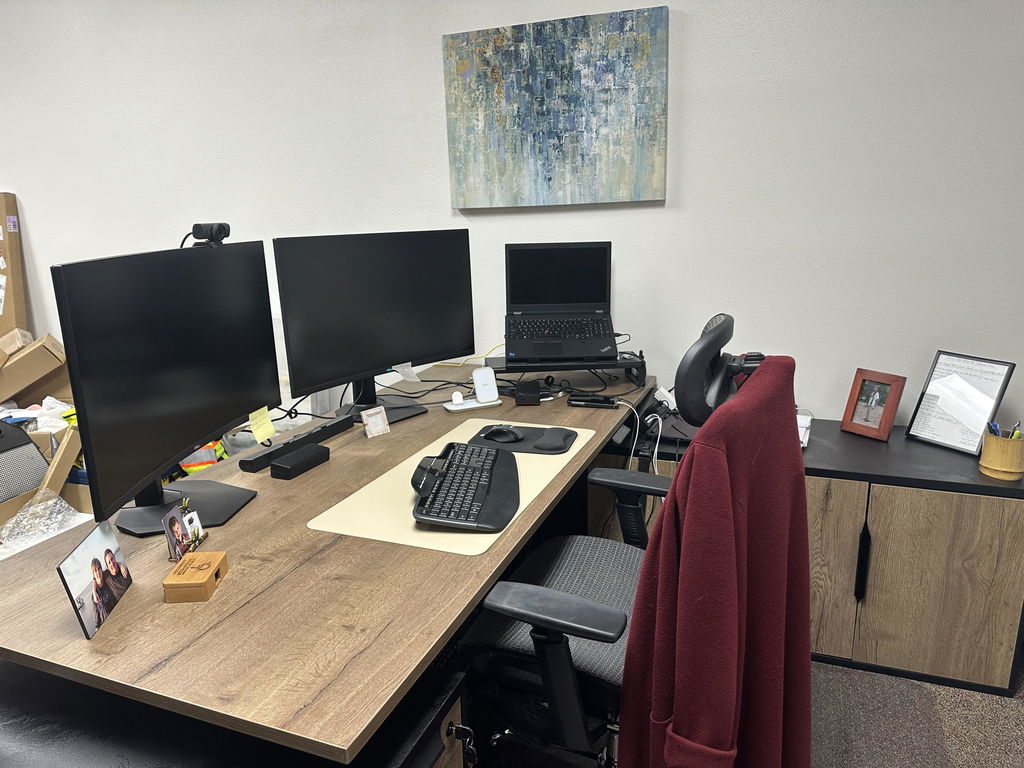
The right tech makes the office work without clutter: an adjustable standing desk for position changes, a wireless charger to cut cords, smart task lighting, and tidy cable management with wireless keyboard and mouse. A good webcam and noise-cancelling microphone matter for virtual meetings. Smart devices (a thermostat, voice assistant, automated blinds, or smart plugs) add comfort and efficiency without leaving your desk.

Make the space yours without crowding it. One statement piece of art beats many small items; add a few meaningful personal touches on floating shelves or sleek frames. Books in your field double as reference and decor. And bring in greenery (low-maintenance snake plants, pothos, or ZZ plants at varying heights) in pots that match your style.
A view of nature and indoor plants measurably lower workplace stress: heart-rate recovery is up to 1.6 times faster with a window and a nature view, and mental restoration sets in within 5 to 20 minutes of nature immersion.
Terrapin Bright Green — 14 Patterns of Biophilic Design
A good setup supports focus. Reduce distractions by setting clear work hours with the household, using noise-cancelling headphones, turning off notifications during focus blocks, and trying a work-and-break rhythm like the Pomodoro Technique. Organize the desk in zones (daily-use items within reach, occasional items in drawers, archives in storage) and keep digital files tidy with a simple folder structure.

Disorganization: a cluttered desk and desktop both scatter focus; use storage, cable management, and a “one in, one out” rule. Poor ergonomics: the chair is the most important piece, so prioritize back support and adjustability, set the monitor top at eye level about an arm’s length away, keep elbows near 90 degrees when typing, set the desk perpendicular to windows to avoid glare, and stand and stretch every hour.
Modern home office design blends good looks with real comfort: ergonomic furniture, plenty of natural light, quality materials, and the organization and technology to keep it efficient. Explore Arc Grove®’s executive desks and shelving, or have a piece built to your exact space and finish.
Related articles
Executive Desks & Offices
A minimalist executive office is built on deliberate reduction: clear surfaces, concealed storage, a restrained palette, and negative space as...
Read more →
Executive Desks & Offices
A mid-century modern executive office runs on warm walnut, clean tapered lines, and functional forms. Timeless rather than trendy. How...
Read more →
Executive Desks & Offices
Japandi blends Japanese minimalism with Scandinavian warmth: pale wood, muted earthy tones, and natural materials. How to design a calm...
Read more →