How To Choose the Right Size Conference Table: Complete Guide
When choosing a conference table, every measurement matters — per-person width, clearance behind chairs, room dimensions, and table shape all compound into how a meeting actually feels. Get it right and the table disappears into the work; get it wrong and the room fights you every meeting.
Plan a minimum of 30 inches per person, 36 inches for comfort, and 42–48 inches at the executive level. Leave at least 48 inches between table ends and walls — chairs need pushback and people need to walk by without bumping. Your table reflects your company's image and shapes how productive every meeting in that room will be.
Ready to specify? Browse the full Conference Tables collection — filterable by exact length, seating capacity, finish, and built-in features.
Summary Table: Choosing the Right Conference Table Size
| Factor | Guidelines | Why It Matters |
|---|---|---|
| Per-Person Space | 30" minimum · 36" comfortable · 42–48" executive | Determines whether the table feels shared or contested |
| Room Clearance | 48" between table edge and wall · 60" for ADA wheelchair turning | Allows chair pushback and traffic without disrupting the meeting |
| Table Dimensions by Capacity |
4–6 people: 6′ × 36–42" 8–10 people: 8–10′ × 42–48" 12–14 people: 12′ × 48–54" 16–20 people: 16–20′ × 54–60" |
Matches table proportions to team size and room footprint |
| Table Shape |
Rectangular: formal, head-of-table authority Boat-shaped: improves sightlines from the middle seats Round/Oval: encourages equal participation |
Shape directly affects meeting dynamics and how decisions get made |
| Technology Integration | Built-in power + USB-C every two seats · hidden cable management · provision for ceiling mic and PTZ camera | Hybrid meetings break down fast without integrated AV |
| Future Growth | Modular or extendable systems · 3–5 year team expansion · evolving hybrid setup | Avoids replacing the centerpiece every time the team grows |
Conference Table Size
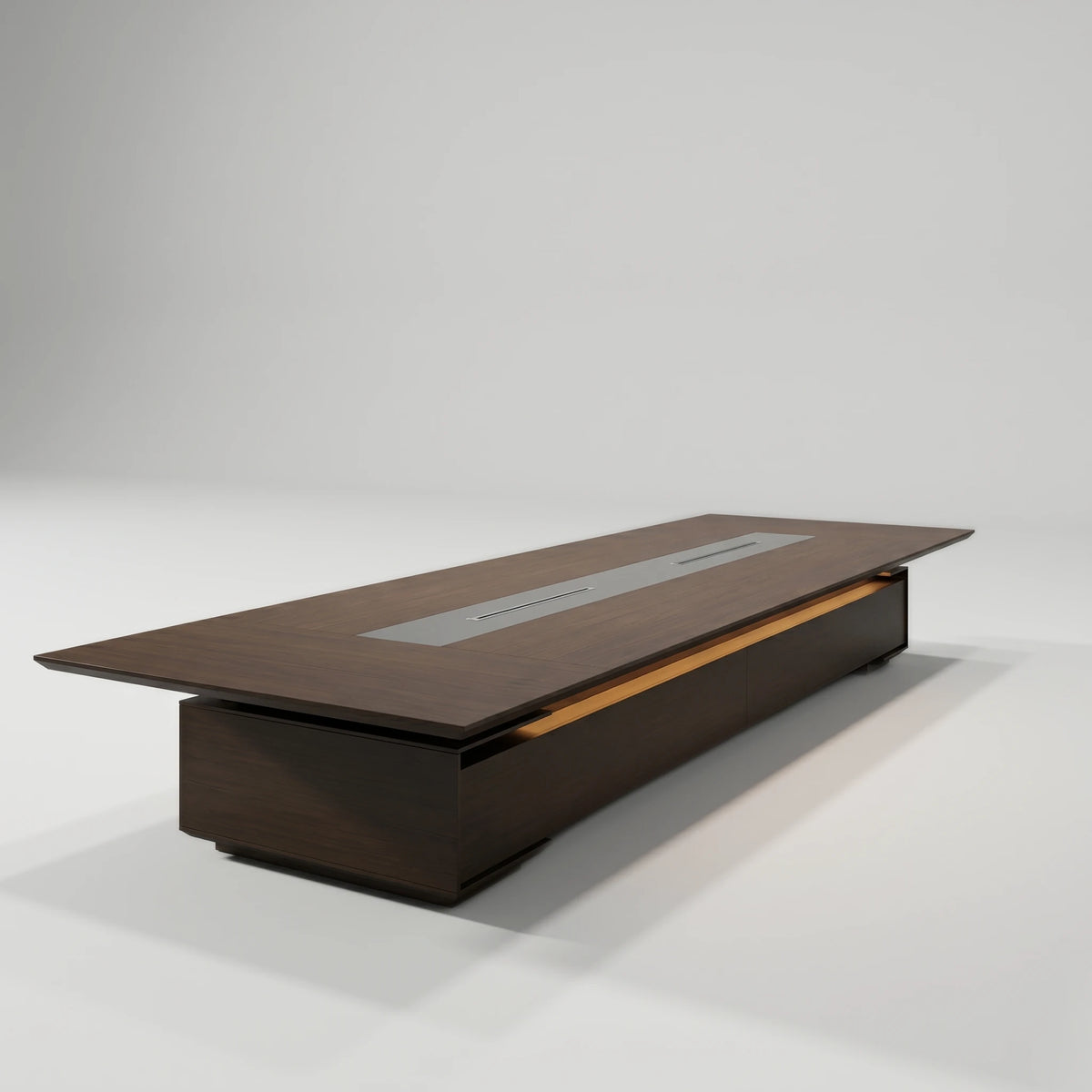
Hunter · Brown Rectangular Conference Table
Selecting the right size conference table is the difference between meetings that feel cramped and meetings that move. The dimensions you pick determine how many people fit comfortably, how the room reads to visitors, and whether the AV setup works.
Standard Dimensions for Conference Tables
Rectangular conference tables typically run from 6 feet to 30 feet long. The general capacity guide:
- 6 ft table — 4–6 people (small huddle rooms)
- 8 ft table — 6–8 people (standard small-team meeting)
- 10–12 ft table — 8–12 people (medium conference rooms)
- 16 ft table — 14–16 people (large conference rooms)
- 20+ ft tables — 18–24+ people (boardrooms)
Boat-shaped and racetrack designs typically run wider — 48–60 inches versus 36–48 inches for rectangular tables — to support the tapered geometry and give middle seats more material space.
Personal Space Requirements
- Minimum per person: 30 inches of table edge
- Comfortable: 36 inches
- Executive: 42–48 inches
- Minimum table width: 36 inches (avoids knee bumping across the table)
- Round tables: Need more total floor space than rectangular for the same capacity
Height Standards
- Standard height: 29–30 inches (pairs with 16–20 inch chair seats)
- Counter-height option: 36 inches for more dynamic, stand-up-friendly meetings
Clearance underneath the table:
- 12+ inches between chair arms and table apron
- 19–25 inches of legroom depth under the table
- 27 inches minimum knee clearance for ADA wheelchair access
Measuring Your Meeting Space

Fuller · Brown Rectangular Conference Table (13–27 ft)
Measure the room before you spec the table. Precise dimensions prevent the most common mistake — buying a table that's six inches too long or six inches too wide for the room to actually work.
Room-to-Table Size Ratio
The simple rule: maximum table length = room length minus 8 feet (4 feet of clearance at each end). For a 20-foot room, that means up to a 12-foot table. For a 6-person meeting, you'll want a room of at least 14×11 ft to keep clearances comfortable.
Clearance Requirements
- Around the table: 48 inches minimum between table edge and walls
- Per person at the table: 30–36 inches of edge
- Behind seated chairs for circulation: Add 24 inches beyond chair pushback if people need to walk behind seated colleagues
- Standard table height: 29–30 inches to pair with standard office chairs
Access Considerations
Measure every entry point before you order — doorways, hallways, elevators, stairwells. Most conference tables ship with detachable bases or modular tops, but confirm with the supplier before signing off. Large boardroom tables sometimes require freight elevators or temporary doorframe removal.
Position the table so power outlets and floor boxes line up with under-table cable runs. Place it perpendicular to large windows when possible to minimize screen glare and maximize natural light across faces — bad lighting reads as bad video on every hybrid call.
Calculating the Perfect Conference Table Size
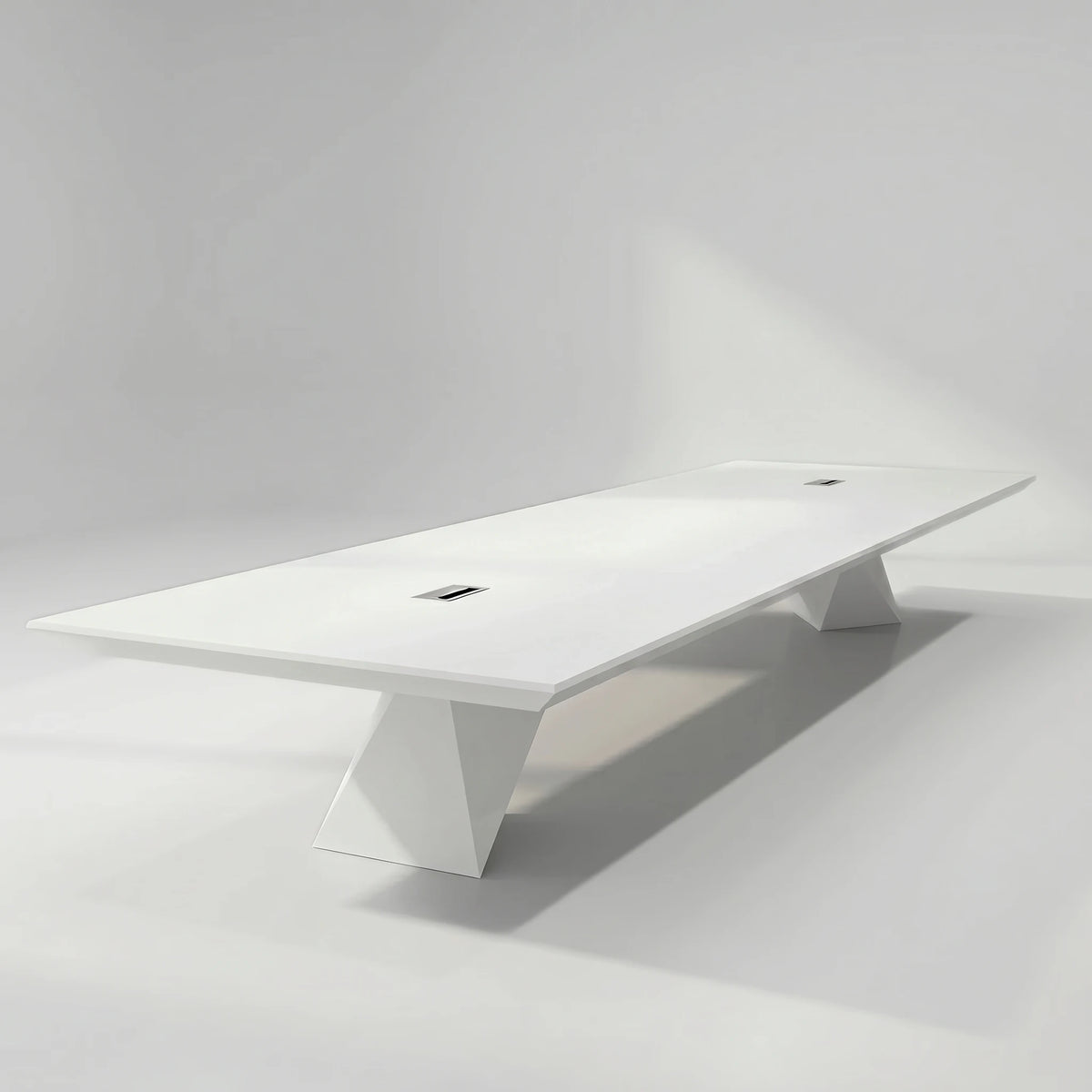
Ardyn · White Conference Table
Number of Users vs. Table Dimensions
Allow 30–36 inches of edge per person for comfortable working space. Standard sizes:
- Small (4–6 people): 6 ft × 36–42"
- Medium (8–10 people): 8–10 ft × 42–48"
- Large (12–14 people): 12 ft × 48–54"
- Executive (16–20 people): 16–20 ft × 54–60"
Maintain at least 48 inches between table edges and walls so chairs can push back and people can walk past without disrupting the meeting.
Quick Size Calculator
- Max table length = Room length − 8 ft
- Ideal table width = Room width ÷ 3 (use ⅔ for the table, ⅓ for movement around it)
- Standard height = 30 inches with a 1.25-inch top thickness
Technology Integration
Plan for integrated power outlets, data ports, and cable management from day one — retrofitting is always uglier. Add 6–8 inches to the table width if you're embedding a center channel for AV pop-ups or recessed monitors. For hybrid-heavy meetings, boat-shaped or oval tables give better camera coverage of all seats than rectangular.
Modern standard: wireless charging pads inset into the top, USB-C/USB-A combo modules at every two seats, and recessed cable troughs that route to a floor box rather than running across the floor.
How Table Shapes Affect Size Selection

Nexum · White Gloss Conference Table
Shape changes the floor plan as much as size does. Different shapes seat different numbers in the same room footprint, and each shape sends a different signal about the meeting's hierarchy.
Rectangular Conference Tables
The classic executive choice. A 6-foot rectangular seats 6, a 12-foot seats 12. Narrow tables (4 ft wide) preserve more perimeter walkway; wider tables (5–6 ft) give more material space but need a bigger room. Allow 4 ft of clearance around the perimeter. Best for traditional formats where the head-of-table position carries authority. Browse rectangular conference tables.
Boat-Shaped Conference Tables
Tapered middle section, wider at center than at the ends. Improves sightlines for people in the middle seats — they can see both ends of the table without leaning. Uses the same floor space as rectangular but distributes it better for visibility. Pair with PTZ cameras for hybrid meetings — the boat profile reads cleaner on video.
Round and Oval Conference Tables
Round tables eliminate the "head of the table" entirely, which encourages democratic, decision-by-consensus conversation. Capacity guide: 48" seats 4, 60" seats 6, 72" seats 8. Oval tables blend round and rectangular benefits — defined ends for leadership, soft sides for sightlines. Both need more total floor space than rectangular for the same seat count, so allow 3 ft of clearance around the perimeter.
Modular Tables for Flexible Spaces
Reconfigurable pieces that adapt to multiple meeting types in the same room — board meeting today, training session tomorrow, breakout discussion the day after. Most modular systems include built-in power and data integration so reconfiguration doesn't break the AV. Worth the investment in rooms that serve multiple meeting formats. Browse Work Collaboration Tables.
Common Mistakes When Selecting Conference Table Size
Three sizing mistakes that come up over and over in client projects — each easy to avoid once you know the rule.
Oversized Tables in Small Rooms
The fastest way to make a room feel cramped is to fill it with too much table. Maintain at least 48 inches between the table edge and every wall — that's enough for chair pushback plus pass-behind circulation. The shortcut: subtract 8 feet from your room length to get the maximum workable table length.
Undersized Tables for Your Team
Just as bad in the other direction. Standards by table shape:
- Rectangular: 30 inches of edge per person minimum
- Round: 24–30 inches of arc per person
- Boat-shaped: 24–30 inches at the widest middle points
Conference tables generally range 8–24 feet to seat 8–24+ people comfortably. Squeezing 12 people around an 8-foot table reads as cheap, no matter how nice the finish is.
Forgetting About Growth
Size the table for the team you'll have in 3–5 years, not the team you have today. Evaluate evolving meeting styles too — hybrid meetings need different geometry than in-person ones, and boat-shaped tables give better camera coverage than rectangular for video calls. When in doubt, choose modular or extendable designs that can absorb growth without a full replacement.
Conclusion
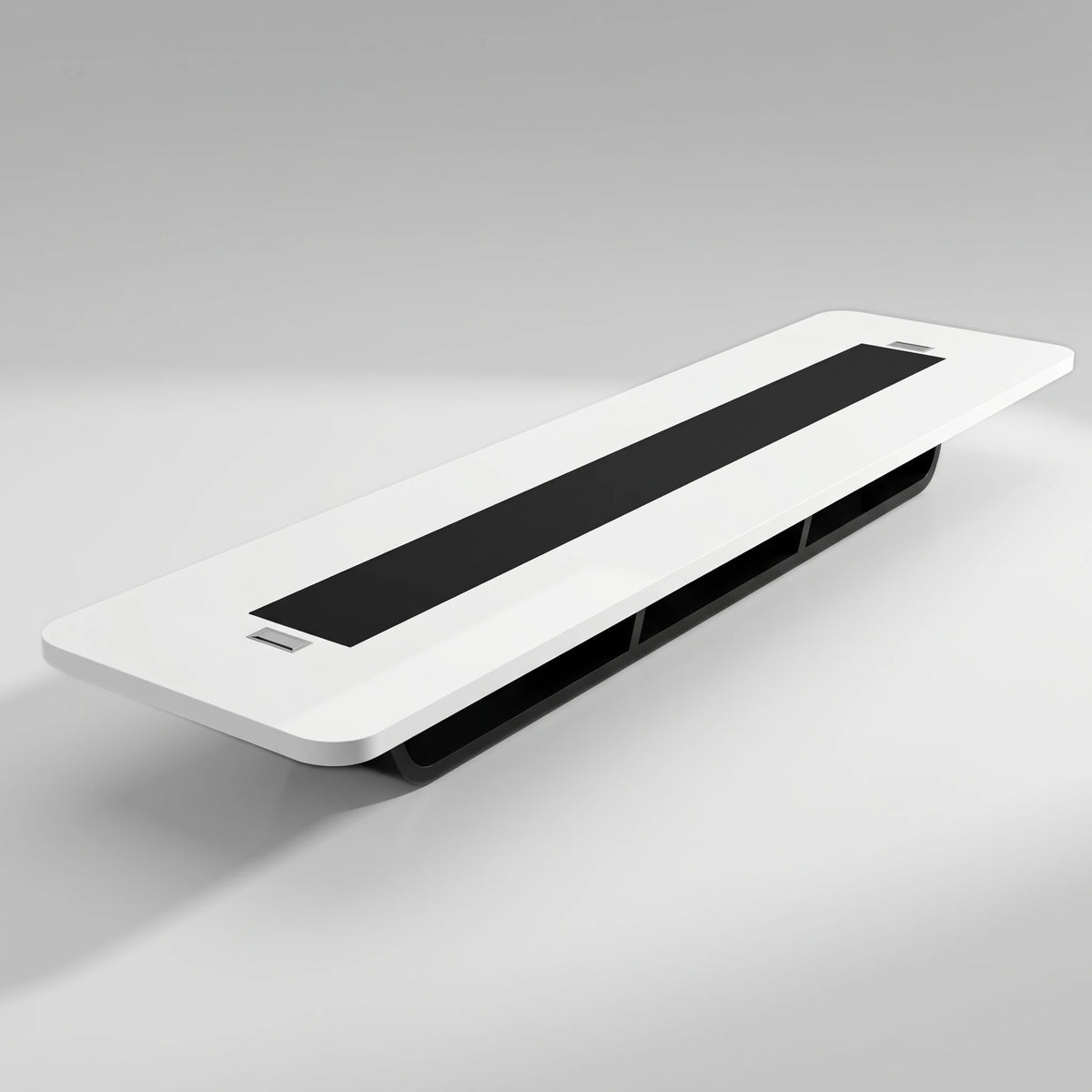
Paxum · Executive Boardroom Conference Table
The right conference table size is set by three numbers — room dimensions, headcount, and growth horizon. Add shape as the fourth variable: rectangular projects authority, round fosters equality, boat-shaped and oval balance the two while improving sightlines.
Allow 30–36 inches of edge per person, 48 inches of clearance to every wall, and 60 inches if you need ADA wheelchair turning radius. Take the time to measure before you order — a half-foot of mismatch reads in the room every meeting.
To complete the office, explore Arc Grove's executive desks, conference tables, and luxury boardroom tables — every collection is filterable by exact size, finish, and built-in feature.
Frequently Asked Questions
What are the optimal dimensions for a 10-person conference table?
A 10-person table measures approximately 120" (10 ft) long by 42–48" wide. Each person gets 30–36" of edge for comfortable working space. The room should provide at least 48" of clearance between the table edges and the walls so chairs can push back without hitting anything.
How much space is required for a 20-person conference table?
A 20-person setup typically uses a boat-shaped or rectangular table about 20 ft long by 54–60" wide, with 36" of edge per person to deliver an executive feel. Plan for 4–5 ft of total clearance around the perimeter so people can enter and exit without disrupting the meeting. Floorplate minimum: roughly 30×16 ft.
What is the appropriate conference table size for 12 attendees?
The ideal 12-person table is 144" (12 ft) long × 48–54" wide, rectangular or boat-shaped. That delivers 30–36" per seat — enough for laptops, documents, and across-the-table conversation without anyone feeling crowded.
What's the ideal spacing per person at an executive table?
30" is the working minimum, 36" is the comfort standard, and 42–48" is reserved for executive boardrooms where presence matters as much as function. The head and foot positions traditionally get a little more space to signal hierarchy without breaking material consistency.
How do I match table shape to meeting style?
Rectangular for traditional decision-making with a clear lead. Boat-shaped for large-group meetings where mid-table sightlines matter. Round for small consensus-driven discussions. Oval to blend hierarchy with sightlines in medium-to-large rooms. Modular when one room hosts multiple meeting types in the same week.
Other Articles
15+ Reception Desk Design Ideas from Arcadia Furnishing
Top 10 Best L-Shaped Desks for Your Office

Modular Office Furniture: Smart Workspace Solutions