Executive Desks & Offices
Table vs. Desk: Choosing the Perfect Workspace Solution
Table vs. desk: a side-by-side on purpose, design, ergonomics, placement, and cost — so you can choose the right surface...
Read more →
Executive Desks & Offices
The best executive desks, by type and budget: wood, glass-and-metal, L-shaped, and sit-stand — plus the size, storage, materials, and ergonomics that separate a desk worth keeping.

The best executive desk balances four things: a generous work surface (60 to 72 inches is standard), real storage, quality materials that last for years, and ergonomics that hold up over long hours. Match the type to your space — traditional wood for presence, glass and metal for a modern feel, L-shaped to maximize a corner, or a sit-stand desk for health.
A good executive desk turns an office into a workspace where you get things done — plenty of room to work, smart storage, and a look that signals you take the work seriously. The options run from rich wood to sleek modern designs with built-in technology. Here is how to choose, by type, by budget, and by the features that matter.
An executive desk is an investment in your professional image and productivity, not just a place for a computer and files. Quality materials make the difference: solid wood, tempered glass, or premium metal finishes look sophisticated and resist wear far better than basic MDF. The generous surface accommodates multiple monitors, documents, and even small meetings, which helps you stay organized and work efficiently. And the impression matters — when clients or colleagues enter your office, a substantial desk reads as attention to detail.
Four features are worth paying for:

The right desk depends on your space, work style, and aesthetic. Four types cover most offices.
Wood desks bring warmth and authority, often crafted from mahogany, oak, walnut, or cherry, each with its own grain. They feature generous surfaces and built-in storage, and they suit spacious offices with classic decor — creating a sense of permanence ideal for established businesses. Look for solid construction and quality hardware; a well-made wooden desk lasts decades.
For a contemporary look, glass and metal desks offer clean lines and a lighter footprint that makes a room feel more open. Glass tops provide a durable surface while letting light through, and metal frames in brushed steel or chrome add modern polish. These suit open-concept offices, and most incorporate cable management and integrated power.
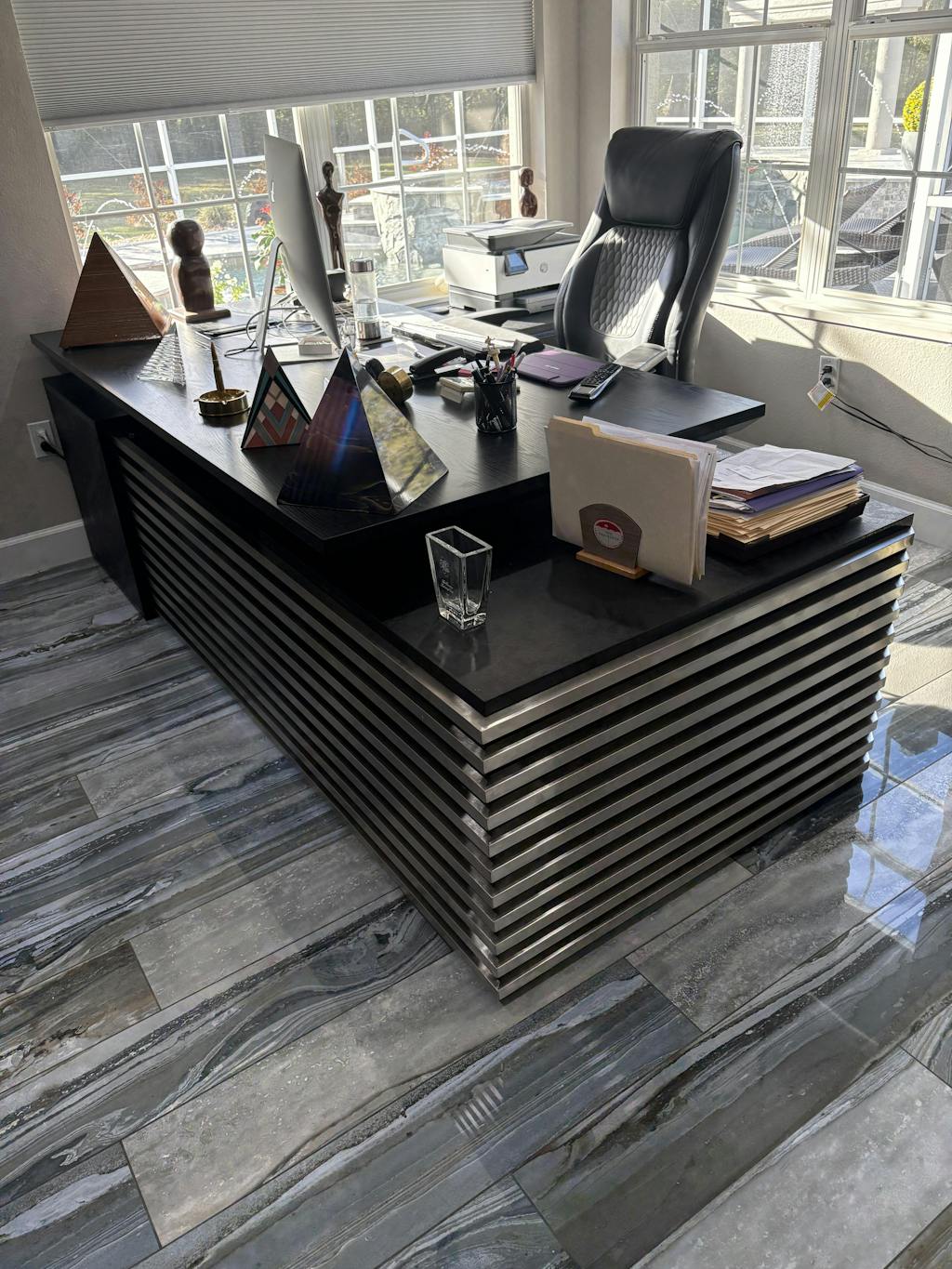
L-shaped desks use corner space efficiently, giving separate zones — one side for computer work, another for paperwork or meetings. The extra surface suits multitaskers handling complex projects, and pedestals and drawers keep essentials within reach. When selecting one, choose the left- or right-return configuration that fits your space and workflow.
As awareness of the health impact of prolonged sitting has grown, executive-level standing desks pair leadership presence with wellness. Adjustable-height models let you alternate between sitting and standing, which can ease back strain and lift energy; the best transition smoothly and quietly with programmable presets. They signal to a team that you value health alongside productivity.
There are strong options at every price point. The tiers below show what your budget typically buys.
Executive desks by budget
| Tier | Price | What you get |
|---|---|---|
| Premium | $2,000+ | Solid hardwood, integrated tech, custom sizing, 10+ year warranty, white-glove delivery |
| Mid-range | $1,000–2,000 | Wood veneer over an engineered core, electric height adjustment, L- and U-shaped configurations, 5–7 year warranty |
| Affordable | Under $1,000 | Durable laminate in wood-look finishes, standard sizing, self-assembly, 1–3 year warranty |

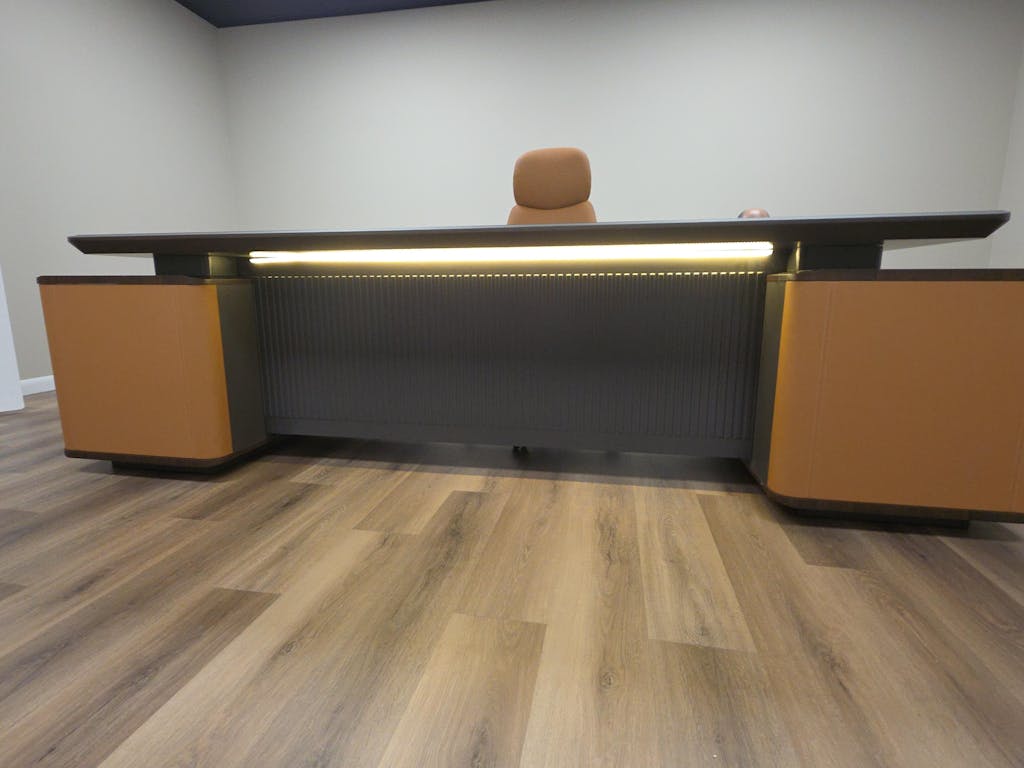
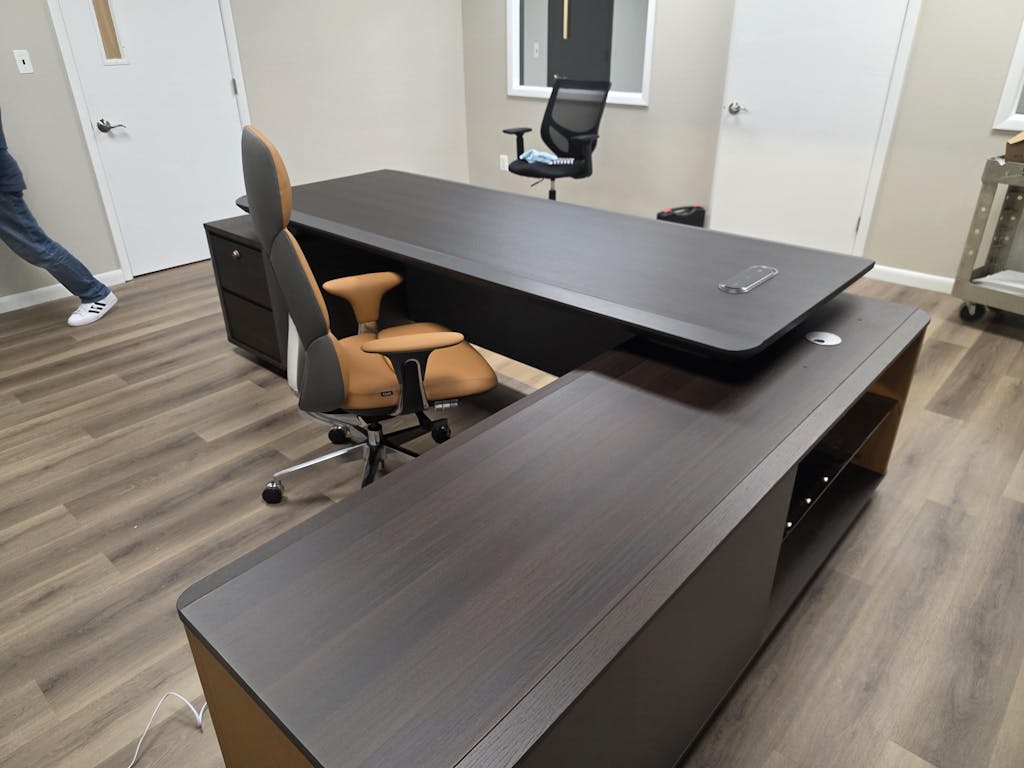
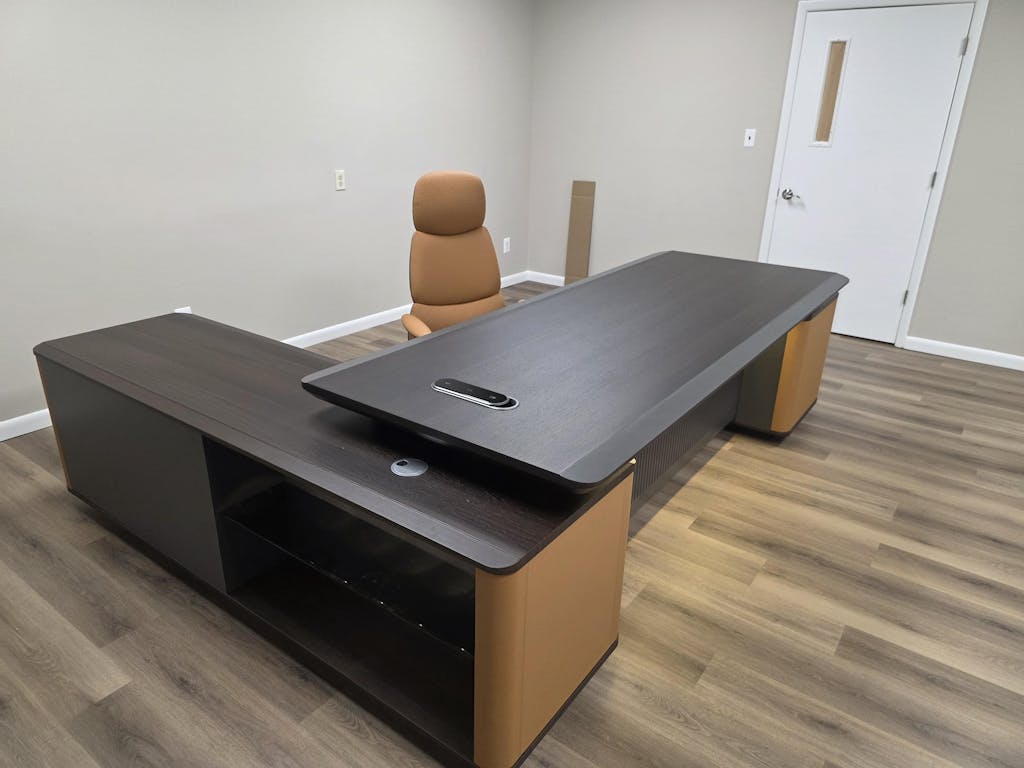
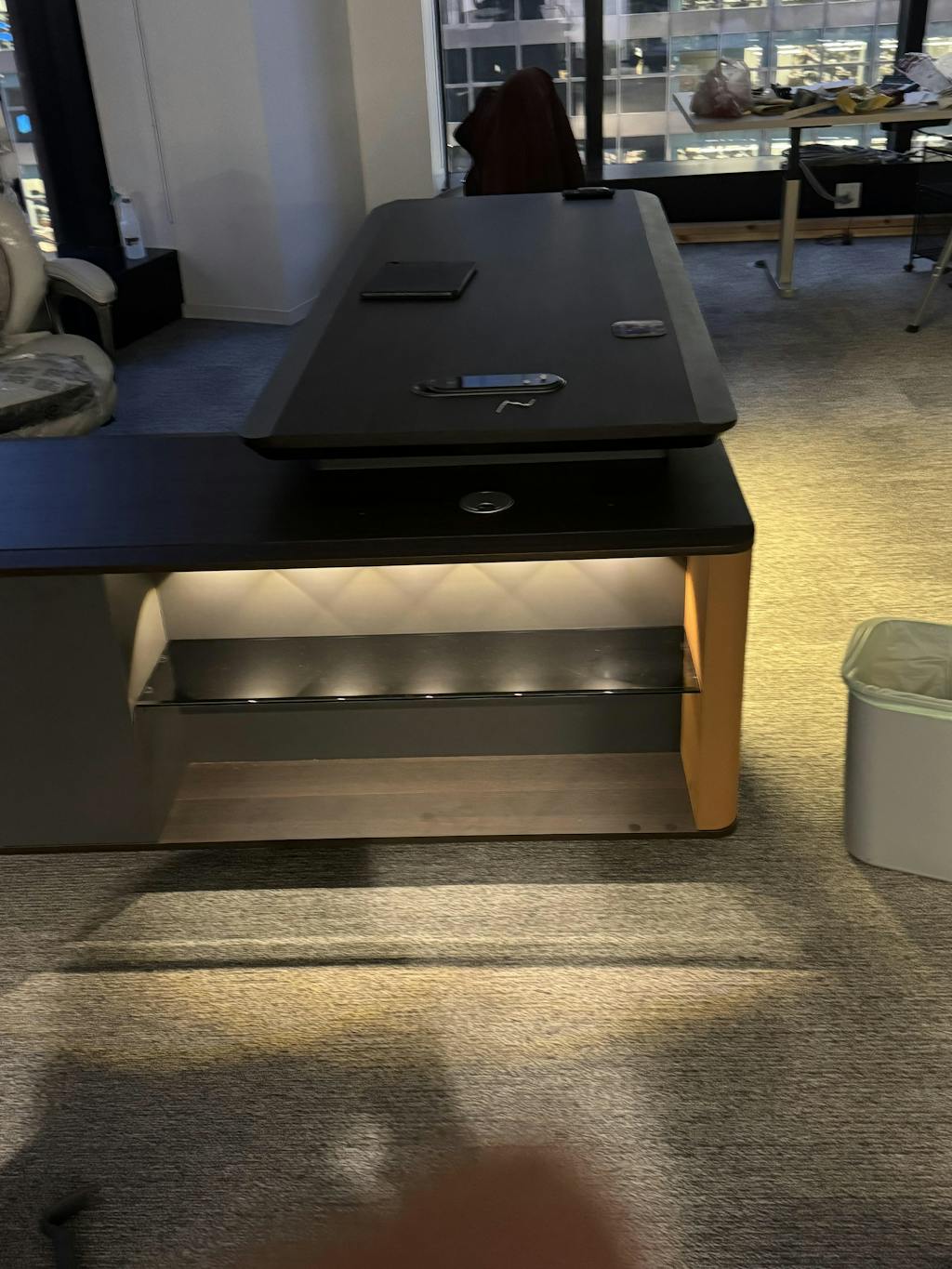
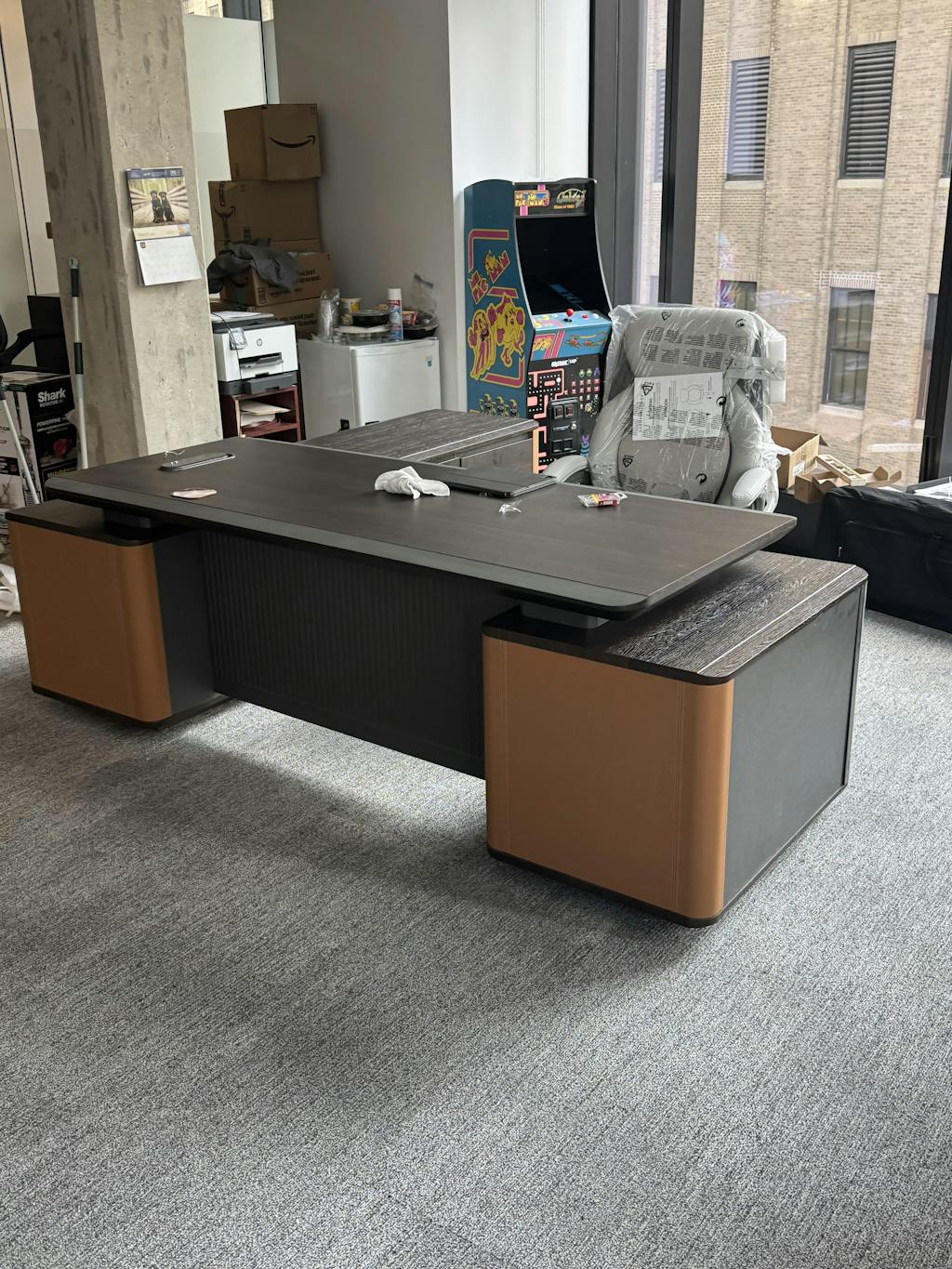
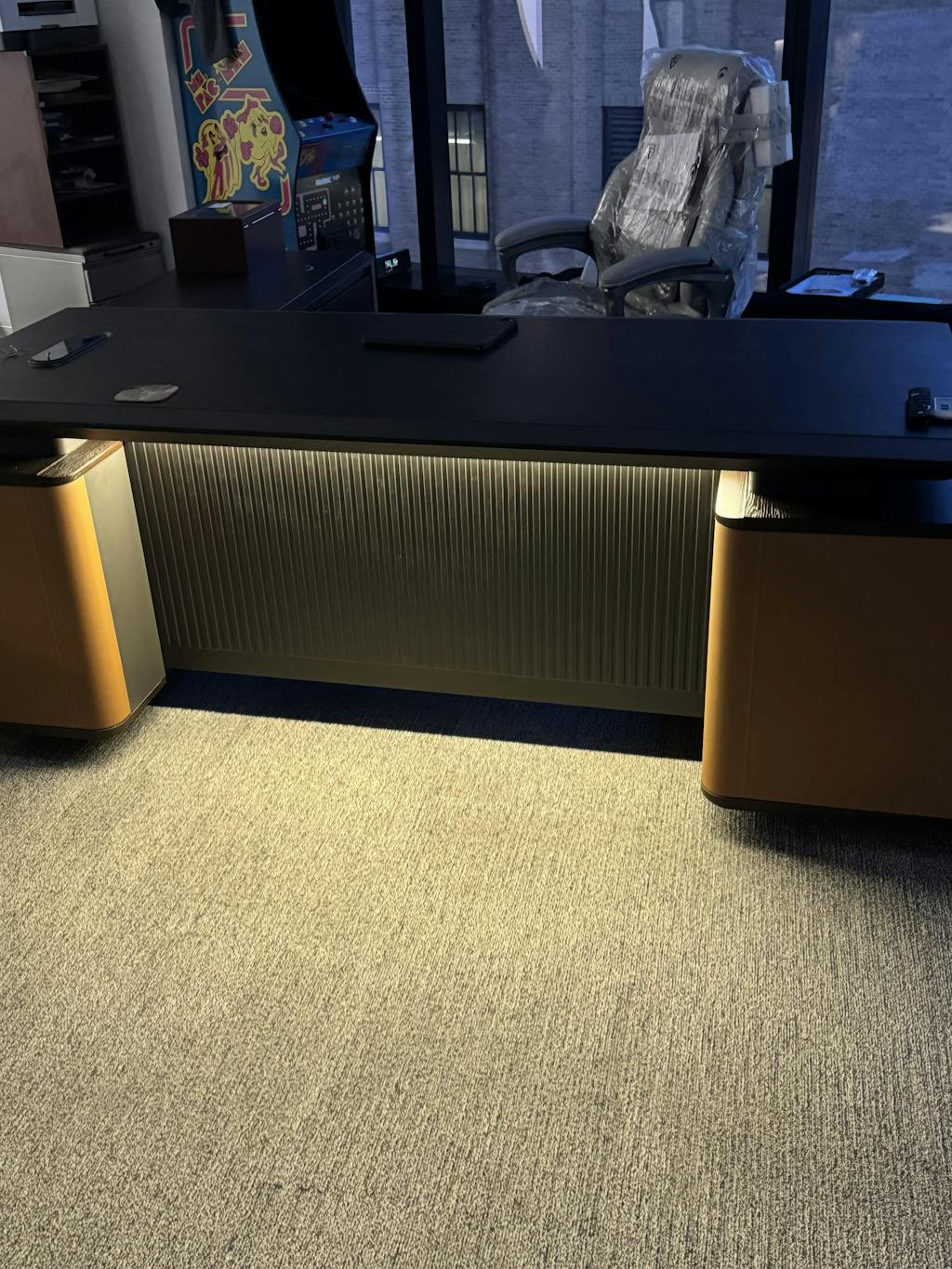
The Cognac executive desk anchors the premium category — a clean rectangular profile with integrated cable management and a mobile storage return that keeps the surface clear. At this level you can expect:

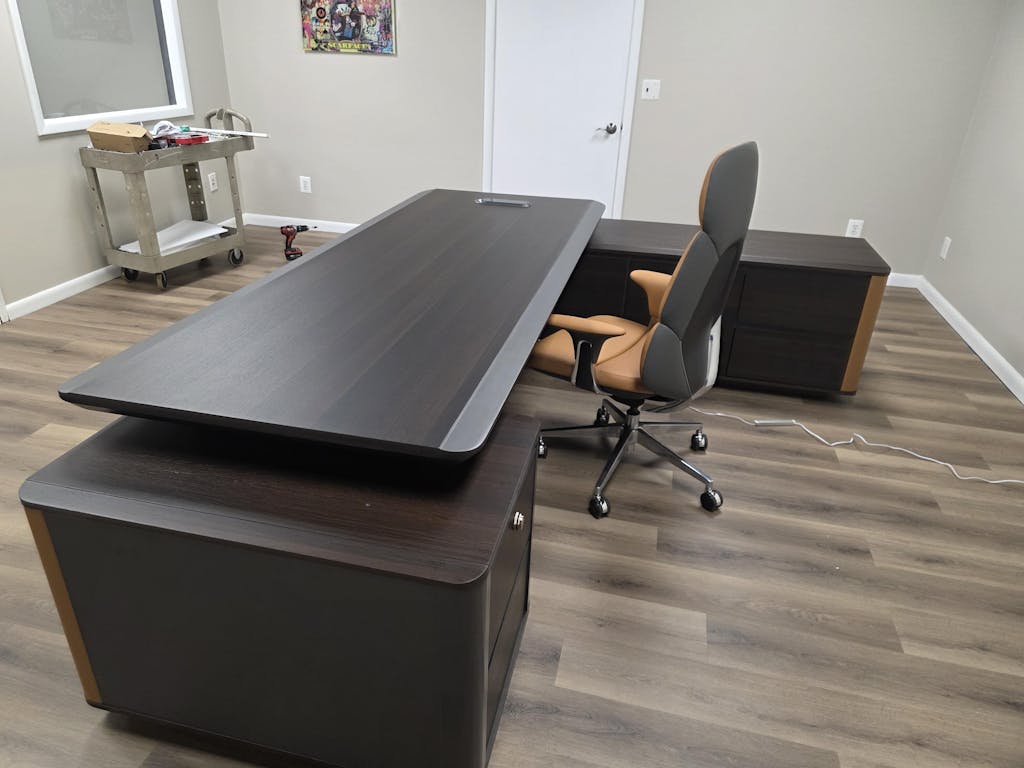
The Hershey L-shaped executive desk is a standout in this range. Expect real wood veneer over an engineered core, partial solid-wood construction, electric height adjustment on some models, L- and U-shaped configurations, and moderate customization — with built-in filing and a surface that fits multiple monitors. Most ship partially assembled with 5- to 7-year warranties.
A tighter budget does not mean sacrificing professionalism. Look for laminate surfaces that convincingly mimic wood grain, at least one file drawer, cable-management cutouts, and a scratch-resistant top. Contemporary glass-top desks pair metal frames with tempered glass for a modern feel at a reasonable price. Expect standardized sizing, self-assembly, and 1- to 3-year warranties.

The right desk balances size, storage, materials, and comfort to support your daily work.
Start by measuring your office. A standard executive desk runs 60 to 72 inches wide (options span 48 to 96), with a depth of 30 to 36 inches for computers and paperwork. Account for clearance — at least 3 to 4 feet behind the desk for your chair and movement, plus space for visitors. In a smaller office, an L-shaped or corner desk maximizes surface while fitting neatly into a corner.
An effective desk keeps the workspace organized with a mix of drawers, shelves, and compartments. Prioritize file drawers for documents, shallow drawers for supplies, cable management for electronics, and a hidden compartment for valuables. Check that drawers run on smooth glides, and consider a matching bookcase or credenza for books and binders. Built-in USB ports and power outlets manage technology without cluttering the surface.
Material quality is a top priority. Solid wood (oak, walnut, cherry) offers classic appeal and exceptional durability; wood veneer over an engineered core gives much of the look for less; metal frames and glass tops read modern. Look for reinforced joints, quality hardware, and protective finishes that resist scratches and stains — and factor in the maintenance each material needs.
A desk should support comfortable working positions over long hours. Most are 29 to 30 inches tall, though adjustable options add flexibility. Look for generous legroom with no obstructive crossbars, and a rounded or waterfall edge that eases pressure on the wrists. Many modern executive desks now offer sit-stand functionality, and integrated grommets and channels keep cords organized.
Set the top of the monitor at or slightly below eye level, keep elbows bent between 90 and 120 degrees with forearms parallel to the floor, and support your feet flat on the floor or a footrest.
OSHA — Computer Workstations eTool, neutral posture
Your desk is the command center for daily operations, and its design directly shapes how efficiently you work. Material sets a tone — wood conveys authority and permanence, glass a modern, transparent style. Size and shape matter too: L-shaped desks provide separate zones, while straight desks keep everything within reach. Ergonomics is the throughline — a desk that positions your monitor at eye level and lets your arms rest near 90 degrees reduces strain and helps you stay focused longer. Built-in storage keeps essentials close and visual clutter down, and integrated cable management keeps the whole setup looking professional.
Choosing one of the best executive desks is about building a home base for your work, not just buying furniture. The right one keeps you organized and productive while signaling that you take the work seriously. Decide what you actually need — room for two monitors, file drawers, or a height-adjustable surface — and treat it as money well spent on something you will use daily for years. Explore the executive desks collection, any of which can be built to your exact size and finish.
Related articles
Executive Desks & Offices
Table vs. desk: a side-by-side on purpose, design, ergonomics, placement, and cost — so you can choose the right surface...
Read more →
Space Planning & Buying
What is a home office deduction calculator? How the IRS simplified ($5/sq ft, $1,500 max) and standard methods work, what...
Read more →
Conference & Boardroom
The best conference room tables for productive meetings: recommendations by size (small, medium, boardroom), the materials that matter, key power...
Read more →